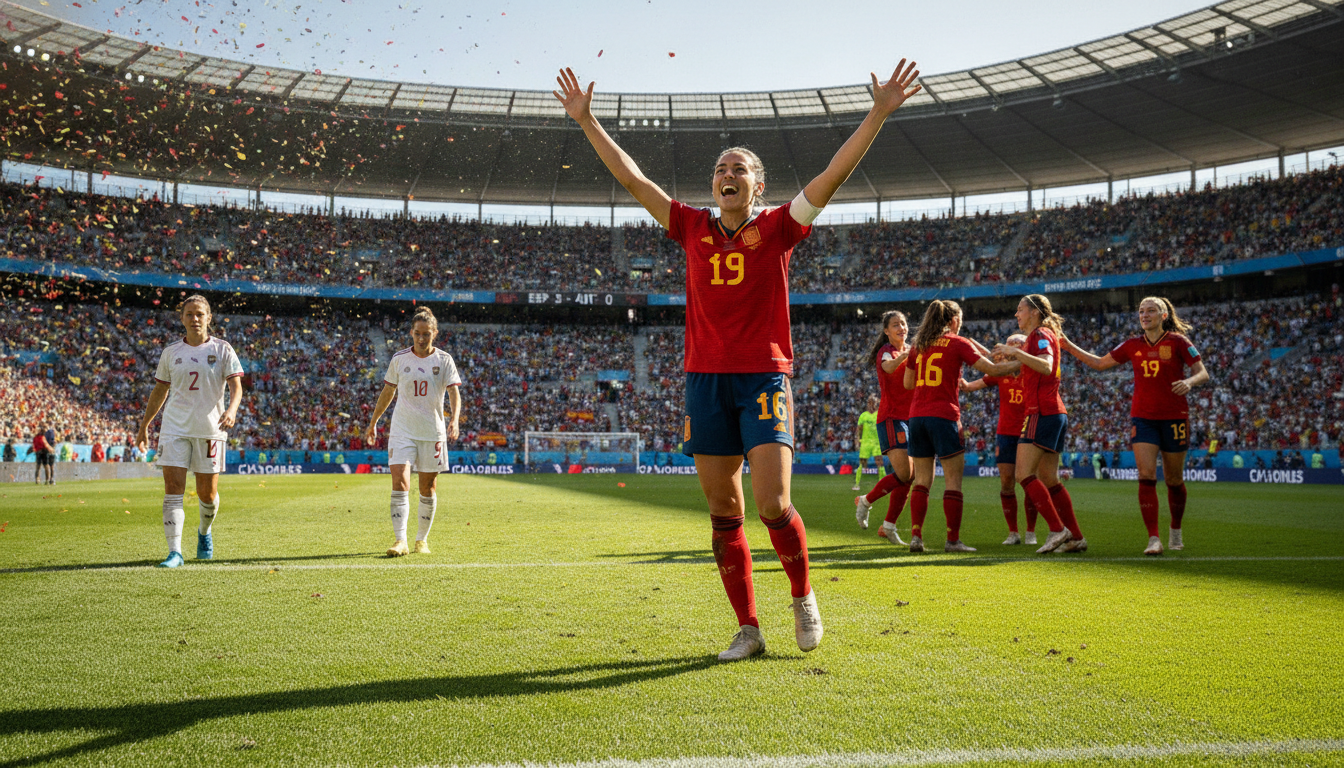
Spain vs Austria: Spain Demolish Austria 3-0 to Signal World Cup Title Charge
Spain rout Austria 3-0 in a commanding last-16 display, with Pedro Porro among the scorers as Luis de la Fuente’s side record their first World Cup knockout win since 2010.


Spain set the tone with relentless pressure
Spain vs Austria unfolded as a one-sided contest from the outset, with Spain asserting control through quick ball circulation and forward intent that left Austria chasing shadows. The 3-0 scoreline reflected sustained dominance rather than the flurry of late luck, and Pedro Porro’s strike for the second goal punctuated a clinical night for the Spanish attack. That decisive performance reinforced the idea that Spain are operating at a level above many of their rivals at this summer’s World Cup.
Spain’s ability to convert control into clear-cut chances separated them from opponents who have struggled to keep up with the tempo and technical fluency on display. Austria offered occasional resistance but were unable to disrupt Spain’s rhythm or prevent the visitors from increasing pressure as the match progressed. Observers left the stadium with the sense that Spain’s performance was not only convincing on the scoreboard but also instructive about their identity under Luis de la Fuente.
De la Fuente’s tactical blueprint produced balance and menace
Luis de la Fuente’s game plan leaned on high-possession sequences and coordinated pressing patterns that stifled Austria’s transition opportunities. Spain moved the ball through tight channels, forcing Austria to surrender initiative and defend in numbers, which created pockets of space for incisive runs behind the back line. The approach combined control with purposeful verticality, allowing Spain to dominate without appearing one-dimensional.
The tactical coherence extended to defensive moments, where compactness and quick recovery runs limited Austria’s ability to craft meaningful attacks. That balance—possession without passivity and aggression without recklessness—has become a hallmark of sides that progress deep into major tournaments. For Spain, it was a blueprint that produced not only three goals but also a message: they are equipped to impose their game against varied opposition.
Pedro Porro’s goal underlined Spain’s incisiveness
Pedro Porro’s contribution—his second-half strike that doubled Spain’s lead—was a tangible example of how individual quality married to collective movement can break a match open. His finish arrived at a moment when Austria were still searching for a foothold, and it effectively removed any doubt about the outcome by forcing the under-pressure hosts to chase the game. The goal also highlighted Spain’s threat from wide areas and the importance of players who can stretch a defence.
Beyond the scoreline, Porro’s involvement was illustrative of Spain’s attacking depth, where different performers can be called upon to unlock tight moments. That versatility is valuable in knockout football, when a single moment of inspiration can be decisive and opponents will often set up to frustrate the favorites. Spain’s ability to produce those moments from multiple positions on the pitch enhances their profile as serious challengers.
Historic context and what the result means for Spain
The 3-0 victory marked Spain’s first win in the knockout stages of a World Cup since 2010, a statistic that underlines both the weight of expectation around this generation and the relief of finally overcoming a historical barrier. The result will bolster confidence in the dressing room and among supporters, offering concrete evidence that Spain can translate tournament promise into knockout success. It also places them alongside the tournament’s other elite teams, with France and Argentina similarly establishing themselves as benchmarks.
For tournament progression, the manner of the win matters almost as much as the three points. A comfortable knockout victory carries psychological advantages for the next round; opponents will register not just Spain’s technical ability but the composure with which they were able to control moments. While single-elimination football always leaves room for surprise, Spain’s performance suggested they will be a difficult proposition for anyone left in the draw.
Last-16 clusters deliver contrasting tests for the favourites
While Spain registered a commanding victory, other heavyweights face varying degrees of challenge in the coming days. England, preparing for a last-16 trip to Mexico City, arrive under a cloud of uncertainty that has left manager Thomas Tuchel searching for solutions ahead of a high-altitude fixture. Portugal must dispatch Croatia with a ruthlessness comparable to Spain’s showing if they are to assert themselves among the tournament’s top contenders, and that tie was scheduled to kick off at 7am as teams battled for advantageous match-ups.
Switzerland’s meeting with Algeria offered another intriguing subplot, with that match set to begin at 11am and providing both sides the chance to alter perceptions. Argentina, meanwhile, were drawn against tournament underdogs Cabo Verde in a contest that promises to test whether the favourites can avoid complacency. With three further matches remaining in the round of 32 after Spain’s win, the knockout phase is still settling into place and plenty of narrative threads remain in play.
Broader tournament picture: favourites, form and fragility
Spain’s performance put them in the same conversation as France and Argentina, who have also shown the consistency and match-winning quality expected of title aspirants. Yet the tournament has demonstrated that form can be volatile; teams considered elite early on can be humbled by well-executed oppositional plans, while underdogs can seize moments of opportunity. The blend of tactical nuance and individual brilliance will continue to shape which sides progress as the pressure of knockout football intensifies.
For managers and supporters around the competition, the task is to read each result in context rather than panic at a single setback or celebrate a solitary triumph excessively. Spain’s emphatic display offers a template for others to emulate: control possession, create high-quality chances and maintain defensive focus. Whether other favorites can match that consistency will determine how straightforward—or fraught—the road to the later stages becomes.
Spain vs Austria was not just a headline result; it was a tactical and psychological statement that will echo through the bracket as teams prepare for the next round. The performance reinforced Spain’s credentials while reminding rivals that the path to the trophy will require matching intensity, technical cohesion and the ability to seize decisive moments.
Spain’s victory over Austria leaves the tournament with clearer frontrunners but also with a knockout phase still rife with potential twists, as teams recalibrate and prepare for the heightened demands of single-elimination football.