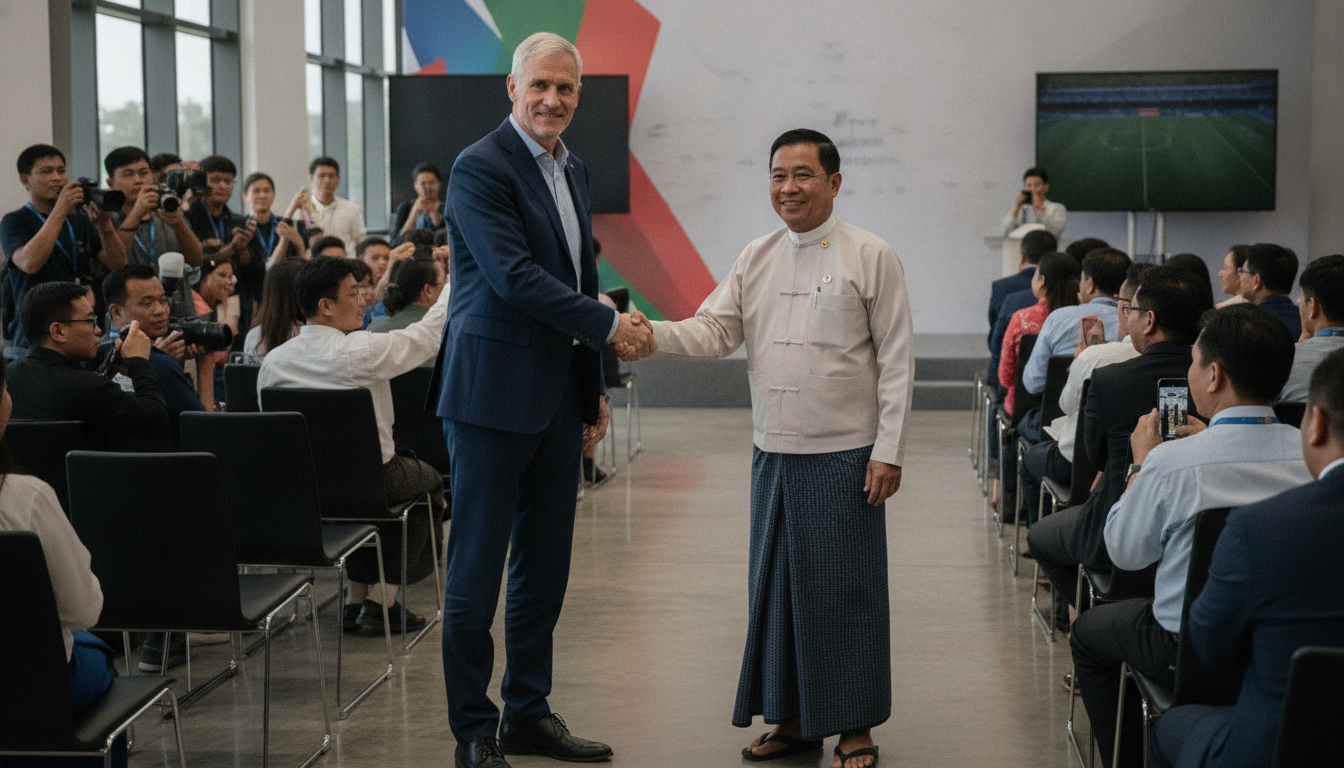
Jorn Andersen poised to become Myanmar head coach, raising tensions with Hong Kong ahead of FIFA Asean Cup
Myanmar confirms Jorn Andersen arrival in Yangon and says he will sign as head coach, potentially setting up a high-profile reunion with Hong Kong at the FIFA Asean Cup in Hong Kong this September.


Andersen’s arrival and Myanmar Football Federation statement
On July 7, 2026, the Myanmar Football Federation (MFF) announced that Jorn Andersen had arrived in Yangon and was expected to sign a contract to become the new head coach of the Myanmar national team in the coming days. The federation said Andersen was “guaranteed to take charge” and that discussions over final contractual details were underway, placing a formal appointment on the immediate horizon. The timing of the announcement has drawn attention because Myanmar will compete in Division 2 of the inaugural FIFA Asean Cup, which is scheduled to be hosted in Hong Kong from September 21 to October 5, 2026.
Andersen’s presence in Yangon to conclude negotiations signals that the appointment is no longer speculative and that Myanmar is moving quickly to install a coach with recent regional experience. The MFF statement did not disclose the length of the proposed contract or specific terms, but it made clear that Andersen’s signature on an agreement was expected “in the coming days,” giving the new coach a narrow window to prepare the squad ahead of the September tournament. The federation’s language suggested a sense of urgency tied to tournament preparations and the need to stabilise leadership well before the start of competition.
Record with Hong Kong and reasons for public interest
Jorn Andersen left a visible mark during his 2½ years as Hong Kong head coach, guiding the city to milestones that rekindled local enthusiasm for the national team. Under Andersen’s stewardship, Hong Kong ended a 55-year absence from major final tournaments by qualifying for the 2023 AFC Asian Cup, and he was also the architect of an unlikely run to the Asian Games semi-finals in 2023 that captured widespread attention across the territory. Andersen’s successes and his rapport with supporters made him a prominent figure in Hong Kong football, and his departure in May 2024, to take charge of Yunnan Yukun, was felt keenly by fans and officials alike.
That history helps explain why the MFF move has been framed in Hong Kong as potentially contentious rather than routine. Andersen is not a neutral outsider to the region; he is widely recognised by Hong Kong supporters for delivering rare competitive success and for raising the profile of the local programme. The prospect of him returning to Hong Kong as the opposing coach at an Asean Cup staged in the city carries emotional weight and raises questions about how Hong Kong’s football authorities and fanbase will respond to a high-profile former coach now leading a neighbouring rival.
Contract negotiations, logistical timeline and immediate tasks
According to the MFF, Andersen arrived on July 7 to finalise contractual matters, indicating negotiations had reached a late stage and that only signatures remained before the appointment became official. With the FIFA Asean Cup set to begin on September 21, the new coach will have approximately two and a half months to evaluate players, stage training camps, and implement tactical plans if he is formally confirmed in July. That compressed timeline will demand rapid decisions on squad selection, staff appointments and logistical arrangements, particularly given that Myanmar must prepare for Division 2 competition on foreign soil.
From a managerial perspective, Andersen will need to balance short-term objectives—stabilising a squad, establishing a clear playing style and securing match fitness—with longer-term goals such as player development and qualification targets beyond the Asean Cup. The MFF’s swift move suggests it wants a definitive coaching framework in place ahead of the tournament calendar, and Andersen’s prior regional experience will likely be presented as an asset in accelerating preparation. The exact technical staff accompanying Andersen has not been disclosed, and those appointments will shape the speed and nature of the team’s readiness for September.
Potential for a high-profile meeting in Hong Kong
Because the FIFA Asean Cup will be hosted in Hong Kong from September 21 to October 5, the appointment raises the real possibility of Andersen returning to the city as the opposing coach for Myanmar. That scenario would create a high-profile narrative: a former Hong Kong coach, credited with some of the territory’s recent successes, facing the team he once led on his new side. Such a meeting would automatically become one of the tournament’s storylines, drawing media attention and heightening interest among supporters across the region.
Beyond the public interest, a match between Myanmar and Hong Kong—if drawn against one another in the group stage or knockout rounds—would pose practical and emotional challenges. Hong Kong’s football authorities will have to consider ticketing, security and messaging around a game that could feature a popular former coach on the other touchline. For Andersen, the fixture would be a test of managerial poise, as he would need to navigate personal history and local sentiment while prioritising competitive objectives for Myanmar.
Implications for Hong Kong’s squad and management planning
The potential appointment of Andersen to the Myanmar role arrives as Hong Kong’s national team continues its own planning cycle and looks ahead to hosting international fixtures later this year. Hong Kong’s coaching staff and federation will assess the competitive impact of Andersen’s new role on their tactical preparations and scouting priorities. If Andersen assumes control of Myanmar, his intimate knowledge of Hong Kong players and tactics could inform Myanmar’s approach, prompting Hong Kong to revise scouting reports and to consider strategic adjustments well before any possible meeting.
At the same time, Hong Kong’s squad selection and tactical evolution will proceed according to the current staff’s objectives, with or without Andersen in the region. The challenge for Hong Kong will be to maintain continuity, protect the progress made under recent management, and ensure that players are able to perform in front of home supporters without being distracted by narrative-driven storylines. Federation officials will likely emphasise process and preparation, while acknowledging the public interest generated by Andersen’s new posting.
Regional context and Myanmar’s strategic intentions
Myanmar’s rapid movement to secure a coach with Andersen’s profile indicates an ambition to be competitive in regional tournaments and to accelerate the national team’s development. By targeting a manager with recent success in Greater China and familiarity with Asian tournament conditions, Myanmar’s leadership appears intent on raising standards and increasing the team’s tactical sophistication. The MFF’s statement that Andersen will “officially sign a contract for the head coach of Myanmar in the coming days” underscores a strategic push timed to coincide with the launch of the FIFA Asean Cup.
For the wider Southeast Asian football landscape, the appointment highlights how federations are increasingly looking beyond traditional markets to recruit experienced coaches who can deliver immediate results. Andersen’s appointment, if finalised as expected, will be monitored by neighbouring federations as an example of how to combine experienced leadership with urgent tournament preparation. The short lead-in to the Asean Cup will test Myanmar’s organisational capacity, but it also offers a concentrated opportunity to demonstrate progress on a regional stage.
Jorn Andersen’s expected move to become Myanmar’s head coach looks set to be formalised shortly, and it introduces a compelling subplot to the FIFA Asean Cup that will take place in Hong Kong from September 21 to October 5, 2026. The appointment brings together sporting ambition, regional rivalry and personal history, and it ensures that when the tournament kicks off in Hong Kong, attention will not only be on the matches but also on the return of a manager who helped reshape football in the city he once led.