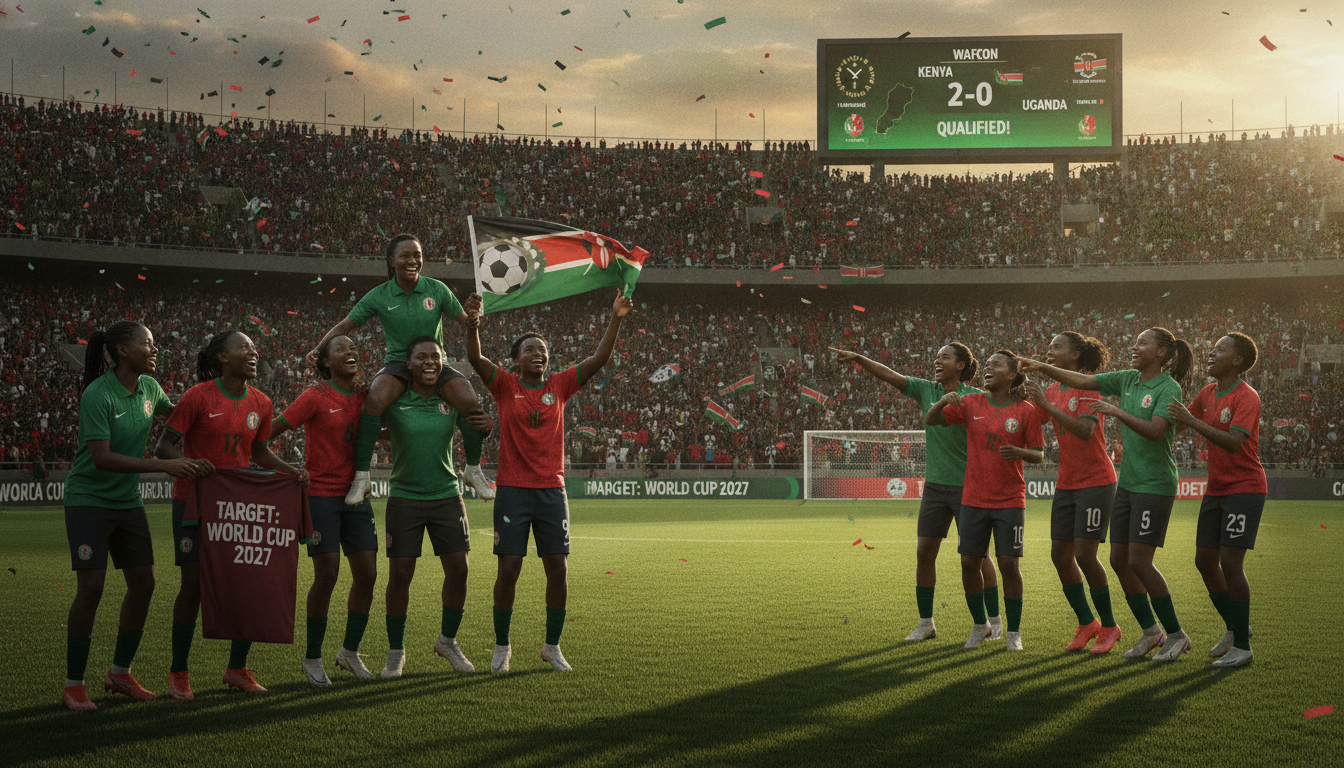
Harambee Starlets target World Cup after qualifying for WAFCON Morocco 2026
Harambee Starlets WAFCON Morocco 2026: Kenya return to the finals and target a 2027 World Cup berth as coach Beldine Odemba outlines preparations and ambition.


Ten years after their maiden appearance on Africa’s main stage, the Harambee Starlets have booked a return to the TotalEnergies CAF Women’s Africa Cup of Nations, Morocco 2026, with ambitions that stretch well beyond participation. Head coach Beldine Odemba has framed qualification as the first step in a campaign aimed at securing one of the tournament’s four slots for the 2027 FIFA Women’s World Cup. The team’s preparations, recent friendlies and an experienced coaching staff have combined to raise expectations across Kenya’s burgeoning women’s game.
Historic return to continental finals
A decade on from their first continental finals, Kenya’s national women’s team will be back among Africa’s elite at WAFCON Morocco 2026. The qualification marks a milestone in the country’s long-term development pathway and reasserts the Starlets as an emerging force in East Africa. Officials and supporters say the achievement underscores steady institutional progress, from improved domestic competitions to growing opportunities for players to move abroad.
The Starlets’ return carries symbolic weight after recent breakthroughs at youth level, which have shown that Kenyan talent can compete on the global stage. That surge in capability has driven higher expectations for the senior side and sharpened focus on converting continental returns into historic tournament runs.
Odemba outlines World Cup ambition
Coach Beldine Odemba has been explicit about the team’s objectives: qualification to the 2027 FIFA Women’s World Cup is the ultimate target. She has stressed that Kenya’s presence at WAFCON should be viewed through the prism of competing for a semi-final spot, since the top four teams from Morocco will secure World Cup places. Odemba’s public messaging has been consistent — the Starlets are not traveling to fill slots, they intend to win matches.
Her approach mixes realism with clear ambition. Odemba acknowledges the caliber of opponents on the continent but believes the side’s recent improvements and sharper tactical identity give Kenya a platform to challenge established teams. That resolve has been backed by a structured preparation plan and a commitment from the federation to support the squad’s needs.
Final preparations and match sharpness
Kenya’s lead-up to WAFCON has included a mix of domestic camps and overseas training meant to simulate tournament conditions. The squad will stage a four-day local camp in early July with two preparatory friendlies before departing for a two-week residential camp in France. That sequence is designed to assess fitness, lock in tactical roles and provide sustained high-intensity work against quality opposition.
Odemba rates the team around 60 percent ready with roughly a month to go, underlining the importance of the upcoming training phase. The plan emphasizes progressive load, tactical fine-tuning and competitive minutes for fringe players, all aimed at delivering a cohesive unit by the time the tournament begins.
Lessons from recent friendlies in Zambia
A recent four-nation tournament in Zambia served as a dress rehearsal for the Starlets and revealed both strengths and areas for improvement. Kenya drew 1-1 with hosts Zambia and were edged out on penalties, a result the coaching staff viewed positively given Zambia’s experience at major global events. The encounter tested Kenya’s defensive organization and resilience against a technically strong opponent.
By contrast, the 6-0 victory over Lesotho showcased the Starlets’ attacking potency and clinical finishing when given opportunities. Odemba has emphasized that the contrasting matches delivered complementary lessons: the Zambia game highlighted the need for concentration against elite teams, while the Lesotho match provided confidence and clarity for attacking patterns.
Group A presents stern test
The draw has placed Kenya in Group A alongside hosts Morocco, Algeria and Senegal, a cluster widely regarded as one of the tournament’s most demanding pools. Morocco arrive with home advantage and a growing pedigree in women’s football, while Algeria bring experience and a physical style that has troubled many opponents. Senegal is the less familiar opponent for Kenya, which means scouting and match planning will be crucial.
Odemba has framed the group as an opportunity rather than a roadblock, arguing that early matches against top teams can accelerate the squad’s growth. Tactical adaptability will be tested, with the Starlets needing to balance defensive solidity against Morocco and Algeria while maintaining the attacking intent that yielded high-scoring results in recent fixtures.
Development momentum across Kenyan women’s football
The senior team’s qualification is part of a broader upward trend in Kenyan women’s football, where increased pathways and overseas moves for players are changing the landscape. More athletes securing professional opportunities abroad has lent the national setup greater technical variety and experience. Federation initiatives and improved domestic league competitiveness have also helped create a deeper player pool.
Youth success has been a catalyst for this momentum, with younger national teams breaking new ground and inspiring investment at grassroots level. Stakeholders say sustained progress will depend on continued support for youth development, coach education and expanded international exposure for players.
The Starlets arrive in Morocco with belief and a detailed preparation schedule, seeking to translate recent progress into results on the continental stage. The immediate objective will be to navigate a challenging group and build momentum into the knockout rounds, where a top-four finish would secure history — Kenya’s first senior World Cup berth.
Beyond the tournament, the campaign is being watched as a barometer of how far Kenyan women’s football has come and how quickly it can close the gap with established African powers. If the Starlets can combine tactical discipline, attacking efficiency and mental resilience, they will pose a genuine challenge in Morocco and keep alive the dream of reaching the 2027 FIFA Women’s World Cup.