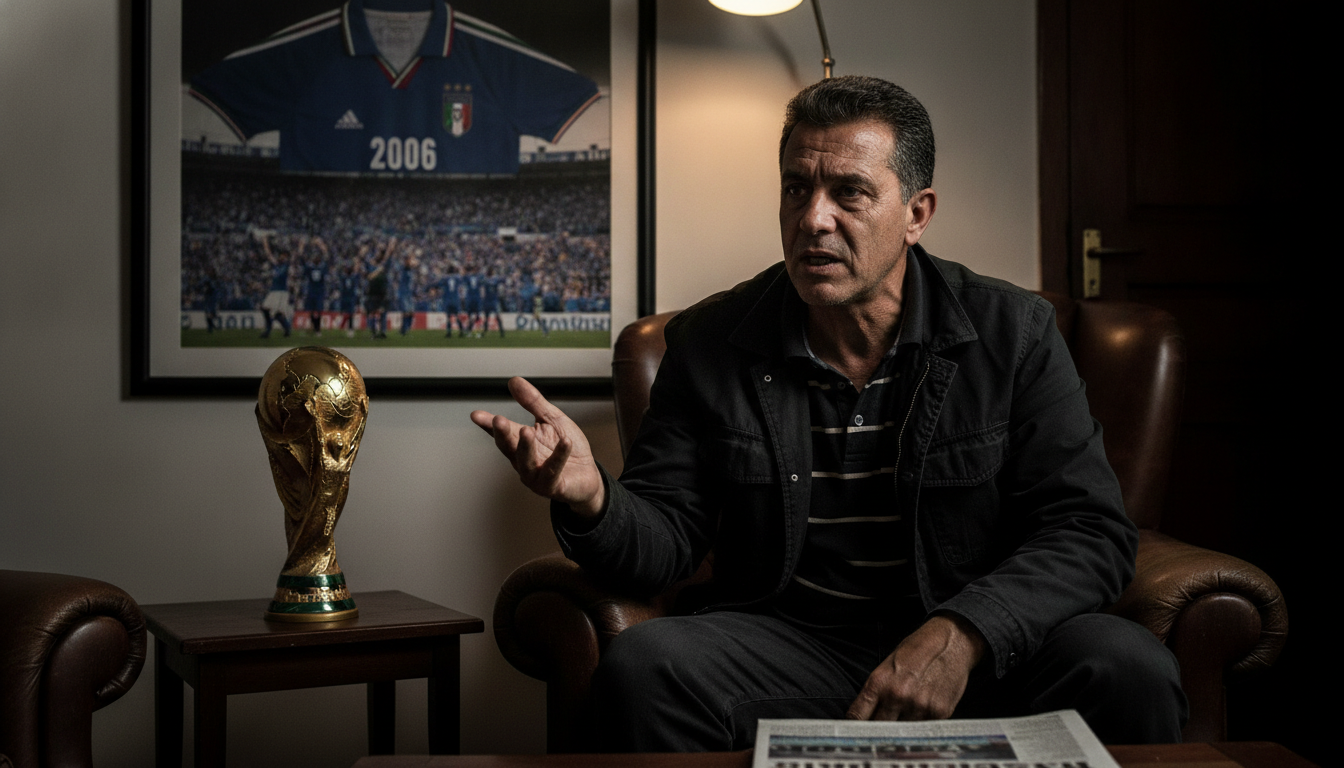
Waseem Razeek Reflects as Italy Miss World Cup: Ball Boy’s 2006 Grudge Surfaces Again
Waseem Razeek, a former ball boy at the 2006 World Cup final, says he felt no sympathy when Italy missed the 2026 World Cup, a memory that has stayed with him since Berlin. Italy miss World Cup has become a headline for fans old and new as the Azzurri were eliminated from the 2026 tournament after a play-off defeat. (fifa.com)


From Ball Boy to Bitter Fan
Waseem Razeek still remembers the humidity of that night in Berlin and the particular focus of a 13‑year‑old tasked with chasing stray match balls. He had been assigned as a ball boy for the July 9, 2006 final and went to the stadium expecting to be part of something glorious for his adopted heroes.
Razeek had grown up in Germany but adopted France as his team and watched the final transfixed on the ball, he later recounted, missing at least part of the unfolding drama that would define the match. The emotional aftermath — his “really” crying when France lost on penalties — hardened into a long‑term dislike of the Italian side.
His family background informed his sporting outlook: his father, Jamal, a former Sri Lanka hockey player, moved to Germany to seek better opportunities in sport and life. That mix of migration, cross‑national loyalties and youthful memory has shaped Razeek’s identity as a fan.
Berlin 2006: The Night That Began a Grudge
The 2006 World Cup final in Berlin ended in a 1–1 draw after extra time and was decided on penalties, with Italy prevailing to lift the trophy. The match also included one of the tournament’s most infamous moments when France captain Zinedine Zidane was sent off for head‑butting Marco Materazzi in extra time. (fifa.com)
Razeek says he was “transfixed on the ball” and missed the on‑field confrontation that dominated headlines for years afterward. He watched cameras swarm Zidane as he left the pitch, and later realized the loss had more layers than the scoreline alone.
That mixture of personal disappointment and the spectacle of one of football’s most replayed incidents left a durable impression. For Razeek, the sensations of that night — nervousness, heat, the shock of a shootout defeat — are inseparable from the national identity and rivalry that underpin elite international football.
Italy’s Play-off Exit Reignites Old Scores
Italy’s failure to secure a place at the 2026 World Cup was finalised in a tense play‑off loss that ended the country’s hopes of competing this summer. The Azzurri were beaten in a deciding encounter that took place during the March 2026 play‑offs, sealing their absence from the tournament in Canada, Mexico and the United States. (fifa.com)
The defeat marked another painful chapter for a nation accustomed to global success; Italy’s absence from the 2026 finals means the country has now missed three consecutive World Cups. That rare reversal for a four‑time champion drew immediate headlines and a widespread reaction across footballing communities. (en.wikipedia.org)
For fans like Razeek, the fact of Italy’s non‑participation rekindled memories rather than sympathy. “I’ve not liked the Italy team since,” he said of the aftermath of the 2006 final, a remark that some supporters saw as cathartic and others as a reminder of how singular moments can shape fan sentiment for decades.
Reactions Inside and Outside Italy
The shock of Italy’s failure to qualify reverberated through the sport at all levels, from current players to former stars and administrators. High‑profile figures publicly expressed dismay, and several voices called for a reassessment of the national setup. (fifa.com)
Players who had invested years in the national cause responded emotionally; some spoke of profound sadness and the need to rebuild for the future. The mood inside the dressing room after the play‑off loss was described as raw and reflective, with calls for structural change echoing in the days that followed. (bbc.co.uk)
For supporters abroad, the absence altered national alignment at the next finals and left diaspora communities — many of whom follow multiple teams — rethinking allegiances and expectations. In such communities, personal histories and family migration stories often inform which teams draw the strongest loyalties.
Fan Identity, Migration and Memory
Razeek’s story is illustrative of the way migration and local context shape sporting loyalties. Growing up in Germany with a Sri Lankan family background, he nevertheless came to support France and to view Italy through a highly personal lens. That is not unusual among second‑generation fans, who often blend homeland ties with the influences of their upbringing.
Personal memories — a ball boy’s vantage point, the smell of stadium grass, the roar and the quiet — anchor those loyalties. In Razeek’s case, the 2006 final’s emotional intensity has translated into a durable dislike that resurfaced when Italy did not go to this summer’s tournament.
Such attachments highlight the emotional labor performed by fans, who carry sporting histories long after players and managers have moved on. They also show how single events can become shorthand for broader national narratives in football.
What Italy’s Absence Means for 2026 and the Game
Italy’s non‑presence at the World Cup alters the competitive and commercial landscape of the 2026 tournament. The absence of a traditional powerhouse reshapes group dynamics, broadcasting narratives and the commercial packages that tournaments rely on. Organisers and broadcasters will adapt programming and promotion to account for the different mix of teams now on offer. (fifa.com)
For Italy themselves, the immediate imperative is a long‑term plan to rebuild talent pipelines and restore international competitiveness. Analysts have pointed to structural gaps in youth development and domestic coaching continuity that require attention if the Azzurri are to reassert themselves on the world stage. Several commentators and football officials urged a systematic review following the play‑off exit. (fifa.com)
The broader lesson for national federations is that historical prestige offers no guarantees in a sport increasingly defined by depth of youth systems, tactical renewal and consistent investment. Nations that learn and adapt after setbacks tend to re‑emerge, and Italy’s football authorities face a familiar test of institutional resilience.
Waseem Razeek’s lasting memory of Berlin and his candid reaction to Italy’s absence underline how the sport’s biggest moments ripple through time, shaping the loyalties and language of fans around the world. As the 2026 finals approach without the Azzurri, those memories will form part of a larger conversation about history, identity and the unpredictable nature of international football.