Dortmund in No Rush Over Niko Kovac Contract as CEO Focuses on Squad Finalisation
Borussia Dortmund say there is no immediate urgency to start Niko Kovac contract talks, with CEO Carsten Cramer prioritising finalising the squad ahead of pre-season preparations. (157 characters)


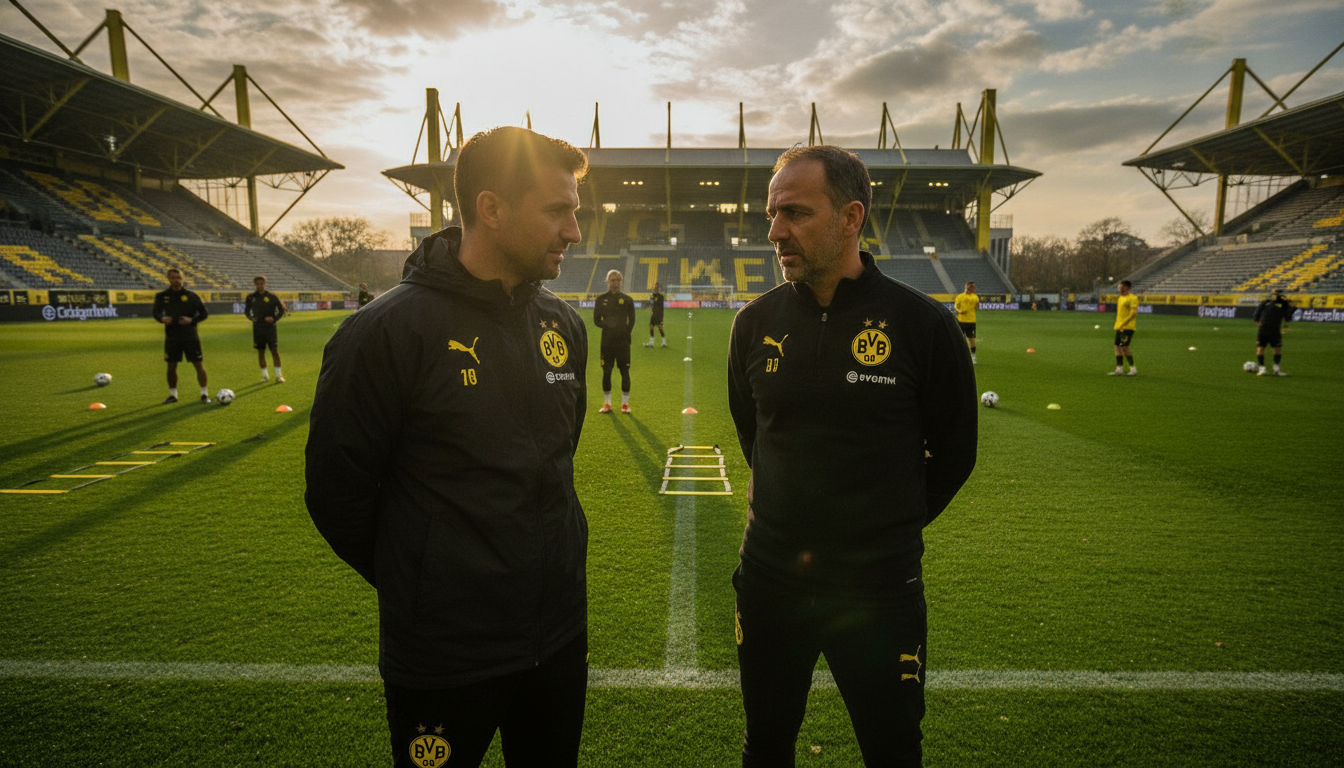
Borussia Dortmund have made clear they will not open early negotiations over the Niko Kovac contract, with the club’s leadership preferring to complete transfer business and begin pre-season before addressing the coach’s future.
CEO Carsten Cramer told Kicker the club is satisfied with Kovac’s work but intends to follow the same timetable used last year, delaying detailed talks until the right moment.
Kovac, who took charge in February 2025 and enters the final year of his deal, is said to be relaxed about the timeline and not pressing the club for immediate clarification.
Cramer signals contentment but a deliberate timeline
Carsten Cramer framed the situation as deliberate rather than neglectful, saying Dortmund remain happy with Kovac’s performance while deliberately postponing contract negotiations.
The priority, Cramer explained, lies with finishing the squad build and preparing for the season, not opening protracted talks during a period of holiday and limited operational focus.
That approach suggests Dortmund will follow a measured, strategic timetable for any extension discussion rather than rush into negotiations for reassurance.
Kovac’s position and the contract landscape
Niko Kovac begins the campaign in the final year of his current agreement, a common point at which clubs decide whether to renew, extend or reassess.
Dortmund’s public posture is one of stability: the technical staff are valued and Kovac is reportedly calm about the process, reducing immediate pressure on the board.
Keeping contract matters on hold gives both parties space to evaluate sporting targets, recruitment outcomes and pre-season form before committing to long-term terms.
Squad completion takes precedence ahead of pre-season
The central reason for the delay is operational: Dortmund are in the process of finalising their playing group and want that work concluded before shifting attention to managerial negotiations.
Cramer underlined that assembling the squad remains the chief task in the weeks leading into training camp, implying that transfer activity will shape the context of any extension talks.
Finishing business early also helps the coaching staff focus on tactical work and player integration once pre-season begins, rather than being distracted by contractual matters.
How last year’s timetable informs this approach
Dortmund pointed to last summer’s handling of coaching discussions as a template, indicating a pattern rather than an ad hoc decision for 2026.
By mirroring the previous schedule, the club aims to preserve continuity and avoid unnecessary upheaval during a sensitive preparation window.
This precedent gives the board a defensible justification for delaying negotiations until the club’s sporting picture is clearer.
Communication and public optics around the process
Cramer stressed that Kovac has not actively pushed the issue through constant messages or agent interventions, presenting a cooperative public dynamic between coach and club.
That restraint on both sides minimizes speculation and keeps media attention focused on squad matters and on-field preparation rather than contract drama.
Maintaining a calm public stance also helps preserve market value for players and protects Dortmund’s negotiating position with potential signings and existing staff.
Practical implications for transfer strategy and stability
Delaying talk of a new Niko Kovac contract allows Dortmund to evaluate how incoming and outgoing transfers affect the coach’s remit and the club’s budgetary envelope.
If the summer brings key reinforcements or unanticipated departures, the board will have clearer criteria for structuring any renewal, including length and financial terms.
Conversely, if recruitment falls short, the club can use that assessment to revisit strategic objectives without having committed to a long-term managerial arrangement prematurely.
Contingency planning and the wider managerial market
While Dortmund signal contentment with Kovac, postponing negotiations keeps options open amid a busy European coaching market this summer.
That does not necessarily indicate an appetite to replace him, but it does mean the club can respond flexibly should an attractive alternative emerge or if circumstances change during pre-season.
At the same time, a measured timetable reduces the risk of destabilising the squad by announcing a long-term extension before seeing how new additions integrate.
Sporting context and expectations for the coming season
Entering the campaign with a settled coach and a near-complete squad is the ideal scenario for Dortmund as they seek to compete domestically and in European competition.
Kovac’s mandate, inherited in February 2025, included stabilising results and shaping a squad capable of challenging on multiple fronts, and the board’s measured approach reflects those ongoing sporting aims.
How quickly the team adapts in pre-season and the early fixtures will inevitably influence the tone and timing of any future contract discussions.
Final paragraph
For now, Dortmund’s position is straightforward: the club will finalise its playing roster and begin pre-season work before engaging in any substantive Niko Kovac contract talks, a pragmatic path designed to align managerial decisions with the club’s sporting and transfer outcomes.