VfB Stuttgart’s €18m Offer for Dženan Pejčinović Rejected as Wolfsburg Hold Out for €25m
VfB Stuttgart’s €18m bid for Dženan Pejčinović was rejected by relegated Wolfsburg, who seek €25m; Stuttgart may increase their offer or pursue alternatives ahead of Champions League football.


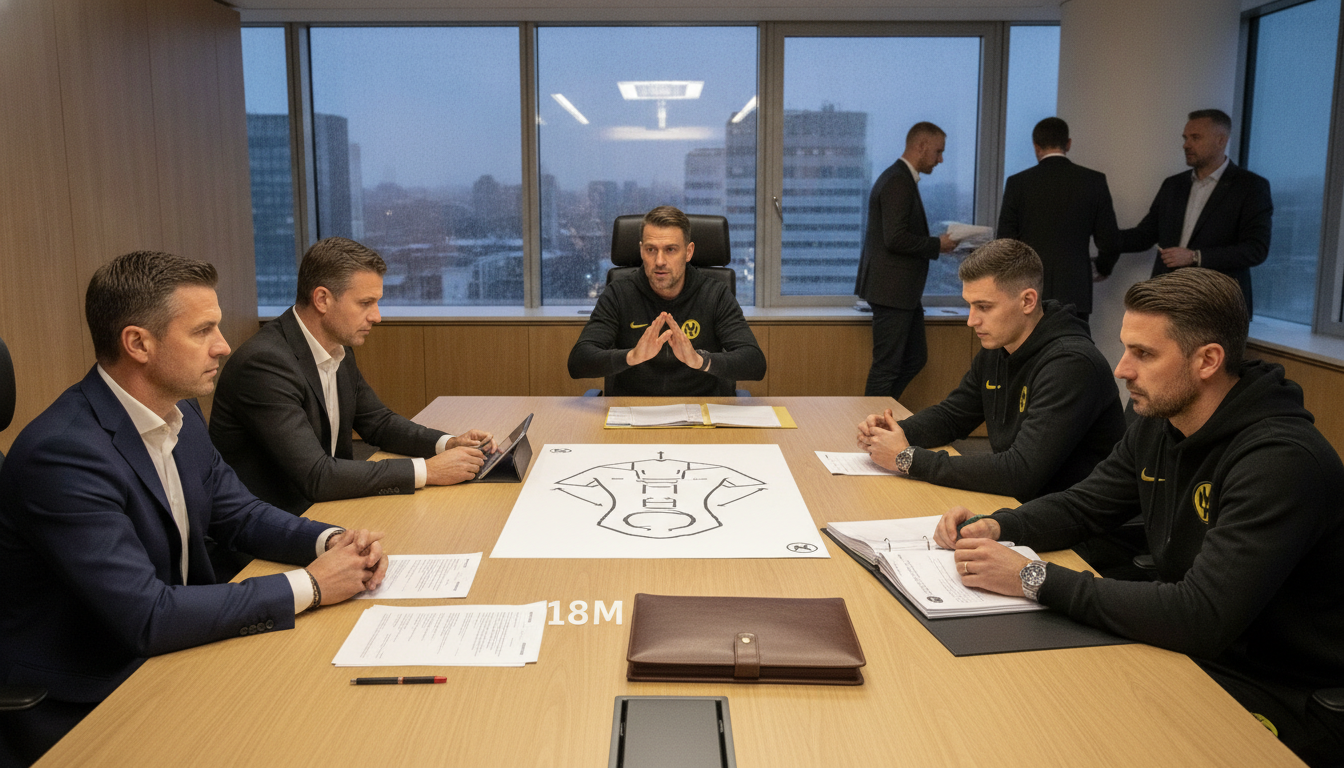
VfB Stuttgart have seen their initial bid to sign striker Dženan Pejčinović turned down by VfL Wolfsburg, sources indicate, as the Swabian club attempts to strengthen its attack ahead of a UEFA Champions League campaign. Stuttgart submitted an €18 million package including add-ons, but Wolfsburg — newly relegated to the 2. Bundesliga — are standing firm on a higher valuation close to €25 million. The breakdown in talks has prompted Stuttgart to open contingency options while weighing whether to return with an improved proposal.
Stuttgart’s Opening Bid Falls Short
Stuttgart’s opening offer was structured around €18 million in guaranteed cash and performance-related bonuses, according to people familiar with the negotiations. The offer aimed to balance Stuttgart’s desire for a young, Bundesliga-proven forward with the club’s need to manage transfer spending prudently ahead of a busy European season. Wolfsburg’s immediate rejection of that package signals a starker valuation gap than Stuttgart anticipated at the outset of talks.
Club officials in Stuttgart have emphasized the importance of decisive summer business but have also made clear they will not overpay on principle. That posture has created a limited window for negotiations: sporting directors must move quickly to land reinforcements without jeopardizing financial plans tied to Champions League participation. The impasse over price has therefore shifted the focus to whether Stuttgart will recalibrate their offer or pivot to alternative targets.
Wolfsburg Maintain a Firm Asking Price
Wolfsburg are understood to value Dženan Pejčinović at approximately €25 million, a figure that reflects the player’s age, potential resale value and recent top-flight output. The club’s stance is influenced by its relegation and the need to maximize transfer revenue as it restructures for competition in the 2. Bundesliga. That context gives Wolfsburg leverage in negotiations and explains their resistance to Stuttgart’s opening bid.
From Wolfsburg’s point of view, retaining negotiating strength is essential given the broader summer market and the number of clubs monitoring the forward. The club has signalled it is prepared to wait for a fee closer to its valuation rather than accept a swift, lower offer. How long Wolfsburg can hold that line will depend on market interest in Pejčinović and any potential urgency to complete sales to balance the books.
Pejčinović’s 2025/26 Performance and Profile
At 21, Dženan Pejčinović emerged as one of Wolfsburg’s most promising attacking talents in the 2025/26 Bundesliga campaign, scoring eight goals across 30 league appearances. He also found the net in the relegation play-off, a contribution that ultimately could not prevent Wolfsburg’s drop but that underscored his ability to perform in high-pressure situations. The young forward has also featured at youth international level for Germany, enhancing his profile in the transfer market.
Scouts and analysts highlight Pejčinović’s movement between the lines, finishing instincts and technical comfort on the ball as attributes that translate to a higher level. His statistical output last season places him among a small group of young Bundesliga forwards who combined regular minutes with tangible goal returns. That blend of youth and productivity is central to Wolfsburg’s valuation and to Stuttgart’s interest as they seek immediate impact players for continental football.
Champions League Imperative Shapes Stuttgart’s Strategy
Stuttgart’s need to bolster their forward options is driven in large part by qualification for the UEFA Champions League, where squad depth and quality are often decisive. Competing domestically and in Europe requires a balance of proven starters plus rotation options to sustain intensity over a congested calendar. The club’s recruitment strategy reflects a preference for players who can contribute straight away while retaining resale potential, which is why Pejčinović has been prioritized.
Sporting directors face a common dilemma: commit to a transfer at a fee that secures a preferred target, or accept the financial discipline of seeking alternatives and potentially compromising on immediate fit. Stuttgart’s hierarchy must weigh the marginal benefit of signing Pejčinović against the opportunity cost of foregoing other targets or exceeding budget projections. That calculus will influence whether they return with an enhanced bid or refocus on the market.
Alternative Target Identified as Fisnik Asllani
With talks stalling over Pejčinović’s valuation, Stuttgart have reportedly begun monitoring Hoffenheim’s Fisnik Asllani as an alternative option to reinforce the attack. Asllani’s profile — a young forward with Bundesliga experience and reported interest from Borussia Dortmund — makes him an attractive, though competitive, target in the summer window. Stuttgart’s consideration of Asllani signals a pragmatic approach to recruitment in the event negotiations with Wolfsburg do not progress.
Asllani’s availability would likely trigger a different negotiation dynamic, with Hoffenheim’s stance and any competing bids shaping his market price. Borussia Dortmund’s presence in the race could push valuations upward and complicate Stuttgart’s ability to secure the player quickly. For Stuttgart, shifting focus to Asllani would also require a reassessment of tactical fit and long-term planning compared with pursuing Pejčinović.
Timeline, Next Steps and Potential Outcomes
The coming days and weeks are pivotal for the Pejčinović negotiation, with Stuttgart needing clarity before preseason training and European commitments intensify. If Stuttgart decide to increase their offer, timing and structure will be critical; a higher guaranteed fee or revised add-on scheme could close the gap with Wolfsburg’s valuation. Conversely, if Wolfsburg remain immovable, Stuttgart are prepared to accelerate interest in alternatives to avoid leaving the forward department thin.
Several outcomes are plausible: an improved Stuttgart bid could lead to a deal if Wolfsburg accept a compromise, or Pejčinović could be sold to another suitor willing to meet Wolfsburg’s demands. A stalemate would see Stuttgart pivot fully to other targets while Wolfsburg seek buyers who match their price. Market movement elsewhere, including bids from clubs across Europe, will also influence how both parties proceed.
Stuttgart’s recruitment team now faces the task of balancing urgency with fiscal responsibility while aligning signings to the demands of Champions League competition. The club’s subsequent moves will reveal whether Pejčinović was the preferred solution or part of a broader shortlist that includes multiple viable alternatives.
The transfer saga over Dženan Pejčinović remains fluid, with negotiations highlighting the complexities clubs face in bridging valuation gaps during a congested summer window.