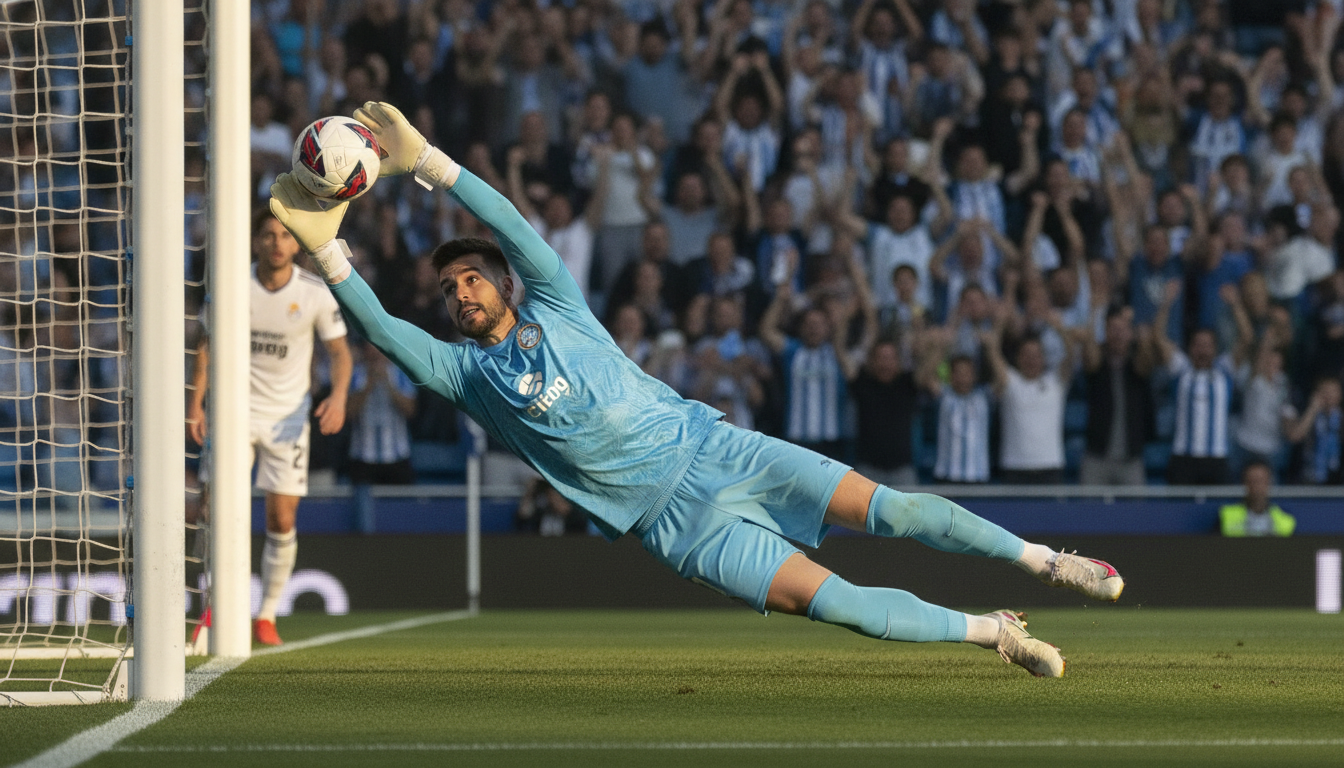
Celta to sign goalkeeper this summer as club strengthens goalkeeping ranks
Celta Vigo will sign a goalkeeper this summer to boost competition and depth, a move that stands regardless of Iván Villar’s future at the club.


Celta to sign goalkeeper this summer, the club confirmed, as it moves to reinforce its squad ahead of the new season. The decision to recruit a new goalkeeper is independent of Iván Villar’s contract situation and reflects a broader strategy to deepen goalkeeping options. With last season’s roster already counting three goalkeepers, the club sees a fresh addition as necessary to maintain performance and cover across competitions.
Celta’s goalkeeper recruitment drive
The club has made a clear decision: Celta to sign goalkeeper this transfer window as part of a wider plan to upgrade the position. Sporting staff have evaluated the squad and concluded that an additional experienced or promising shot-stopper will raise training standards and ensure reliable cover across all competitions. This recruitment is positioned as a proactive measure to preserve the club’s competitiveness rather than simply as a reaction to a single player’s status.
Celta’s planning reflects standard squad management practices at top-flight clubs, where having three senior goalkeepers is considered prudent for an intensive campaign. The coaching staff and sporting directors have prioritized a profile that complements the current pecking order, adding either a seasoned competitor to push the established starter or a developing talent capable of stepping in when needed. The club’s public stance emphasizes strengthening the goalkeeping unit as a whole.
Marc Vidal’s departure creates room for a signing
The recent termination of Marc Vidal’s contract, who did not make a first-team appearance, has opened a roster spot and freed up resources for Celta to reinforce the position. Vidal’s exit resolves an immediate numerical imbalance and gives sporting management the latitude to pursue a goalkeeper who better aligns with the coach’s requirements. The move was handled administratively and now allows Celta to accelerate its search without necessarily compromising squad depth.
Vidal’s departure illustrates how clubs reshape their squads in the off-season, particularly in roles with limited game rotation like goalkeepers. By clearing the roster, Celta can contemplate either recruiting an experienced back-up or investing in a younger prospect, depending on availability and strategic fit. The club’s priority remains ensuring competitive training for the incumbent starter and having dependable alternatives during a congested calendar.
Claudio Giráldez wants three goalkeepers
Head coach Claudio Giráldez has been explicit in his preference for a goalkeeping roster that includes three specialists, a model he believes sustains internal competition and match preparedness. Giráldez views Radu as his first-choice goalkeeper but is intent on ensuring that the Romanian remains challenged in training and does not become complacent from extensive playing time. To that end, the coach supports adding a new goalkeeper who will offer credible competition and keep standards high.
The coach’s approach mirrors contemporary coaching philosophies that prioritize depth and rivalry for starting places as drivers of performance. Giráldez’s insistence on trio coverage indicates that any new signing is meant to be an active participant in training dynamics rather than a nominal backup. This stance also signals to current squad members that their positions will be contested, reinforcing professional standards across the group.
Radu established as starter but underlined need for competition
Radu remains the clear first-choice goalkeeper for Celta, a role the coaching staff endorses while simultaneously seeking to avoid overreliance on a single player. The rationale for recruiting another goalkeeper is not to displace Radu but to provide a level of quality and challenge that sustains his form over a long season. Match load, injuries, and fixture congestion make depth essential, and the club wants to ensure seamless continuity if circumstances require rotation.
Keeping Radu sharp through meaningful competition will also be important should Celta engage in domestic cups or European fixtures where squad rotations are common. The presence of an experienced back-up or a highly rated understudy can serve as insurance and facilitate tactical flexibility. The club’s medical and performance teams are likely to have briefed sporting directors on the necessity of this redundancy in the goalkeeping department.
Potential impact on Celta Fortuna and Coke Carrillo
One internal consequence of recruiting a new goalkeeper is the potential movement of Coke Carrillo, whose promotion to the first-team squad could leave Celta Fortuna without its established starter in Segunda División. The coaching staff is weighing the benefits of elevating young talent against the competitive needs of the B team, which relies on consistent goalkeeping to develop and stabilize results. If Carrillo is drafted into first-team duties, the club must identify a successor to preserve Fortuna’s competitive balance.
Celta’s broader development model prioritizes a clear pathway from youth ranks to senior football, but such transitions require careful timing. Promoting Carrillo would be a vote of confidence in his progress, yet it could create a short-term gap at Fortuna that the club would need to fill either internally or via a loan. Sporting directors will have to coordinate departures, promotions, and signings to ensure both squads remain well-equipped for the coming campaign.
Iván Villar’s contract and standing within the club
Iván Villar, a long-serving member of the squad and one of the team captains, has one year remaining on his contract, and the club has stressed respect for his tenure irrespective of summer signings. Villar’s limited playing time last season—five appearances, comprised of three Copa del Rey matches and two Europa League outings—has not altered his status as a respected figure within the dressing room. The club’s approach balances honoring his service while managing the practical needs of squad construction.
Across his years with Celta’s first team, Villar has accumulated 78 official appearances, a record that underlines his contribution to the club over nearly two decades affiliated with the institution. Management has indicated that any decisions regarding Villar’s future will be handled with sensitivity to his role and leadership. The addition of another goalkeeper is framed as an organizational choice rather than a direct commentary on Villar’s position.
Squad management and strategic implications for the transfer window
Adding a goalkeeper this summer sits within a larger transfer strategy that targets squad stability and competitive depth. Celta’s recruitment team is balancing short-term needs—ensuring a reliable back-up and challenging the starter—with long-term considerations such as player development and market value. The goalkeeping market can be selective, and the club will likely favor a candidate who brings immediate credibility without undermining the progression of homegrown talents.
Financial and regulatory factors also inform recruitment decisions, as clubs manage wages, registration rules, and roster ceilings. Any incoming goalkeeper will need to fit both the sporting profile and the club’s budgetary constraints, with sporting directors prioritizing versatility, character, and readiness to contribute. The outcome of this search will shape training dynamics and influence tactical options available to the coaching staff.
Celta’s communication around the recruitment underscores a deliberate approach intended to avoid destabilizing players while delivering competitive reinforcement. By framing the signing as part of a strategic plan, the club aims to preserve locker-room harmony and ensure clarity of purpose ahead of pre-season preparations.
What this means for the upcoming season
The decision to add a goalkeeper signals Celta’s intent to maintain high standards in goalkeeping and to prepare for the demands of the season ahead. A reinforced goalkeeping unit should help the team weather injuries and fixture congestion while sustaining performance levels across competitions. For fans and stakeholders, the move conveys ambition and a commitment to protect a position that often proves decisive across campaigns.
Tactical flexibility, squad rotation, and the safeguarding of young prospects are all likely to benefit from the recruitment if executed with care. The coaching staff will need to integrate any new arrival into a well-established dressing room culture, ensuring that competition yields performance improvements rather than friction. Ultimately, the success of this operation will be judged on consistency and the seamlessness with which the club navigates the season.
Iván Villar remains an integral member of the group, but the club’s proactive stance shows how Celta plans to align respect for long-serving players with the practical necessities of modern squad building. The coming weeks will reveal whether the club targets an experienced campaigner, an emerging talent, or a trade that balances first-team needs with the development pathway.