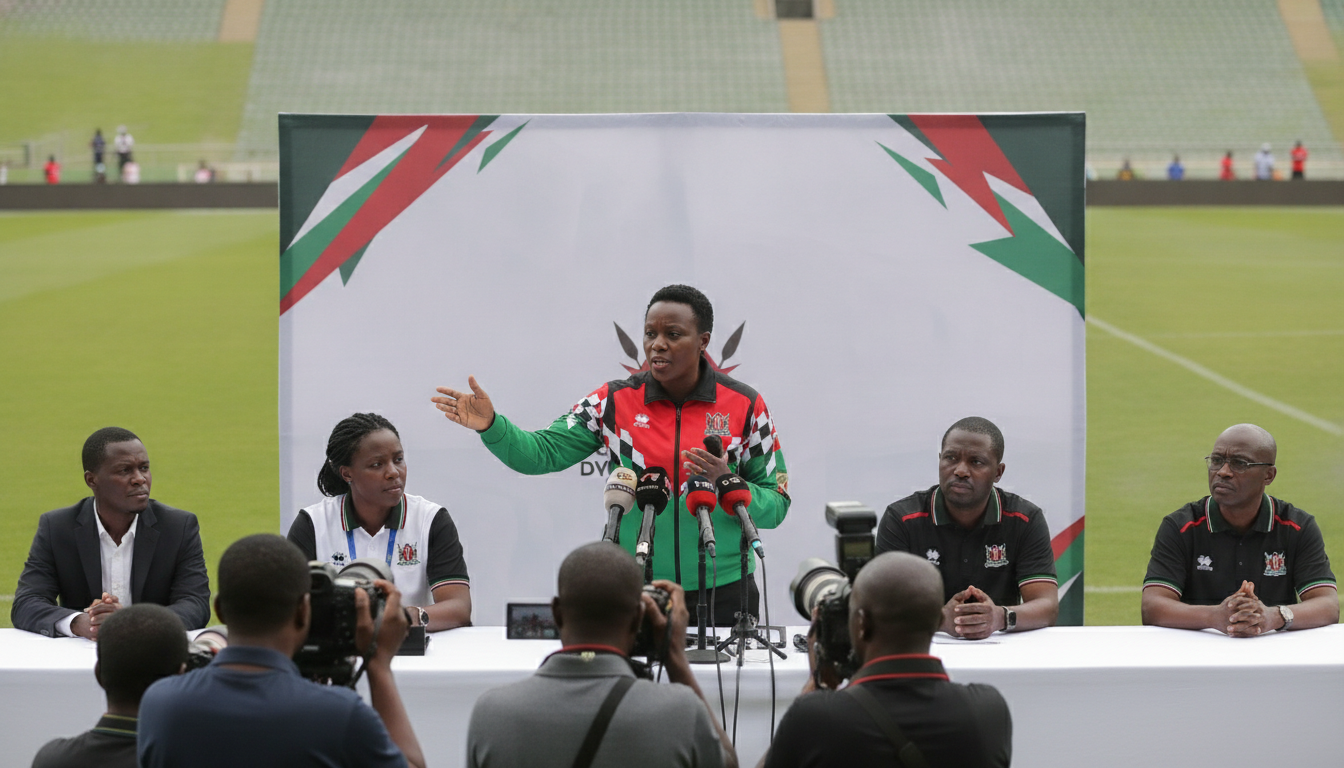
Kenya WAFCON 2028 bid pushed by Harambee Starlets coach as State House plea
Harambee Starlets coach Beldine Odemba urged President and ministers to back a Kenya WAFCON 2028 bid, citing AFCON 2027 infrastructure and a call for national broadcast rights.


Harambee Starlets coach Beldine Odemba used a State House breakfast on Tuesday to formally urge the Kenyan government to mount a bid to host the 2028 Women’s Africa Cup of Nations, arguing that the country is already preparing the infrastructure through AFCON 2027 projects. Odemba said Kenya’s stadium upgrades and recent construction work, including the Raila Odinga Talanta City International Stadium, provide a ready foundation to stage Africa’s premier women’s tournament. The coach made a public appeal for political and administrative support and specifically asked for national broadcaster access to ensure Kenyan fans can follow the team.
Odemba presses for immediate WAFCON 2028 bid
Odemba told the President that with Kenya co-hosting the men’s AFCON in 2027, the momentum and facilities should make a WAFCON 2028 bid both logical and achievable. She framed the request as a strategic follow-on that would leverage sunk infrastructure investments and bring the continent’s top women’s teams to Kenyan soil. The appeal was presented as a timely opportunity to elevate Kenya’s standing in African football and to mark a first for East Africa.
State House presentation highlights stadium readiness
At the breakfast, Odemba cited ongoing stadium renovations and new builds as the principal argument for hosting the tournament. She identified projects under way to prepare venues for AFCON 2027 and said those same venues could accommodate a tournament of WAFCON’s scale the following year. The coach emphasized that shorter lead times would reduce additional capital expenditure while maximizing the return on existing upgrades.
Call for free-to-air broadcast of WAFCON
Odemba made a direct appeal for the government to secure free-to-air broadcast rights for the tournament on Kenya Broadcasting Corporation, mirroring the arrangement used for the current FIFA World Cup. She argued that national televising would unify public support, allowing millions of Kenyans to watch and cheer the Starlets through their campaign. The broadcast plea was presented as both a civic good and a means to raise the profile of women’s football in Kenya.
Linking AFCON 2027 preparations to WAFCON logistics
The coach underscored the operational synergies between AFCON 2027 planning and a potential WAFCON 2028 hosting plan, noting shared needs such as transport logistics, accommodation, and security protocols. She maintained that leveraging existing supplier contracts and venue schedules would streamline the transition between the men’s and women’s tournaments. Odemba also suggested that hosting consecutive continental events could build event-management expertise within local organizing bodies.
Focus shifts to upcoming U17 World Cup campaign
While pitching for WAFCON 2028, Odemba kept the immediate spotlight on the team’s short-term competitive goals, specifically the 2026 FIFA U-17 Women’s World Cup in Morocco scheduled to start on July 25, 2026. She stressed that sustaining success at youth level is essential if Kenya is to become a continental powerhouse. Odemba noted the Junior Starlets’ back-to-back U17 World Cup qualifications as evidence of a growing talent pipeline that would feed senior teams in coming years.
Push for contracts and cross-ministry talent scouting
Odemba used the occasion to press for structural support beyond a tournament bid, calling for formal contracts for her technical staff and a strengthened alliance between the ministries of sports and education. She appealed directly to Cabinet Secretary for Sports Salim Mvurya and Education counterpart Julius Ogamba to cooperate with the Football Kenya Federation and the Kenya Secondary Schools Sports Association. The coach argued that consistent, coordinated scouting and development programs are necessary to produce teams capable of qualifying annually for global youth competitions.
Government collaboration framed as long-term investment
The coach framed her requests to the President and cabinet as more than short-term favors, describing them instead as long-term investments in national sporting capacity. She said a coordinated approach involving ministries, federations and school sports would create a steady flow of elite players and enable Kenya to field competitive teams at every age level. Odemba suggested that sustained public backing, including guaranteed contracts for coaches and staff, would foster stability and continuity in preparation cycles.
Historic significance for East Africa if Kenya hosts WAFCON
Odemba highlighted that hosting WAFCON would mark a historic first for East Africa and would help cement Kenya’s status as an emerging continental football center. She argued that staging a major women’s tournament would not only bring economic benefits but also boost local interest and participation in the women’s game. The coach presented hosting as a legacy project that could accelerate investment in grassroots facilities and women’s leagues across the region.
Operational considerations and community impact
Beyond stadiums and broadcast rights, Odemba drew attention to the broader operational requirements of hosting WAFCON, including volunteer programs, medical facilities, and community engagement plans. She insisted that early government endorsement would allow planning bodies to integrate social development objectives into event design. The coach also said that ensuring accessibility and affordable ticketing should be part of any bid to maximize public participation.
International calendar and scheduling implications
Odemba acknowledged the compressed nature of international and youth competition calendars and suggested that careful scheduling coordination would be needed if Kenya were to host WAFCON in 2028 after AFCON 2027. She noted that collaboration with continental and global governing bodies would be essential to avoid clashes and to secure a smooth transition between tournaments. The coach emphasized that advanced planning would be required to align domestic league schedules, national team camps, and venue availability.
Broadcasting as a lever for women’s football growth
The coach’s appeal for free-to-air coverage was framed as a tool to grow the women’s game commercially and culturally. Odemba argued that visible role models on mainstream television would inspire girls to participate and would attract sponsors looking for broad audience reach. She suggested that secure broadcast arrangements would help build the narrative of Kenyan teams on the continental stage.
Financial and legacy benefits outlined
Odemba drew attention to how hosting WAFCON could deliver economic stimulus through tourism, hospitality, and event services, while leaving a long-term sports legacy. She proposed that reuse of AFCON 2027 infrastructure for a WAFCON 2028 staging would enhance return on investment and justify the public spending already committed to venue upgrades. The coach framed the potential bid as fiscally sensible if it capitalized on recent capital works.
Calls for institutionalizing youth pathways
To sustain competitive results, Odemba advocated for institutional mechanisms that would ensure a yearly pipeline of U17 talent rather than ad hoc scouting. She urged that school sports programs be integrated with national talent identification strategies and that the FKF and KSSSA coordinate to maintain consistent player pathways. The coach emphasized that institutional reforms would be as important as episodic tournament success.
Potential obstacles and political will
Odemba’s pitch acknowledged potential challenges, including the political will and budget allocations required to formalize a bid and to guarantee broadcast and staff contracts. She positioned her requests as pragmatic steps that require decision-making at the highest levels of government to accelerate planning and secure commitments. The coach made it clear that timely action would be necessary to meet CAF’s host selection timelines should Kenya decide to bid.
Kenya’s football leadership now faces a decision point: to leverage AFCON 2027 readiness and press ahead with an ambitious WAFCON 2028 hosting campaign, or to prioritize incremental development focused on youth systems and domestic competitions. The coach’s remarks at State House put the spotlight on both possibilities and left the final choice to political and sporting authorities.
The outcome will shape the next phase of Kenyan women’s football, determining whether the country pursues a landmark hosting role while seeking to institutionalize success at youth level.