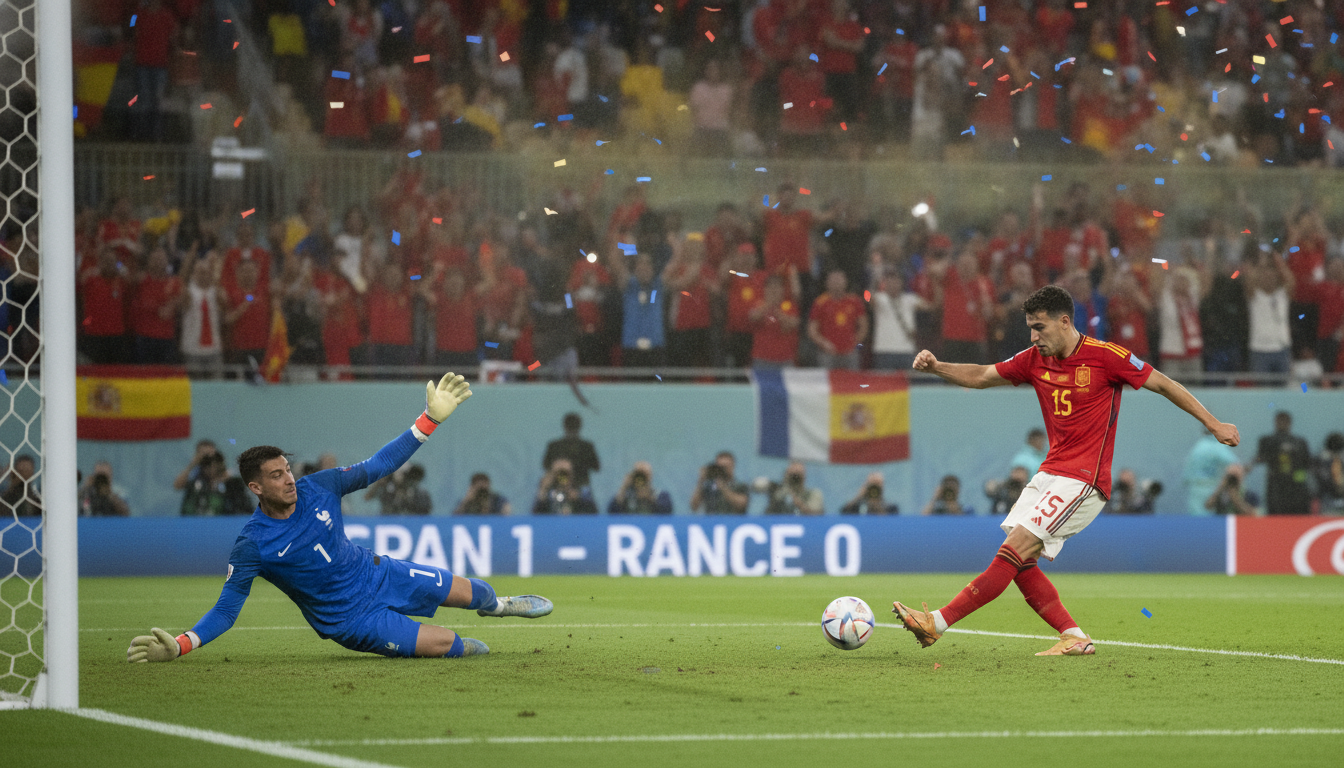
Spain beat France 2-0 in Dallas to reach World Cup final
Spain beat France 2-0 in Dallas as Mikel Oyarzabal converted a penalty and Pedro Porro scored to send La Roja into the World Cup final, where they will face England or Argentina on Sunday.


Spain beat France decisively in a tactical contest at AT&T Stadium in Dallas, with Mikel Oyarzabal’s penalty and Pedro Porro’s strike securing a 2-0 victory that books a place in the World Cup final. The European champions produced a disciplined performance that limited France’s attacking threat and preserved a sixth clean sheet in seven matches. Spain now await the winner of the England v Argentina semi-final in Atlanta, with the final scheduled for Sunday in East Rutherford, New Jersey. The result was a statement win that blended defensive organisation with clinical finishing at key moments.
Match-defining moments in Dallas
Mikel Oyarzabal’s penalty opened the scoring and set the tone for Spain’s control of the contest. The spot-kick came after a sustained period of pressure and was executed with composure to give Spain the lead. Pedro Porro added a second goal later in the match to seal the result and remove any doubt about the outcome. Those two moments proved decisive in a game that otherwise featured few clear openings for either side.
France created dangerous situations through moments of individual quality, but Spain’s structure repeatedly disrupted passing lanes. Kylian Mbappé and his teammates found limited space between the lines, and the French front line was unable to convert sporadic opportunities. Spain’s timely interventions and quick recovery runs restricted France’s build-up play, forcing the visitors into longer passes and rushed choices. The final phases saw Spain manage the game efficiently, closing down counterattacks and shepherding possession away from danger.
Penalty and Porro finish explained
The penalty call followed a Spain attack that probed France’s defence until an infringement was committed in the box. Oyarzabal, who has been a reliable presence in front of goal throughout the tournament, stepped up to take the spot-kick and delivered without hesitation. The conversion gave Spain the psychological advantage that often changes the complexion of knockout ties.
Porro’s goal came as the result of decisive movement and clinical execution inside the attacking third. He arrived at the right moment to finish a team sequence that had stretched France’s defensive shape. The strike underlined Spain’s capacity to convert moments of control into clear scoring chances. Taken together, the two finishes showcased a balance between patience and ruthlessness in Spain’s attacking play.
Spain’s defensive template: six clean sheets
A defining feature of Spain’s run has been defensive consistency, with the side keeping a sixth clean sheet in seven matches of the tournament. Across the competition they have conceded only once, a statistic that highlights organisation, goalkeeper reliability and disciplined team defending. The back line and midfield have combined to limit transitions and close gaps that opponents have tried to exploit.
That low concession rate has allowed Spain to play with calculated risk in possession, confident that defensive responsibilities will be met when turnovers occur. Opponents have found it difficult to break Spain down through sustained possession or direct play. The result in Dallas reinforces the idea that Spain’s route to the final has been built on a blend of tactical discipline and compactness across the pitch.
Tactical approach and containment of France’s attack
Spain deployed a compact shape that prioritized midfield control and defensive balance to blunt France’s forward options. By congesting central zones and forcing play wide, Spain reduced the influence of France’s key creative players. The approach limited through balls and delayed French build-up, allowing Spain to win the second balls that often fuel counterattacks.
Defensive transitions were swift, with Spain’s midfielders immediately applying pressure upon loss of possession. That intensity made it difficult for France to build sustained threats through the middle or find Mbappé in dangerous pockets. Spain’s tactical plan was clear: neutralize the fastest routes to goal and rely on set-pieces and calculated attacks to create scoring opportunities.
Historical context and a potential repeat of 2010
Spain’s progress to the final evokes echoes of past success, notably the country’s 2010 World Cup triumph that followed their European Championship win two years earlier. As current European champions, La Roja now have the chance to mirror that sequence once more by lifting the World Cup after continental glory. The potential repeat would cement a period of continuity between Spain’s recent and historic peaks.
A final against either Argentina or England will attract added narrative weight given recent encounters at major tournaments, including the Euro 2024 final that featured Spain and England. The likelihood of familiar matchups adds context to what would already be a high-stakes match in East Rutherford. For a Spain side that has blended youth, experience and system, the occasion will represent a chance to confirm their standing on football’s biggest stage.
Path forward and the opponent to be determined
Spain will have a brief window to recover and prepare before the final, with the Argentina v England semi-final scheduled to take place in Atlanta on Wednesday. That match will determine Spain’s opponent and shape the tactical preparations for the title game on Sunday. Coaching staff will analyze the winner’s strengths and weaknesses and adjust Spain’s approach accordingly, but the core defensive principles are likely to remain central.
Attention will also fall on squad management and recovery, with minutes for key players being weighed against fitness needs ahead of the final. The coaching staff faces the task of maintaining momentum while avoiding fatigue from a long tournament campaign. For supporters and neutral observers alike, the weeks ahead promise intense scrutiny as teams ready themselves for the season’s showpiece.
Spain’s result will also influence broader tournament narratives, from player legacies to national expectations. A World Cup final appearance raises individual profiles and provides a platform for players to enhance international reputations. The outcome in East Rutherford could reshape conversations around coaching credentials, player development and national footballing trajectories for years to come.
Spain beat France through a blend of disciplined defending and effective finishing, setting up a World Cup final appearance that carries historical resonance and high anticipation. The team’s six clean sheets and single goal conceded underlined a tournament-long defensive resilience, while goals from Oyarzabal and Porro demonstrated the timely attacking edge Spain can summon. As they prepare for the final, Spain will study the England v Argentina result, refine tactical plans and manage physical recovery with the aim of securing a second World Cup title.