President Ruto Pledges Ksh 100 Million Boost for AFC Leopards Sponsorship
President William Ruto gives AFC Leopards Ksh 35m at State House and pledges Ksh 25m more, raising the AFC Leopards sponsorship to a promised Ksh 100 million.

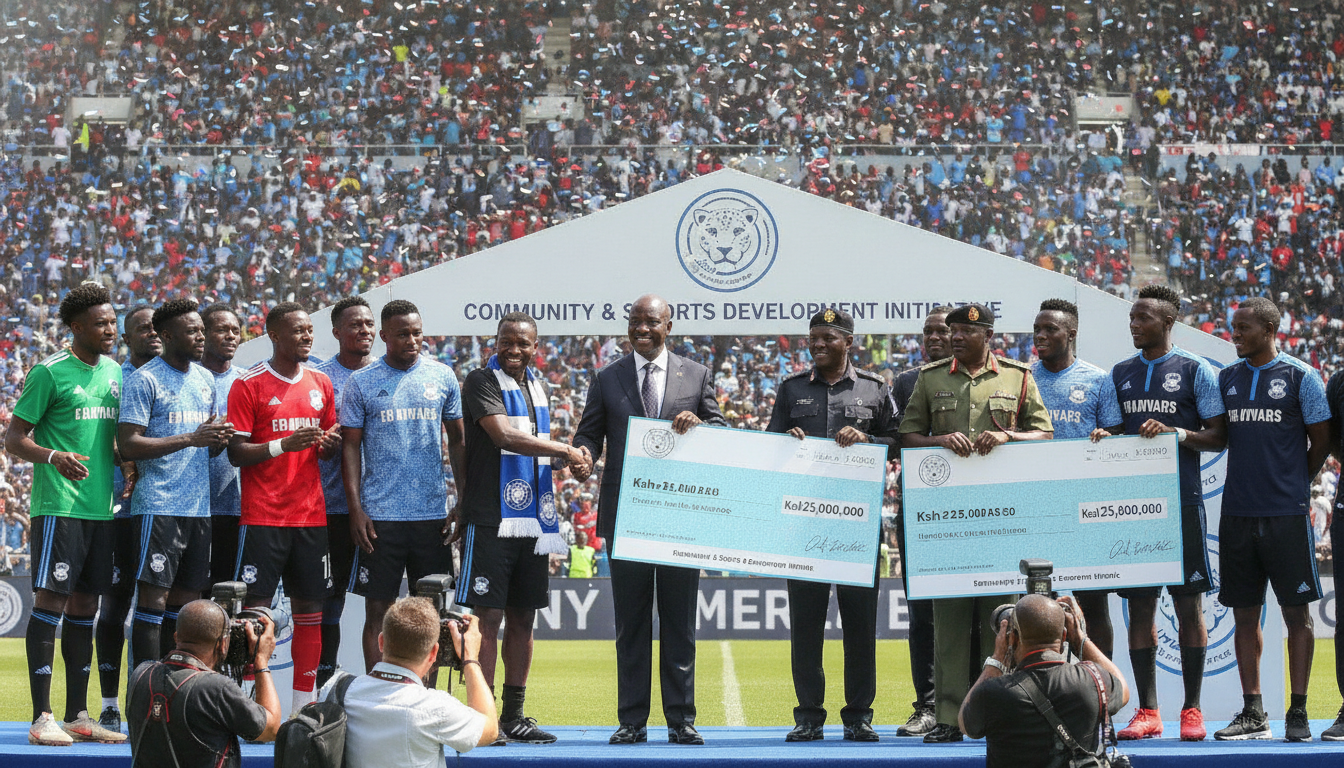
President William Ruto hosted AFC Leopards at State House on Tuesday, handing the 12-time FKF Premier League champions Ksh 35 million and pledging an additional Ksh 25 million to bring the club’s AFC Leopards sponsorship to Ksh 100 million. The gift included a Ksh 10 million cash disbursement split between player and technical team rewards and transfer funding, with the remainder intended to support the club’s broader preparations. The announcement came amid celebrations in the State House reception and represents the latest of several high-profile injections into Kenyan club football by the president in recent weeks.
Details of the Ksh 35 Million Disbursement
The Ksh 35 million announced during the State House meeting was delivered in distinct components designed to meet immediate and short-term needs. President Ruto gave Ksh 10 million directly, which the club indicated would be divided between bonuses for players and staff and funds for the transfer window. The remaining Ksh 25 million was pledged to top up an existing sponsorship, with the explicit aim of taking the AFC Leopards sponsorship to Ksh 100 million.
Club officials and supporters at the State House reception welcomed the package, describing it as timely for a side preparing for domestic and continental commitments. The donation was presented as both a reward for recent performance and a strategic investment in the club’s competitive ambitions.
How the Pledge Affects AFC Leopards Sponsorship Plans
The president’s pledge to increase the AFC Leopards sponsorship to Ksh 100 million is intended to supplement an already reported Ksh 75 million deal that the club had secured from private partners. The additional Ksh 25 million from State House funds is framed as a targeted injection to expand the club’s operational capacity and strengthen its transfer budget. Club administrators are expected to detail how the combined sponsorship will be allocated across squad reinforcement, logistics, and competition preparedness.
Leaders at AFC Leopards face immediate choices about prioritizing short-term bonuses and transfer activity versus longer-term investment in infrastructure and youth development. The boost to the sponsorship pot alters the club’s financial planning window and creates expectations among supporters for visible improvements on and off the pitch.
State House’s Recent Engagement with Kenyan Football
AFC Leopards’ visit follows a series of similar State House engagements with top Kenyan clubs and national teams over the past weeks. Gor Mahia visited State House on June 7 and received player bonuses plus a Ksh 10 million grant intended to aid their preparation for continental competition. Migori Youth, the National Super League champions, were hosted on July 13 and left with a new team bus and a Ksh 10 million grant. Shabana also benefited recently with a new bus valued at Ksh 27 million, a Ksh 20 million grant, and a pledged Ksh 1 billion toward stadium refurbishment.
The president has regularly framed these meetings as strategic investments in youth and national development, emphasizing that support for sports is part of governance rather than ceremonial outreach. State House hosts have included senior national teams, and the president has publicly connected such support to broader economic and social goals.
Officials’ and Club Responses in Nairobi
Club executives and league officials who attended the State House meeting expressed gratitude and highlighted practical uses for the funds. AFC Leopards’ leadership noted that immediate portions would be used to reward the playing squad and technical staff, while the transfer-related allocation would be deployed to bolster the squad depth. Supporters present at the reception applauded the injection, viewing it as a sign of renewed institutional backing for one of Kenya’s most storied clubs.
League officials welcomed the show of support but also reiterated the need for transparent reporting and professional governance as clubs receive state and private funding. Observers asked for clarity on timelines and conditions attached to the pledges to ensure the money delivers measurable gains on the pitch and in club administration.
Implications for Competition and Player Recruitment
The Ksh 100 million sponsorship target for AFC Leopards, if realized, could have tangible effects on recruitment, contract stability, and competition in the FKF Premier League. Increased funds may allow the club to pursue higher-profile signings, improve player wages, and cover logistical costs associated with domestic and continental fixtures. Such financial breathing room can also reduce mid-season transfer uncertainty and help the coaching staff maintain a consistent selection and tactical approach.
However, financial injections can raise expectations and scrutiny. The club will need to manage supporter demands while safeguarding long-term sustainability, balancing immediate competitive ambitions with investments in youth structures and club operations.
Broader Sports Policy and Government Rationale
President Ruto has positioned these interventions as part of a broader policy that treats sports as an investment in the nation’s youth and economic future. In remarks at the State House reception, he said sports engagements were not incidental and framed government support as both social policy and talent development. The president has argued that strategic backing for clubs and national teams can raise the country’s profile, create jobs, and unlock commercial partnerships.
This approach aligns with recent public events where ministers and sports administrators have discussed the link between state support and enhanced performance on continental stages. Officials stress that sustained funding must be paired with governance reforms to maximize the return on public and private contributions to the sports sector.
AFC Leopards supporters and football stakeholders will watch how the club translates this new funding into competitive gains and sustainable club management. The coming transfer window and early-season fixtures will offer the first real test of whether the pledge delivers measurable improvement.
The State House interventions have sparked debate about expectations, transparency and the role of government in club football, but for AFC Leopards the immediate impact is concrete: cash for players, resources for transfers and a substantial promise that could reshape the club’s budget for the season. The club’s next public communications are likely to focus on how the funds are allocated and on setting targets that justify the president’s investment.