Harambee Starlets allowances cleared as government disburses Ksh20 million ahead of WAFCON
Kenya confirms payment to the Harambee Starlets after government disburses Ksh10 million reward and Ksh10 million to settle allowances, securing the squad’s WAFCON participation.

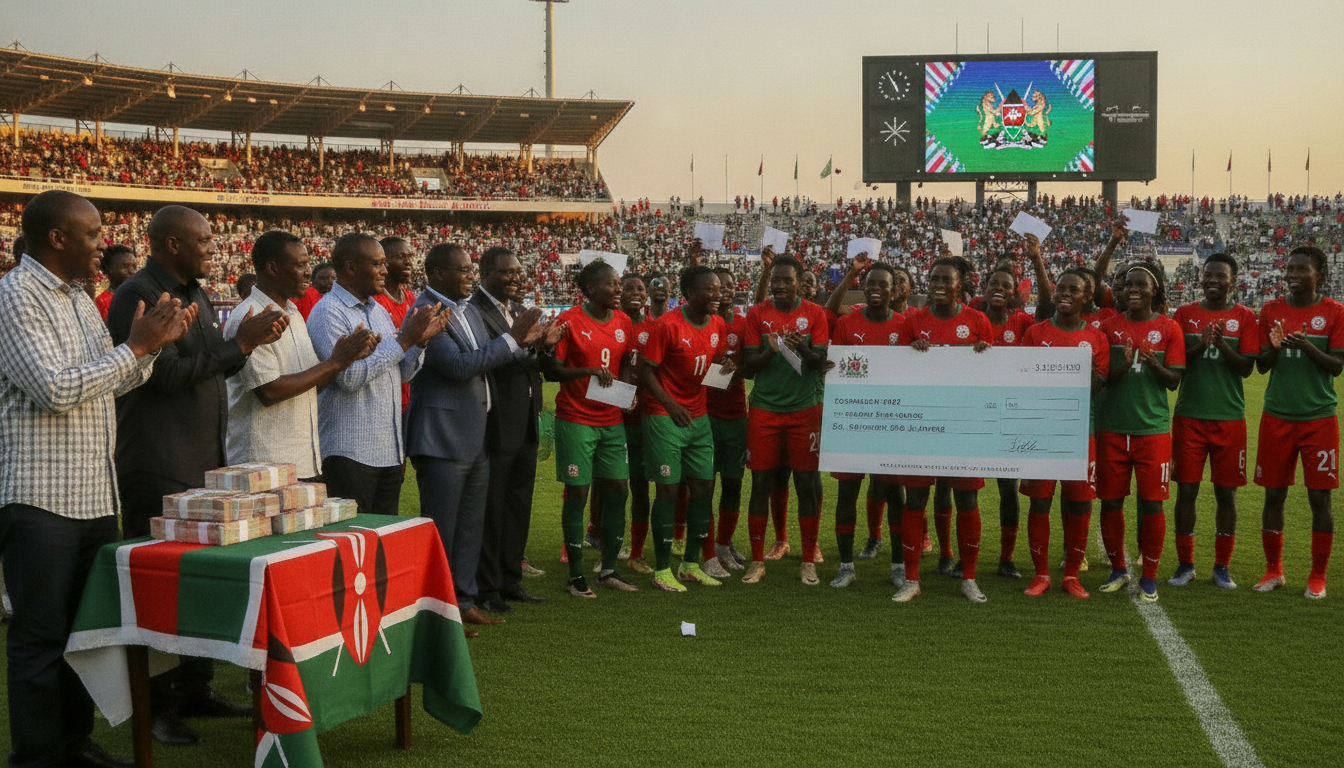
The government has fulfilled a pledge to the national women’s team, the Harambee Starlets, by releasing Ksh10 million as a performance reward and a further Ksh10 million to clear outstanding allowances ahead of the Women’s Africa Cup of Nations. The payments follow a high-profile protest by players at Football Kenya Federation headquarters and urgent intervention from senior sports ministry officials. The move ends a standoff that threatened Kenya’s preparations for the tournament in Morocco beginning July 26.
Government disburses Ksh20 million to Harambee Starlets
Sports Principal Secretary Elijah Mwangi confirmed that the two separate payments have been processed and credited to players’ accounts, fulfilling commitments made by President William Ruto earlier this week. The first tranche, described as facilitation funds, was the Ksh10 million reward the president promised, while the second Ksh10 million was allocated specifically to settle arrears on allowances owed to the squad. Ministry officials signalled the payments were part of a broader plan to ensure the team travels without financial distractions.
Officials also indicated that the ministry is preparing an additional support package linked to tournament progress, to be negotiated with the federation should the team reach later stages. That package would mirror arrangements used previously for the men’s squad during continental competitions, and is intended to provide further motivation and logistical backing. Mwangi said the objective is to avoid repeat disputes and to align incentives with performance on the pitch.
Players storm FKF headquarters over unpaid allowances
Tensions escalated earlier in the day when a group of Harambee Starlets players marched into Kandanda House, the Football Kenya Federation headquarters, demanding payment of dues before they would commit to upcoming WAFCON fixtures. Video clips circulating on social platforms showed players chanting and making their demands audible, signalling they would not board preparations or attend competitive fixtures without settlement of their claims. The protest underscored lingering frustrations over delayed payments that had affected multiple national teams across recent cycles.
The public demonstration put the federation and the ministry under intense scrutiny, with supporters and media forced to weigh the optics of a national team in public dispute days before a major continental tournament. FKF representatives held emergency consultations with ministry officials as the situation unfolded, and urged restraint while promising to expedite administrative processes. The players’ action highlighted ongoing governance and payment challenges within Kenyan football and the urgency for clear, reliable payment channels.
Ministry officials intervene to defuse the protest
Cabinet Secretary Salim Mvurya and Principal Secretary Elijah Mwangi moved quickly to engage with both players and federation officials to prevent the standoff from escalating into a boycott of the WAFCON opener. According to ministry sources, the interventions combined direct dialogue with the squad, assurances of immediate payment, and administrative directives to FKF to normalise financial disbursements. The visible presence of senior officials helped calm tensions and facilitated a negotiated exit from the impasse that threatened Kenya’s participation.
Ministry representatives stressed that the government remains committed to supporting all national teams and that mechanisms are being strengthened to avoid similar crises in future. They warned that public protests risk reputational damage and can disrupt sporting performance, while also acknowledging that players have legitimate rights to demand timely remuneration. The approach taken in this episode blended conciliatory public statements with expedited administrative action to ensure both payment and continuity of preparations.
Payments processed to senior and junior national teams
Mwangi stated that the processed payments covered both the senior women’s team and the junior under-17 side, indicating a wider effort to settle arrears across age groups. The ministry said funds were routed to individual accounts in line with standard payroll and facilitation procedures, and players were invited to confirm receipt through their federative channels. Officials framed the move as corrective action aimed at restoring trust and reinforcing the principle that athletes must be supported materially while representing the country.
Federation officials have been asked to provide the ministry with a clear paper trail for future disbursements and to coordinate more proactively with the sports docket. The government also signalled it will work with FKF on an “agreeable formula” to determine additional bonuses tied to performance at WAFCON, mirroring previous arrangements for other national teams. That discussion is expected to cover incentive structures, travel facilitation, and treatment protocols should Kenya advance in the tournament.
Starlets depart for France camp ahead of WAFCON opener
With the financial dispute settled, the Harambee Starlets departed for a residential training camp in Miramas, France, as part of final preparations ahead of their WAFCON opener in Morocco on July 26. The camp is intended to provide focused training, acclimatisation and tactical work ahead of the Group A schedule that includes matches against the hosts, Senegal and Algeria. Team management expressed relief at the resolution, saying the squad can now concentrate fully on match preparation and fitness.
Coaching staff have described the France camp as a critical phase to fine-tune the side’s tactical identity and to integrate the squad after a period of uncertainty. Players will undergo a mix of on-field drills and recovery sessions, while technical staff use the controlled environment to finalise starting combinations and set-piece routines. The federation emphasised that logistics for the trip to Morocco were intact and that the team will travel in time for the opening match.
WAFCON Group A fixtures and stakes for Kenya
Kenya opens its WAFCON campaign against Morocco on July 26 and follows with fixtures against Senegal and Algeria in Group A, a draw that presents a mix of home advantage for the hosts and tough challenges for the Starlets. Progressing beyond the group stage would mark a significant achievement and unlock additional financial support and recognition for the squad, according to federation officials. The tournament represents both sporting ambition and a platform for players to showcase quality on the continental stage.
For Kenyan football, a positive performance at WAFCON could shift momentum and enhance investment in the women’s game domestically, including youth pathways and league development. Conversely, any disruption in team morale or preparation could hamper competitive prospects and reinforce systemic shortcomings that have surfaced in recent months. Stakeholders from the federation to the ministry have repeatedly flagged the tournament as an opportunity to demonstrate progress and to justify further resource allocation.
The resolution of the allowances impasse leaves the Harambee Starlets able to focus on the pitch, but it also serves as a reminder of the administrative and financial systems that must be strengthened if Kenyan football is to sustain progress at continental and global levels. Continued cooperation between the ministry, federation and players will be essential in the days ahead as the team seeks results in Morocco.