Stuttgart Confirmed Interest in Dzenan Pejcinovic Transfer as Wolfsburg Hold Out for Higher Fee
VfB Stuttgart have acknowledged their interest in the Dzenan Pejcinovic transfer; sporting director Fabian Wohlgemuth says the striker remains with Wolfsburg as talks over a fee continue.


Fabian Wohlgemuth confirmed on July 16, 2026, that VfB Stuttgart have been tracking VfL Wolfsburg forward Dzenan Pejcinovic and remain active in the market. The sporting director emphasized that the player is under contract with Wolfsburg and has returned to pre-season with his current club. Stuttgart have not closed the door on further moves as they assess options to reinforce their attacking line ahead of the new Bundesliga campaign.
Stuttgart confirm interest in Dzenan Pejcinovic
Wohlgemuth’s remarks to Zeitungsverlag Waiblingen represented the clearest public acknowledgment to date of Stuttgart’s pursuit of Pejcinovic. The club framed the dialogue as part of ongoing transfer monitoring rather than an advanced negotiation, underlining a professional approach to any potential deal.
Those comments came amid reports that Stuttgart opened talks with a structured offer, showing the club’s willingness to engage financially while remaining measured about the likelihood of a completed transfer. Stuttgart say they will continue to evaluate targets and that offensive reinforcements remain a priority as the window progresses.
Wohlgemuth stresses player contract and pre-season commitments
The sporting director made a point of highlighting contractual realities, noting that Pejcinovic is still bound to VfL Wolfsburg and is participating in their pre-season preparations. That stance signals Stuttgart’s awareness that any move would require agreement from Wolfsburg as well as the player’s consent.
Wohlgemuth also indicated the club’s desire to conduct discussions professionally and to avoid public speculation that could disrupt preparations at either club. His comments were framed to reassure supporters that Stuttgart are acting deliberately while monitoring opportunities to upgrade their forward options.
Wolfsburg valuation and rejected opening bid
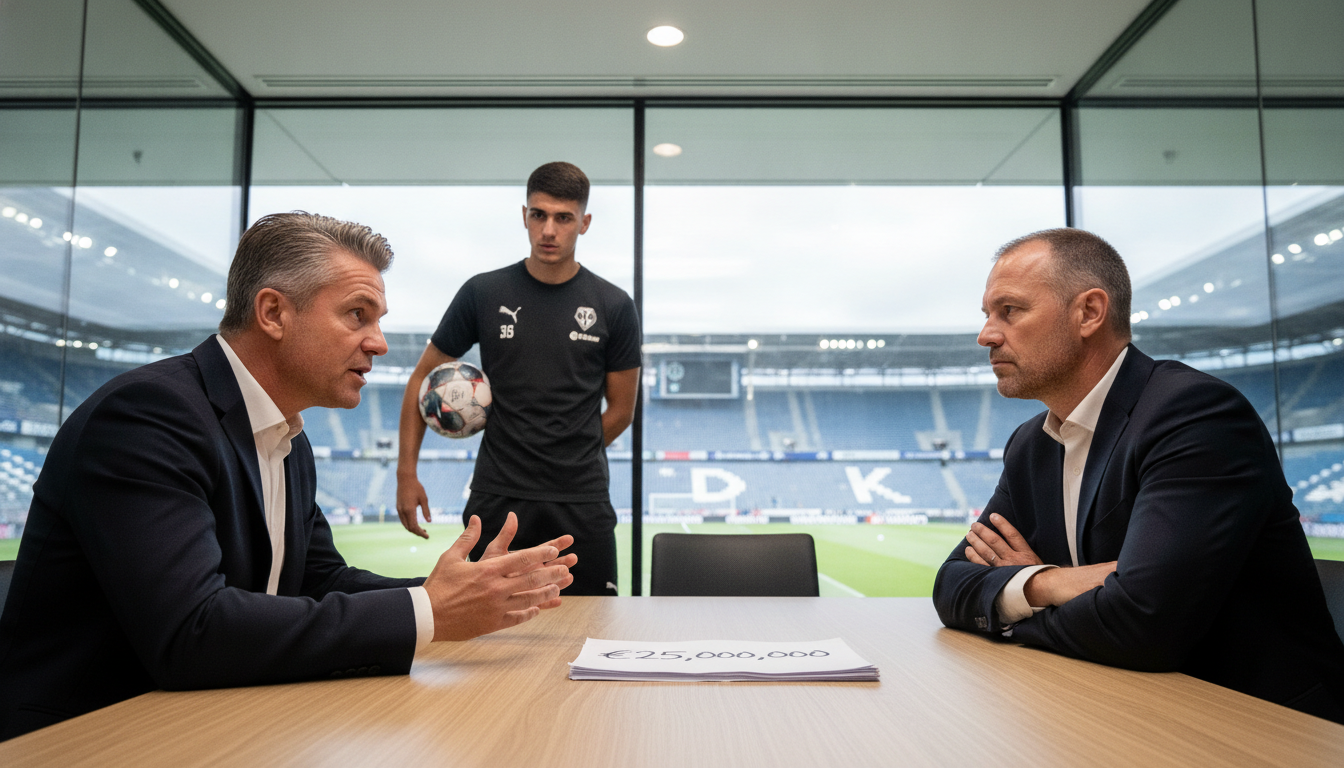
Reports indicate Wolfsburg turned down Stuttgart’s initial proposal of €18 million, structured with potential add-ons, with the Bundesliga side seeking a fee closer to €25 million. The valuation gap reflects Wolfsburg’s assessment of Pejcinovic’s potential and their leverage given his age and contract status.
The difference between the clubs’ positions leaves room for further negotiation, which could include performance-related add-ons, sell-on clauses, or staged payments to bridge the gap. Wolfsburg’s willingness to hold out for a higher return suggests they view Pejcinovic as a valuable asset rather than a mandatory sale this summer.
A resolution will depend on the two clubs’ appetite to compromise, the player’s preference, and the timing of any agreement as the transfer window advances. Financial terms, including bonuses and payment schedules, are likely to be central to any renewed talks.
Pejcinovic’s profile and appeal to Bundesliga suitors
At 21, Dzenan Pejcinovic has emerged as one of the Bundesliga’s promising young forwards who has attracted attention for his combination of physical presence and technical ability. Observers point to his movement in the final third and knack for arriving in scoring positions as attributes that fit several teams’ tactical profiles.
His age and potential development curve make him an attractive target for clubs looking to invest in a player who can contribute immediately and appreciate in value. Clubs across the league routinely prize such profiles, particularly when they can be integrated into systems that emphasize quick transitions and support for a central striker.
Pejcinovic’s market interest also reflects broader recruitment trends in Germany, where teams balance short-term competitive needs with long-term player development and value generation. For suitors like Stuttgart, that means weighing immediate reinforcement against the cost and the player’s fit within existing squad dynamics.
How Pejcinovic would fit Stuttgart’s attacking plans
Stuttgart have publicly signaled a desire to strengthen their offensive options, and Pejcinovic would address depth concerns up front while offering a youthful profile with resale value. His arrival could provide an alternative focal point in attack or serve as a complement to established forwards, depending on the coach’s tactical approach.
Tactically, a forward with Pejcinovic’s attributes can add variety to Stuttgart’s attacking patterns by providing holds-up play and finishing ability inside the box. That versatility would give the coaching staff additional options in match plans and could help mitigate the impact of injuries or form dips among the current striking corps.
Beyond the pitch, integrating a young, ambitious forward represents a strategic move for a club that often seeks to blend experience with emerging talent. Stuttgart would need to manage expectations and provide a clear development pathway to maximize both immediate contributions and long-term gains.
Negotiation dynamics and transfer window timing
The timeline of any potential agreement will be shaped by Wolfsburg’s valuation, Stuttgart’s transfer budget, and the player’s own stance on a move. With pre-season already under way for many clubs, deals at this stage of the window can hinge on rapid alignment or, conversely, stall until later in the summer if initial offers are insufficient.
Potential pathways include an improved structured offer from Stuttgart that narrows the fee gap, a loan with an obligation or option to buy that spreads financial risk, or Wolfsburg’s decision to retain the player and reassess his role for the season. Each option carries implications for sporting plans and financial reporting for both clubs.
Agents and intermediaries typically play an active role once clubs enter structured talks, making confidentiality and timing essential components of the process. Stakeholders will monitor how negotiations proceed, and any public statements are likely to be measured to avoid undermining leverage on either side.
In the short term, Stuttgart’s transfer strategy appears flexible, with the club open to additional moves that prioritize attacking reinforcements. Continued scouting and contingency planning will shape how aggressively they pursue Pejcinovic versus other targets.
The broader market context also matters; competing suitors, unexpected departures, or emergent injuries elsewhere in the squad could accelerate negotiations. For Wolfsburg, finding a buyer that meets valuation expectations will be balanced against sporting considerations about the player’s role in the coming season.
The final decision will hinge on a practical assessment of cost, player ambition, and squad needs, rather than on public pressure. Both clubs are likely to weigh the merits of a quick resolution against the potential long-term value of holding firm.
Pejcinovic’s future remains open, with Stuttgart positioned as a credible suitor and Wolfsburg intent on extracting significant value. Talks may resume in the coming days as the transfer window continues, and observers will be watching to see whether an agreement can be struck that satisfies both clubs and the player.
As negotiations continue, all parties will be mindful of timing, financial structure, and the sporting impact of any move, making the coming weeks decisive in determining whether the Dzenan Pejcinovic transfer will progress or remain unresolved.