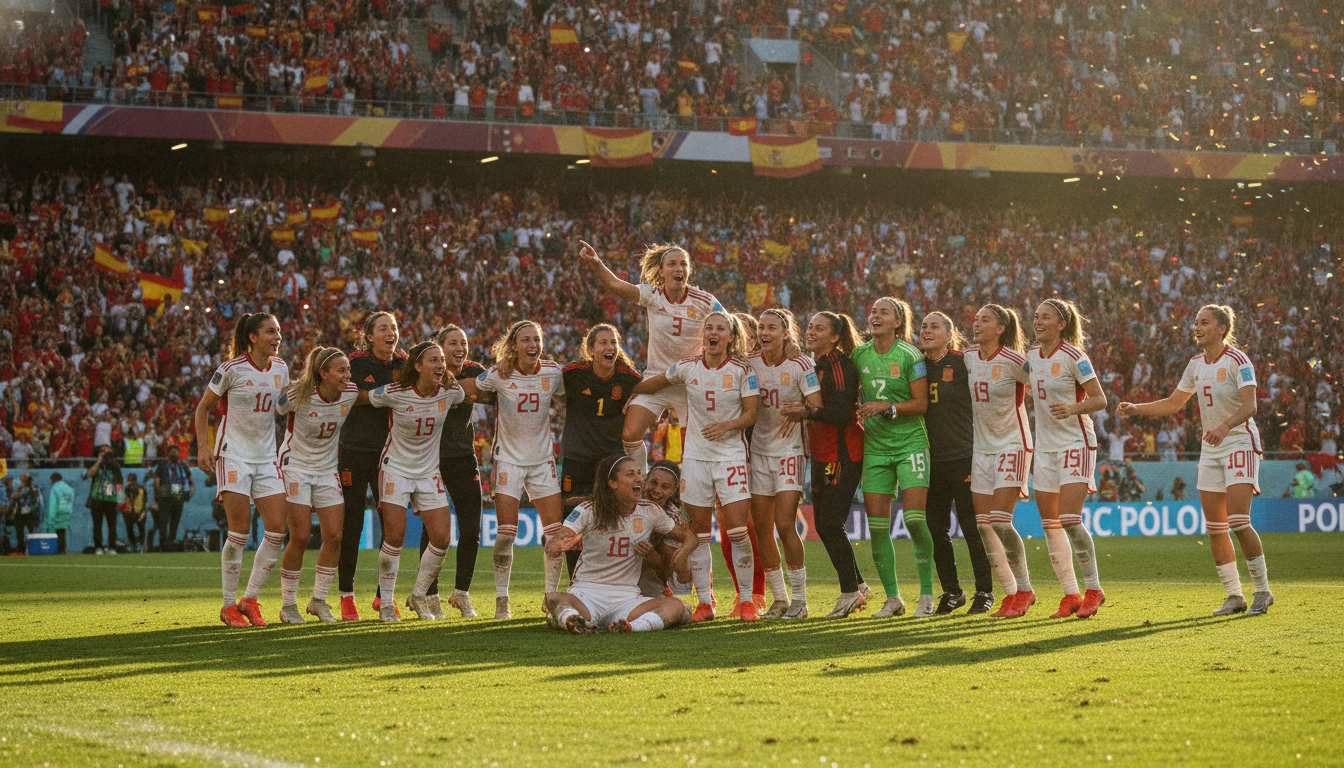
Spain Reach World Cup Final After 2-0 Semi Over France, Set to Face Argentina in New Jersey
Spain reach the World Cup final after beating France 2-0 and will now face Argentina at MetLife Stadium on July 19. The European champions advanced with a controlled semi-final display that emphasized structure and collective discipline. (investing.com)


Spain’s route to the New Jersey final
Spain secured the semi-final victory over France with a composed performance that produced two decisive moments in Dallas. Mikel Oyarzabal converted a penalty after Lamine Yamal won the spot-kick, and Pedro Porro added a second to seal a 2-0 win that booked a place in the final. (fifa.com)
That result completed a knockout run built on defensive consistency and timely attacking contributions from a spread of players. The victory set up a title match in East Rutherford, where MetLife Stadium will host Spain and Argentina on Sunday, July 19. (fifa.com)
Collective identity drives results
Spain’s progression to the World Cup final has been defined by a deliberate team-first philosophy rather than reliance on a single superstar. Coach Luis de la Fuente has repeatedly framed the side’s success as the product of a collective system in which roles are shared and responsibilities are broadly distributed. (scmp.com)
That approach was evident against France, where Spain limited clear chances and managed the game tempo through coordinated pressing and possession control. The team’s discipline in defensive phases and its ability to manufacture openings without a single dominant scorer have become hallmarks of their campaign. (fifa.com)
Lamine Yamal’s influence, measured
Lamine Yamal remains the tournament’s most talked-about Spaniard and supplied the spark that led to the semi-final penalty, but Spain’s model has never asked him to carry the side alone. The 19-year-old celebrated his birthday on the eve of the match and emerged as a decisive presence, drawing fouls and stretching opposition defenses with his pace and agility. (apnews.com)
Despite the headlines around Yamal, Spain have spread attacking output across several forwards and midfielders, with Mikel Oyarzabal and substitute Mikel Merino providing crucial goals at different stages of the knockout rounds. That balance has kept opponents guessing and preserved Spain’s tactical flexibility heading into the final. (investing.com)
Defence and depth underpin the run
Spain’s defensive record has been a defining statistic of the tournament, with the team conceding only once through the opening rounds and relying on a compact backline that limits high-quality chances. Midfield protection from Rodri and the emergence of young centre-back Pau Cubarsí have allowed full-backs and wingers to press with confidence without exposing the defence. (sports.yahoo.com)
Goalkeeper Unai Simón has been central to that solidity, compiling long minutes without conceding and making key saves when called upon. The combination of an organized defensive block and a deep pool of substitutes has given coach Luis de la Fuente tactical options late in matches, a factor that produced late winners in earlier knockout games. (sports.yahoo.com)
Luis de la Fuente’s continuity and control
Luis de la Fuente has overseen a period of sustained progress since taking charge in 2023, building a group that reflects a shared footballing education and familiarity with his methods. Many of the squad’s core players were developed within Spain’s youth structure and have adapted smoothly to a senior system that emphasizes coordination over individual brilliance. (sports.yahoo.com)
De la Fuente’s emphasis on squad unity, role clarity and gradual evolution has produced measurable results at major tournaments, and his record across competitive fixtures has given Spain an aura of reliability. That managerial steadiness will be tested against Argentina’s experience and Lionel Messi’s world-class influence in the final. (sports.yahoo.com)
Argentina the final hurdle: Messi and experience
Argentina arrive in New Jersey as defending champions and will again look to Lionel Messi to provide decisive inspiration, backed by a veteran core that knows how to close out big games. Their path to the final included a dramatic victory over England, reinforcing the impression that Argentina possess both attacking talent and resilience under pressure. (apnews.com)
The final presents a classic contrast: Spain’s structured, system-first identity against Argentina’s blend of creative individualism and tournament experience. Tactical matchups in midfield and on the wings, where Yamal and Argentina’s wide creators will duel, are likely to shape the outcome. (fifa.com)
Spain enter the championship game with momentum from a semi-final display that married defensive control with efficient finishing. The team’s depth, collective discipline and the capacity of young talents to influence big moments have taken them back to a World Cup final 16 years after their last triumph. (investing.com)
Both nations will spend the next days preparing final tactical plans and recovery routines, with Spain expected to refine pressing triggers and overload patterns while preserving the energy of key contributors. The match on July 19 at MetLife Stadium will decide whether Spain’s team-first blueprint can topple Argentina’s experienced, Messi-led side on football’s biggest stage. (metlifestadium.com)
The World Cup final in New Jersey now looms as a test of contrasting philosophies: collective structure versus seasoned star power, youth against experience, and a tactical contest that will be dissected long after the final whistle. The winner on Sunday will be defined as much by moments of individual quality as by the systems that created them.