K-Football Reform Committee urges direct election for KFA president amid sharp local backlash
K-Football Reform Committee pushes for direct KFA presidential vote after World Cup group-stage exit, drawing criticism from Jeonbuk FA chief over legality and qualifications.

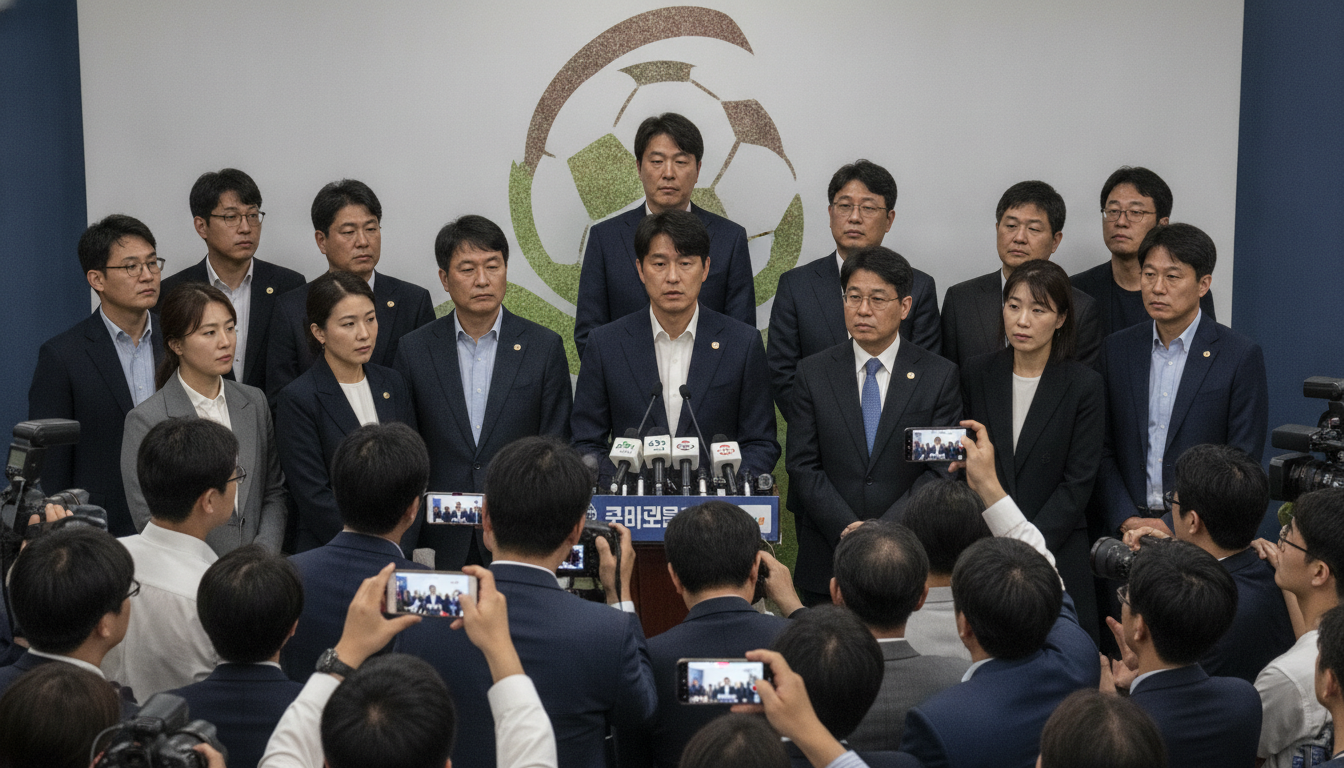
The K-Football Reform Committee has formally proposed a direct election system for the next president of the Korean Football Association (KFA) following another disappointing World Cup group-stage exit. The committee, fronted by former national team stars including Park Ji-sung, Lee Young-pyo and Park Joo-ho and supported by sports figure Ryu Seung-min, argues the change is necessary to restore accountability and public trust in the KFA. The proposal has immediately drawn sharp criticism from provincial FA leadership, raising questions about the committee’s mandate and the legal path to alter KFA governance. The dispute has set up a potentially contentious battle over process, governance and who should lead Korean football into the next cycle.
Origins of the reform push
The reform drive took shape after recent national team results deepened frustration among players, fans and some officials, prompting public calls for structural change. Former internationals organized under the K-Football Reform Committee banner to advocate for a direct, one-person-one-vote style election for the KFA presidency. The committee says a direct vote would broaden participation beyond the current electoral base and make leadership more accountable to supporters, clubs and grassroots stakeholders. Its proponents frame the plan as a corrective measure to modernize governance and prevent a repeat of underperformance on the international stage.
Who is leading the committee
The committee’s lineup includes high-profile former players whose names carry weight in the domestic and international game. Park Ji-sung and Lee Young-pyo are among the best-known figures, and Park Joo-ho has served in administrative and ambassadorial roles since retiring. The group is also backed by Ryu Seung-min, the president of the Korean Sport and Olympic Committee and an Olympic gold medallist in table tennis, who has used his platform to press for reforms across sports governance. Supporters say the public recognition and football experience of these figures give credibility to the call for electoral reform and will draw broader attention to governance debates in Korean football.
Jeonbuk FA chief’s rebuttal
The committee’s initiative met immediate resistance from Seo Gang-il, president of the Jeonbuk Football Association, who questioned whether former players are the right actors to drive legal and institutional changes. Seo publicly challenged the committee’s credentials to lead a governance overhaul, arguing that football experience alone does not equate to expertise in law, administration or wider social governance. He also urged the committee to put forward candidates if its members genuinely want to change the system rather than simply criticise current leaders. Seo’s comments reflect a broader unease among some regional officials about outsiders reshaping internal federation rules.
Legal and procedural fault lines
A central point of contention is the path to change the KFA’s election method. Seo and other opponents point to the existing association by-laws, which they say provide for a by-election to be held within 60 days when a presidency vacancy occurs, and argue that amending the articles of association is unnecessary. The reform committee, by contrast, has signalled that a structural amendment would be required to shift from the current delegate-based system to a direct national vote. Legal experts and federation lawyers say the dispute hinges on interpretation of the statutes and whether short-term vacancy procedures can be bypassed by a wider constitutional revision, a debate that could ultimately require arbitration or judicial review if the parties cannot agree.
Reactions across the football community
Responses from clubs, players and supporters have been mixed, with some welcoming the reform committee’s attempt to broaden democratic participation and others warning against hasty institutional change. Professional clubs have expressed concern about disruption to league operations and sponsorship contracts if governance reform becomes acrimonious or litigious. Fans and grassroots groups have been vocal online, with some applauding the committee’s visibility and others urging a focus on technical and developmental reforms rather than electoral mechanics. Sponsors and broadcasters, who provide vital revenue, are watching closely for signs of instability that could affect commercial arrangements and the sport’s public profile.
What a direct election would mean for the KFA
A move to direct elections would alter the balance of power within Korean football, expanding the electorate far beyond the current cadre of delegates and regional officials. Proponents argue such a change would make the KFA leadership more responsive to a wider constituency, including supporters, players and smaller clubs, and could incentivize transparent policy on coaching, youth development and financial management. Critics warn that a nationally contested vote risks turning KFA leadership into a popularity contest, potentially importing politics and celebrity dynamics into the federation’s daily operations. Practical issues would also need resolution, including voter registration, eligibility criteria, campaign finance rules and timelines for implementation.
Possible timelines and next steps
If the dispute continues, the immediate calendar will be shaped by whether the KFA holds a by-election under its current by-laws or moves to convene an extraordinary congress to consider amendments. Legal advisers to both sides will likely scrutinize the statutes to determine the correct procedural route, and the matter could be escalated to independent arbitration or the courts if an internal resolution proves elusive. Meanwhile, the reform committee may seek to build public momentum through rallies, media appearances and outreach to clubs and regional FAs to pressure decision-makers. The coming weeks will be critical for shaping the terms of debate and the practical feasibility of implementing a direct election before the next presidential term begins.
Public confidence in KFA governance and the health of the domestic game are at stake as both sides frame their positions in terms of the future competitiveness of the national team. The outcome will affect not only who runs the federation but also how priorities such as youth development, coaching standards and international engagement are set. The debate highlights a broader tension in sport between institutional continuity and demands for greater public accountability, and it will test Korea’s governance mechanisms as stakeholders seek a path that preserves stability while responding to legitimate calls for reform.
The K-Football Reform Committee and its critics have signalled they are prepared to press their cases in public and through legal channels, and the next official move by the KFA will likely determine whether the dispute escalates or is contained. As the federation and its stakeholders navigate this dispute, the stakes extend beyond an election to the long-term credibility and strategic direction of South Korean football.