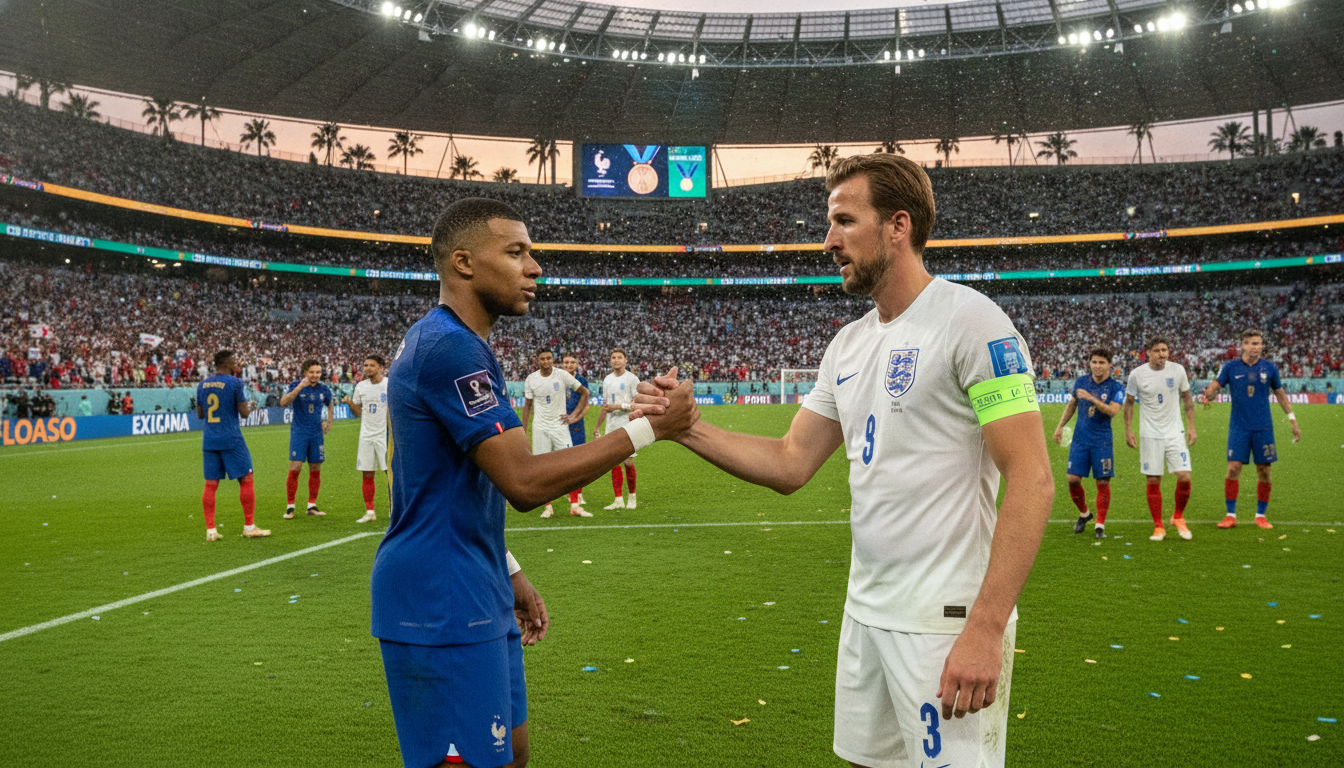
France vs England clash in Miami for World Cup bronze as Deschamps and Southgate rotate squads
France vs England third-place playoff in Miami: lineups, tactical notes and Golden Ball implications ahead of the match for bronze at the 2026 World Cup.


France and England will meet in Miami for the World Cup third-place playoff, with both managers making significant changes to their starting XIs for the curtain-raiser to the tournament’s final. France vs England headlines the fixture as Didier Deschamps hands opportunities to several squad players while England restarts with a rotated side after their semi-final defeat. The match will decide the bronze medalist at the 2026 tournament and carries individual stakes as well as national pride.
Confirmed starting XIs and notable selections
France say Maignan will start in goal behind a back four of Gusto, Konaté, Lacroix and Theo Hernández, while the midfield will feature Zaire-Emery and Rabiot. The front line includes Michael Olise, Cherki and Doué supporting Kylian Mbappé, who captains the side.
England’s eleven is led by goalkeeper Jordan Henderson with a backline of Jarell Quansah, Ezri Konsa, Marc Guehi and Denzel Spence, and Declan Rice wearing the captain’s armband in midfield. Bukayo Saka, Eberechi Eze, Cole Palmer’s replacement in recent games Kobbie Mainoo, Marcus Rashford and Ivan Toney provide attacking options in a rotated setup.
Selection surprises and rotation explained
Deschamps’ decision to omit Dayot Upamecano from the starting lineup is one of the most talked-about calls ahead of the match. The France manager has instead opted for a defence built around a blend of youth and experience, with Konaté and Lacroix paired centrally and Theo Hernández returning to his familiar left-sided role.
England’s selection also contains surprise elements as Harry Kane is named on the bench despite remaining in contention for individual awards. Gareth Southgate’s rotation policy is designed to give minutes to squad players while still fielding a competitive team, and the recall of Jarell Quansah following suspension reflects a desire to restore defensive continuity.
Golden Ball race and individual motivations
The fixture carries extra significance for several players chasing individual honors, with Kylian Mbappé and Harry Kane both having outside claims on the Golden Ball. Mbappé starts for France and will look to reinforce his case with a match-winning display, while Kane’s presence among the substitutes indicates England may preserve his final minutes to keep his tally high for voters.
Beyond the Golden Ball, the game is an opportunity for fringe players such as Michael Olise and Rayan Cherki to stake a claim for future national-team consideration. Performances in a high-profile third-place game can reshape perceptions and accelerate a young player’s integration into senior international plans.
Tactical implications and likely match shape
France are expected to adopt a possession-based approach with fluid attacking rotations designed to free Mbappé in the channels. Olise’s inclusion suggests Deschamps wants a creative presence on the wing who can combine with the captain and pull defenders out of position.
England’s setup will likely emphasize structure and transitions, using Rice to shield the back four and spring wide attackers into space. The presence of Toney up front hints that England will look to target aerial duels and second-ball situations, while Rashford and Saka provide pace on the flanks to exploit counter-attacking chances.
Context from the semi-finals and recent form
Both nations arrive having fallen short in their semi-final bids; France were beaten by Spain while England lost to Argentina, leaving each to pick themselves up for one final match. Those losses shaped the team selections as managers balanced the desire to finish on a high with broader squad management ahead of the next international cycle.
Form across the tournament has shown France’s offensive potency around Mbappé and moments of defensive flux, and England have displayed resilience and attacking variety despite susceptibility at times to quick transitions. The third-place game will test whether either side can recompose quickly and produce a performance that belies the disappointment of missing the final.
What a bronze medal would signify for both nations
Securing third place would offer a tangible silver lining after semi-final exits and provide momentum heading into European qualifying and future tournaments. For France, a podium finish would underline the depth of talent beyond their core starters and validate Deschamps’ squad-building choices.
For England, bronze would be a marker of progress in consistently competing at the top end of global tournaments and a morale boost for players who have endured a long, emotionally draining campaign. Both federations will frame the result as part of a broader development plan rather than the final verdict on either manager’s tenure.
The game in Miami is more than a consolation match on the schedule; it is a final chance for players to make impressions, for coaches to evaluate personnel, and for two proud footballing nations to finish their World Cup campaigns with a competitive display.