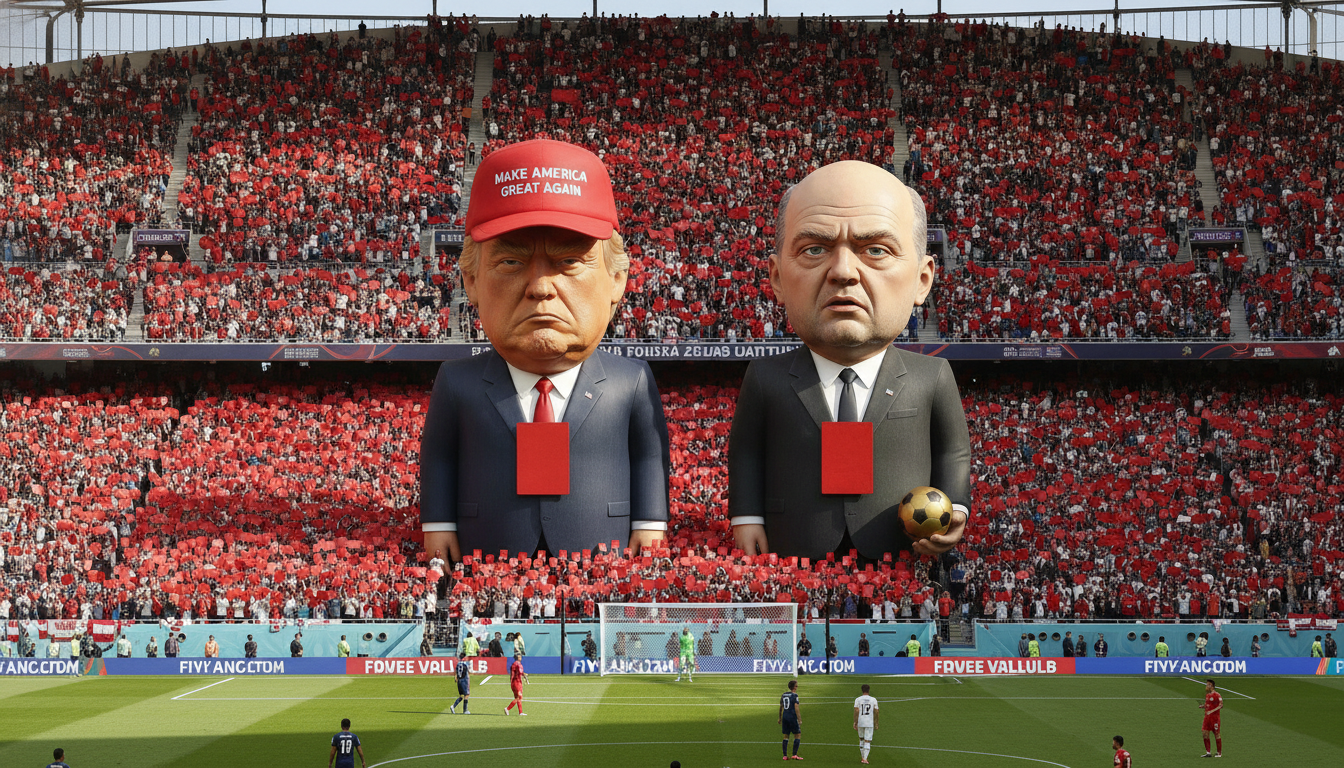
Red cards protest greets World Cup final as fans target Trump and Infantino at MetLife
Fans staged a coordinated red cards protest at the World Cup final, distributing cards to supporters traveling to MetLife Stadium to register opposition to US President Donald Trump and FIFA chief Gianni Infantino.


Spain and Argentina met in the final at MetLife Stadium, where supporters arriving from New York and New Jersey received red cards bearing a QR code linked to finalredcard.com as part of the red cards protest. Organisers said the display was timed to coincide with the trophy handover, where Trump and Infantino were due to present the cup to the winning captain.
Fans Distribute Red Cards Outside MetLife Stadium
Thousands of spectators passed through transit hubs and stadium entrances holding up the red cards handed out by activists on the route to the match. Volunteers distributed the cards at key junctions in New York and New Jersey to ensure visibility during the event.
The initiative aimed to create a moment of visual protest without disrupting the match itself, organisers said, asking fans to raise the cards only at a specific moment. The cards were designed for quick deployment and maximum impact when displayed en masse.
Organisers’ Tactics and QR Code Campaign
Each red card carried a QR code linking to a website that provided instructions on when to lift the card and a short explanation of the group’s message. The website used sporting language to stage the action, framing the protest in terms familiar to football fans.
Organisers coordinated the timing to coincide with the traditional trophy presentation, hoping the imagery would reach a global audience. The campaign relied on volunteer marshals to guide participants and on clear digital instructions to synchronize the display.
Targets Named: Donald Trump and Gianni Infantino
The protest specifically targeted US President Donald Trump and FIFA president Gianni Infantino, who were scheduled to participate in the ceremony. Demonstrators cited concerns over political influence and accountability as reasons for the symbolic show of condemnation.
Organisers framed the display as a statement against perceived abuses of power, saying the red cards represented an official sanction in the court of public opinion. The approach sought to distinguish between opposition to individuals and respect for the sport and its supporters.
Choreography at the Trophy Presentation
Organisers asked fans to hold the red cards aloft at the precise moment the trophy was handed to the winning captain, aiming to create a single, coordinated visual. The timing was planned to ensure the protest would be visible to stadium cameras and international broadcasters.
Event marshals and digital prompts were used to minimize confusion and to prevent accidental interference with the ceremony. The group emphasized non-violence and respect for other fans, urging participants to remain seated and to follow stadium rules.
Message Framed in Sporting Terms
The website associated with the protest framed its message using refereeing language, casting the action as an adjudication of wrongdoing. The phrasing mimicked a video assistant review to highlight what organisers described as a decisive judgment against corruption and misuse of office.
This sporting framing was intended to resonate with supporters who understand the symbolism of a red card as a final sanction. By borrowing the language of the game, organisers hoped to make their critique immediately comprehensible to a global football audience.
Background: Balogun Suspension Controversy Cited by Protesters
Organisers referenced a recent disciplinary decision involving US striker Folarin Balogun in their materials, noting the lifting of a suspension despite an earlier red card in a match that affected tournament participation. They argued that the incident exemplified broader concerns about consistency and governance in football administration.
The Balogun case has been central to criticism levelled at governing figures, protesters said, and was used to contextualize the red cards protest. Supporters organising the action described the sequence of events as a catalyst for public demonstration and a rallying point for fans frustrated with institutional decision-making.
Reactions from Authorities and Organisers
Stadium and law enforcement officials monitored the situation but described the protest as peaceful and largely symbolic, aimed at visibility rather than disruption. Stadium management reiterated standard safety and conduct rules and urged fans to comply with event policies.
Organisers reported broad cooperation from participants and said they had briefed marshals and the local authorities in advance to avoid clashes. They stressed that the action was planned to be expressive but non-confrontational, with clear boundaries to protect other matchgoers.
Broadcast teams adjusted camera angles when necessary but captured significant shots of the red cards held aloft during the handover. The imagery circulated quickly on social media, amplifying the protest beyond the stadium and prompting commentary from supporters and critics alike.
Potential Impact on Football Governance Debate
The protest revived discussions around governance, transparency and the relationship between political leaders and sporting bodies. Analysts suggested the visual nature of the red cards protest could galvanize further debate among fans and advocacy groups about accountability in football.
While symbolic protests rarely result in immediate policy shifts, they can influence public agendas and place pressure on institutions to respond. Organisers said their goal was to provoke conversation and to keep scrutiny on decisions that, in their view, undermined the integrity of the sport.
The red cards protest also prompted a range of reactions from commentators, with some praising fans for peaceful civic expression and others cautioning against mixing politics and sport in ways that could alienate supporters. The balance between activism and the matchday experience became a focal point in post-match analysis.
The demonstration underscored how major sporting events can serve as platforms for political expression, especially when participants feel traditional channels of accountability are insufficient. Supporters argued that visible, non-disruptive protest at high-profile moments can highlight grievances to an international audience.
Questions linger about whether the protest will lead to concrete follow-up actions beyond the immediate display, including petitions, advocacy campaigns or formal complaints directed at relevant institutions. Organisers indicated they planned to sustain pressure through additional awareness efforts and outreach.
The red cards protest at the World Cup final was a carefully orchestrated, symbolic demonstration designed to communicate fan discontent with specific leaders and governance decisions, using the language and timing of football to maximize impact and visibility.