Alejo Sarco transfer: Bayer Leverkusen sell forward to Sporting Gijón with buyback clause
Alejo Sarco completes transfer from Bayer Leverkusen to Sporting Gijón for under €1m, with Leverkusen retaining a buyback option to monitor his development.

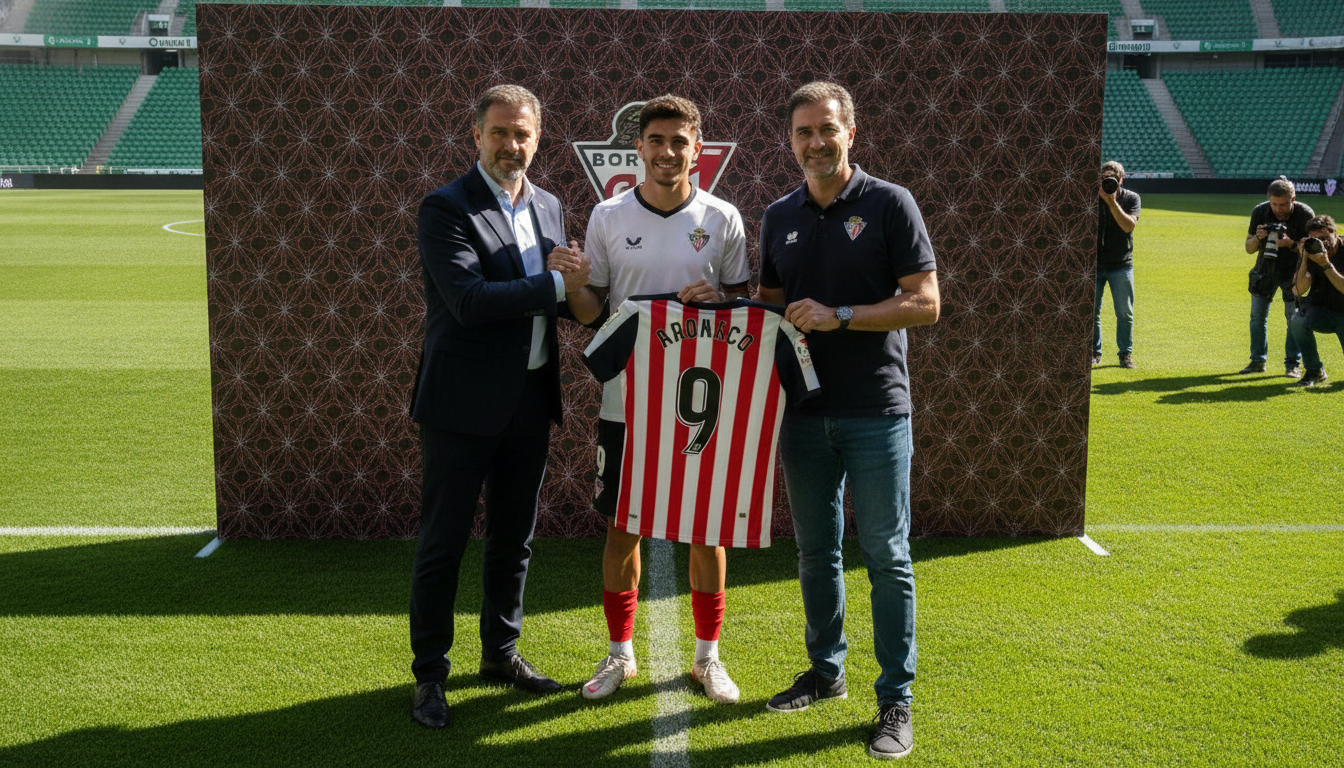
Bayer Leverkusen have confirmed the sale of Argentine forward Alejo Sarco to Spanish second-tier side Sporting Gijón, marking a permanent move aimed at securing regular first-team minutes for the 20-year-old. The transfer, reported to be for a fee below €1 million, includes a buyback clause that allows Leverkusen to retain a future option on the player. Leverkusen framed the move as a strategic step to accelerate Sarco’s development in a competitive environment where he is more likely to play consistently.
Transfer confirmed and basic terms
Bayer Leverkusen announced the agreement with Sporting Gijón in an official club statement, noting that the transfer was completed after internal evaluation of Sarco’s playing opportunities. The clubs agreed a modest fee understood to be under €1 million while inserting a buyback provision that gives Leverkusen a pathway to re-sign the forward if his progress warrants it.
The structure mirrors deals the club has used previously to manage young talent, balancing immediate squad needs with the long-term potential of prospects. Sporting Gijón will take primary responsibility for Sarco’s integration and match minutes, while Leverkusen will monitor his performance under the terms of the buyback arrangement.
Player background and scouting profile
Alejo Sarco arrived in Germany in January 2025 when Leverkusen signed the young centre forward on a free transfer from Vélez Sarsfield in Argentina. A product of the South American development system, Sarco has been regarded as a raw, athletic striker with a profile suited to development through senior minutes in competitive leagues.
Internationally, Sarco has appeared for Argentina’s U20 setup, which has kept him on the radar of clubs seeking to cultivate emerging South American forwards. Scouts have highlighted his movement in the box, physical presence, and potential to improve finishing and tactical awareness with sustained senior play.
First-team minutes and loan experience in Germany
During his time at Leverkusen, Sarco found first-team opportunities limited, making a handful of substitute appearances in the Bundesliga during the 2025–26 campaign. The club subsequently arranged a loan to Borussia Mönchengladbach in the second half of that season, but the move produced only brief cameo appearances at senior level.
While senior minutes were sparse, Sarco did register goals for Gladbach’s reserve side in the Regionalliga, demonstrating an ability to find the net at lower senior levels. The mixed pattern of substitute appearances and reserve-team productivity contributed to Leverkusen’s decision to seek a permanent move that would offer Sarco consistent match exposure.
Buyback clause and precedent at Leverkusen
A key element of the deal is the buyback option retained by Bayer Leverkusen, a mechanism the club has used to de-risk permanent sales of promising youngsters. That approach gained visibility when Leverkusen retained a repurchase right for winger Kerim Alajbegovic after his move away, a clause that the club exercised following the player’s successful spell elsewhere.
Specific financial details of Sarco’s buyback figure were not disclosed by either club, and Leverkusen described the arrangement in pragmatic terms rather than revealing exact numbers. The buyback gives Leverkusen flexibility: if Sarco flourishes in Spain, the club can bring him back without entering a protracted transfer battle or paying an open-market premium.
Sporting Gijón’s role and expectations
Sporting Gijón acquire a young striker with high upside and the expectation that he will compete for regular minutes in the Spanish Segunda División. For a club focused on promotion and youth integration, Sarco represents a low-cost gamble with potential high reward if he adapts to the technical and tactical demands of Spanish football.
Gijón’s coaching staff will be tasked with shaping Sarco’s game to the team’s style—emphasizing link-up play, positional intelligence, and finishing in transition. The Spanish second tier has been a productive environment for developing strikers who require game rhythm and confidence, and Sporting Gijón will seek to build Sarco into a reliable attacking option over the coming season.
Club comments and the development rationale
Leverkusen sporting director Simon Rolfes explained the club’s reasoning for the move, saying that Sarco had not received the volume of competitive minutes deemed necessary for a player of his age. The club stressed that the decision was taken to provide Sarco with a clearer pathway to regular senior football, while maintaining a relationship that allows Leverkusen to follow and evaluate his progress.
From Leverkusen’s perspective, the transfer is both pragmatic and strategic: it frees squad space and gives the player an environment better suited to his immediate needs, yet it preserves a future option should his development accelerate. Sporting Gijón, for their part, have secured a promising talent without committing a large transfer outlay.
Sarco himself has not yet publicly detailed his objectives with Sporting Gijón, but the move presents him with the opportunity to establish himself as a first-team regular and to translate reserve-level scoring into sustained senior contributions.
Implications for player development and market strategy
This type of low-fee transfer combined with a buyback clause reflects a broader trend among European clubs seeking to manage young talent while controlling financial exposure. For buyers like Sporting Gijón, it provides access to players trained at higher-tier clubs at affordable cost, while sellers keep upside through contractual safeguards.
If Sarco secures consistent minutes and improves key areas—especially decision-making in the final third and link play—he could become an asset that either accelerates Sporting Gijón’s ambitions or prompts Leverkusen to trigger the buyback. The move also serves as a reminder that measured talent management can create multiple pathways to value for both player and club.
Looking ahead, tracking Sarco’s appearances, goals, and general influence in the Segunda División will be essential for evaluating whether the buyback clause becomes actionable. Observers will pay particular attention to his adaptation to Spanish football’s tempo and technical emphasis, areas that often determine whether South American forwards thrive in Europe.
Alejo Sarco’s transfer to Sporting Gijón offers the forward a clearer route to the minutes he needs while allowing Bayer Leverkusen to keep a degree of control over his future through the buyback mechanism. The coming season in Spain will be decisive in determining whether this move is a stepping stone back to the Bundesliga or the start of a new chapter in Sarco’s career.