Kenyan searches show World Cup passion runs from watch parties to ball science: 2026 FIFA World Cup Google Search trends
Google Search trends in Kenya during the 2026 FIFA World Cup reveal fans were searching far beyond scores, driven by culture, technology and communal viewing habits.


The data cover the tournament period from June 11 to July 13, 2026, and show Google recorded its highest-ever search activity for a World Cup, both globally and within Kenya. A single dramatic moment — Argentina’s late winner against Egypt — set a new global queries-per-second record and galvanized Kenyan interest across a wide range of topics.
Record-breaking moment and national reaction
The tournament’s defining instant — Argentina’s winning goal in the match with Egypt — produced unprecedented search activity worldwide and sparked a spike in Kenyan queries. Google’s metrics mark the 2026 edition as the most searched World Cup in its history, underscoring how singular moments can drive massive online engagement.
Kenyan fans used search to follow breaking match developments, find instant replays and learn about the players involved in those clutch moments. That surge in real-time querying reflects changing consumption habits where fans move from passive viewing to active, information-seeking engagement.
Most-searched matches among Kenyan fans
Several fixtures dominated Kenyan search interest over the tournament dates of June 11 to July 13, 2026. The five matches most searched in Kenya were France vs Morocco, Brazil vs Norway, Brazil vs Japan, Norway vs England and Portugal vs Spain.
These games combined traditional heavyweight appeal with surprise elements and regional affinities, drawing fans to search for lineups, highlights and post-match analysis. The variety in the list indicates Kenyan interest spanned marquee contests and surprising upsets rather than focusing on a single team.
Watch-party surge and public viewings
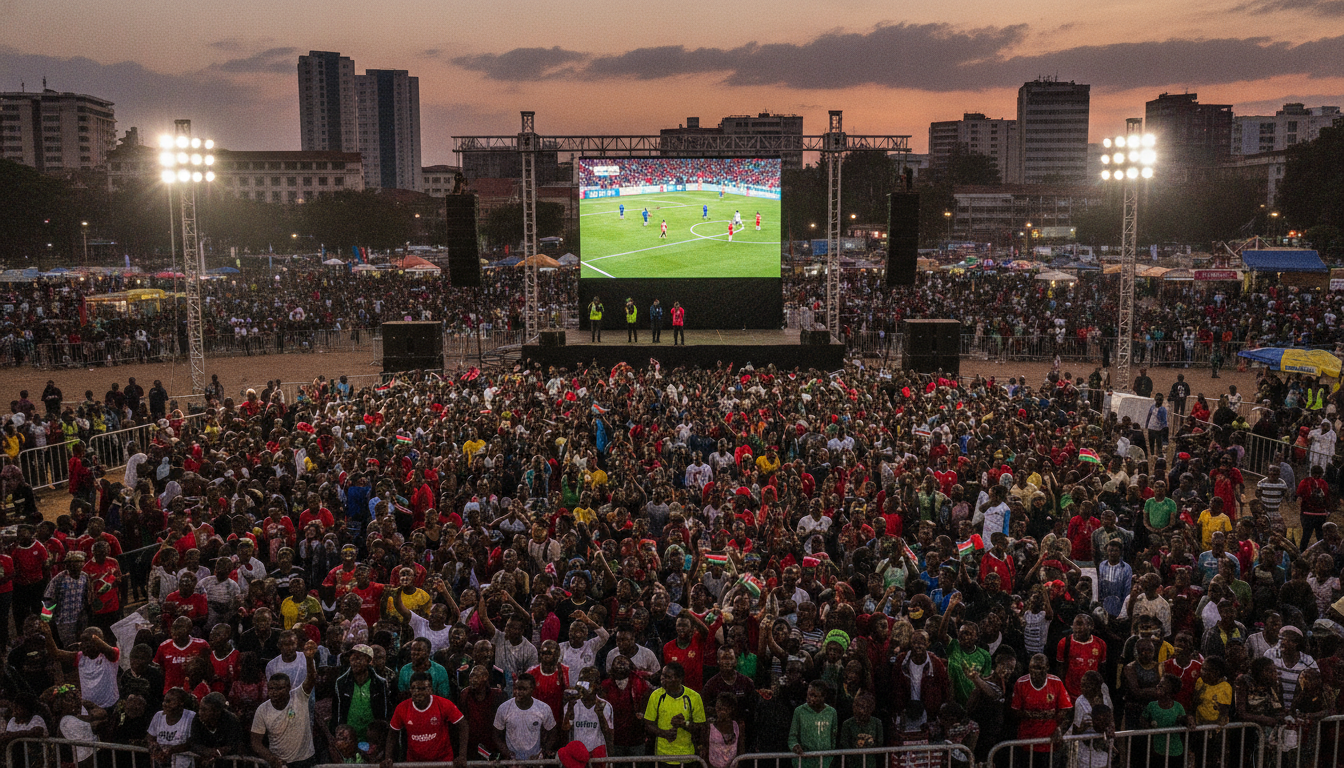
Searches for public World Cup viewings climbed sharply, rising by roughly 700% across the two weeks leading to the final. Fans increasingly sought venues and events where they could watch matches together at fan parks, restaurants and community screenings.
Interest in final-day gatherings also rose: searches for “World Cup finale watch parties” jumped about 160% after Friday, July 10, reflecting a late push toward organized group viewing. The data point to a cultural shift back toward communal experiences, with Kenyans keen to combine the spectacle of the tournament with social occasions.
Player search behavior: African stars and global icons
Kenyan search patterns highlighted a strong appetite for both African footballers and global superstars. The most searched African players during the tournament in Kenya were Mohamed Salah, Vozinha, Jayden Adams, Achraf Hakimi and Ismael Saibari, showing interest in established stars and emerging talents alike.
At the same time, searches for global names such as Lionel Messi, Cristiano Ronaldo, Kylian Mbappé, Lamine Yamal, Rodri and Ferran Torres remained prominent. The persistence of those searches underscores how Kenyan fans follow both continental representation and the international narratives that drive modern football discourse.
The GOAT debate and comparative interest
The tournament rekindled the perennial “GOAT” debate, with searches for “Who is the GOAT of football?” rising by about 200% during the World Cup. In Kenya, search volume for Lionel Messi exceeded Cristiano Ronaldo’s by only around 10%, indicating a near-even split in curiosity and debate between the two icons.
That narrow margin demonstrates how discussions about football’s greatest players remain highly contested and locally resonant. For many Kenyan users, the World Cup served as a catalyst to revisit long-running arguments about legacy, statistics and peak performance.
Curiosity about the match ball and tournament technology
Technical questions about the official FIFA World Cup ball spiked early in the tournament, with searches related to the match ball surging roughly 290% during the opening week. Overall interest in the ball was about 10% higher than during the 2022 World Cup, signaling growing fascination with tournament equipment and design.
Fans asked detailed, practical questions: what type of air is inside the ball, how the ball is manufactured, whether it is rechargeable and how it is charged, and how much the official ball costs. That level of inquiry points to a fan base that wants to understand not just who scored, but how the tools of the game are engineered and used.
Traditions and stadium culture capture attention
Cultural elements of matchday experience also attracted searches, particularly how fans around the world celebrate during games. Interest in “La Ola,” the Mexican wave, rose by about 130% compared to the 2022 World Cup as Kenyans looked up how to start and join the stadium staple.
Searches for chants, crowd displays and other fan rituals show a desire to participate in global football culture rather than only observe it. The trend suggests many Kenyan supporters see the World Cup as an opportunity to adopt new traditions and amplify their own matchday atmospheres.
What the trends reveal about Kenyan fan engagement
Taken together, these search patterns indicate that Kenyan engagement with the 2026 FIFA World Cup was multidimensional: fans sought real-time updates, social experiences, technical explanations and cultural connection. Google Search became a real-time barometer of curiosity, emotion and communal intent across the country.
The mix of match-focused queries, player interest, technological curiosity and event planning signifies an audience that values both the spectacle and the mechanisms of the sport. For stakeholders — from broadcasters and venue operators to sponsors and federations — the data point to opportunities to tailor content and experiences to an increasingly inquisitive fan base.
Kenyan search behavior during the tournament underscores that the World Cup’s impact extends beyond final scores; it drives conversations about identity, innovation and shared experience that persist long after the final whistle.