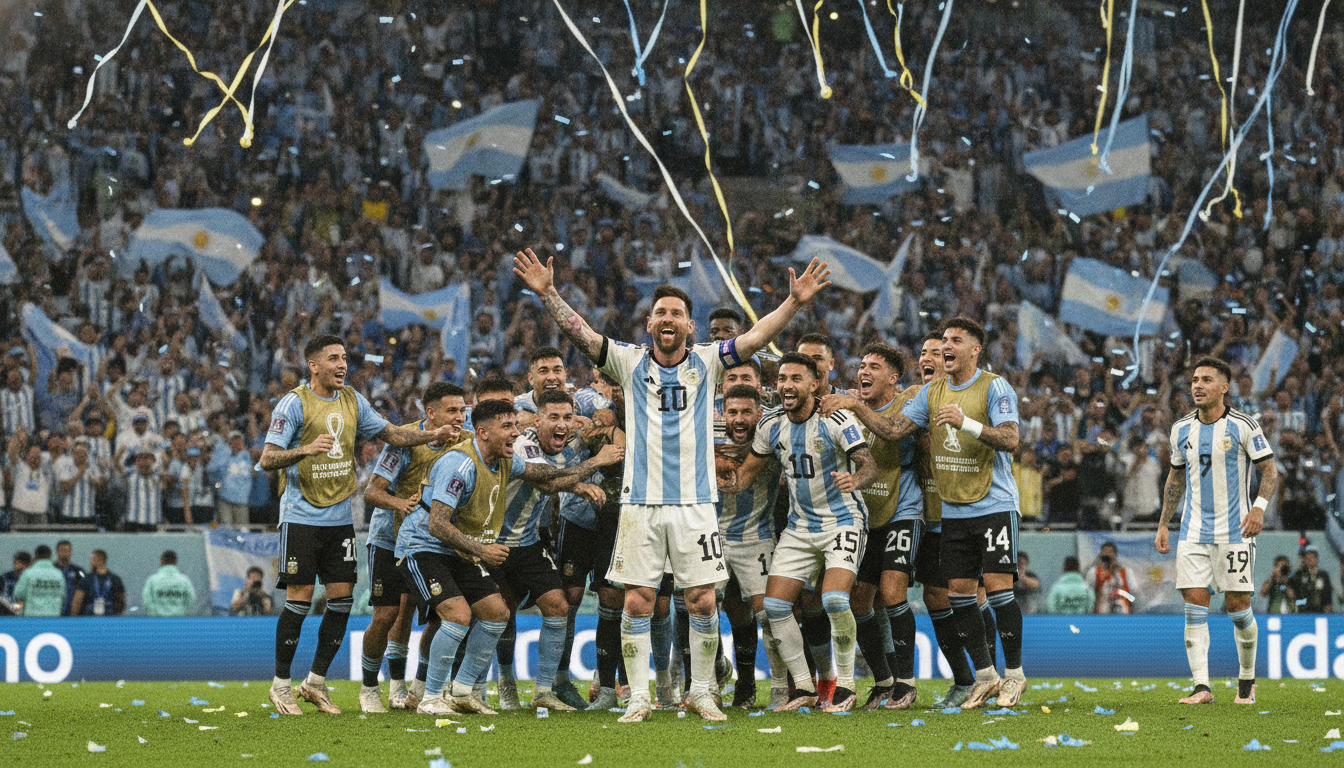
Argentina vs Egypt: Messi Inspires Dramatic 3-2 Comeback as Argentina Reach Quarter-finals
Argentina vs Egypt ended 3-2 after Lionel Messi scored and assisted in a late turnaround that sent the defending champions into the World Cup quarter-finals.


Argentina, the defending World Cup champions, recovered from a 2-0 deficit to beat Egypt 3-2 and secure passage to the quarter-finals in a night defined by Lionel Messi’s late intervention and a contentious finish. The match, played on July 7, 2026, saw Egypt lead for most of the game after an early header, but Argentina produced a furious late rally that included a goal and an assist from Messi and a stoppage-time header from Enzo Fernández to seal the win. The comeback preserved Argentina’s title defense and set up a quarter-final meeting with the winner of the Colombia-Switzerland tie, while Egypt left the field frustrated by refereeing decisions in the final stages.
Messi Orchestrates Late Turnaround
Lionel Messi produced the decisive intervention in a match that had tilted in Egypt’s favor for more than an hour, providing a pinpoint cross for Cristian Romero before scoring the equalizer himself. His assist to Romero marked another entry in his World Cup records, and his composed finish to level the match extended his run of consecutive World Cup games with a goal. Messi’s influence was visible across the final quarter, as Argentina shifted into a higher gear, pressing more aggressively and creating the space needed for late opportunities. The playmaking veteran combined vision and execution at the moment Argentina needed it most, directing teammates into positions that bridged a previously flat attacking performance.
Egypt Take Early Lead Through Ibrahim
Egypt’s strategy of exploiting set pieces and aerial delivery paid off in the opening half when Yasser Ibrahim rose to head his nation into a surprise lead in the 15th minute. The early goal rewarded a sustained period of Egyptian pressure and validated a game plan built around physical duels in the box and quick transitions on turnovers. After taking the lead, Egypt grew in confidence and forced Argentina to play with greater urgency, testing the champions’ defensive organization and their ability to handle long balls into the penalty area. The Pharoahs’ early dominance altered the tempo and forced Argentina into reactive moments that seldom yielded clear scoring chances during the first 45 minutes.
Penalty Miss and Defensive Resilience
A turning point in the first half came five minutes after Ibrahim’s header when Lionel Messi’s penalty attempt was saved, marking a rare miss for the forward and prolonging Argentina’s drought of clear-cut scoring in the opening period. Egypt’s goalkeeper, Mostafa Shobeir, produced several crucial stops, his penalty save among a series of interventions that kept his side in front at halftime. Argentina struggled to find rhythm and accuracy from set plays and open play alike, with one free-kick from Messi striking the woodwork, underscoring how fine margins were separating the teams. Egypt’s defensive resilience, particularly on aerial duels and second balls, maintained their lead and forced Argentina to alter their approach after the interval.
VAR Review and Disallowed Goal Drama
The match featured a significant VAR intervention when Egypt thought they had doubled their advantage around the hour mark, only for the goal to be overturned after a prolonged review for a potential foul in the buildup. The lengthy check produced confusion in the stadium and visible frustration on the Egyptian bench as a yellow-carded goalscorer was denied a celebration and the momentum that would have accompanied a two-goal cushion. That moment proved pivotal to the complexion of the contest, as the reprieve allowed Argentina to maintain belief and continue probing for a route back into the match. The stoppage-time environment intensified after the reversal, with both sides exchanging attacks and the refereeing decisions becoming a focal talking point for players and officials alike.
Late Goals Decide the Tie
Argentina’s revival gathered pace in the final ten minutes when the champions capitalized on a combination of creative passing and increased urgency to overturn the deficit. Messi’s cross found Cristian Romero for a headed equalizer, and four minutes later Messi himself finished powerfully to make it 2-2 and force Egypt into reactive defending. The drama culminated in the 92nd minute when Enzo Fernández rose highest from a set-piece delivery to direct a headed winner that ultimately settled the contest without extra time. The stoppage-time winner came amid heated appeals from Egypt for a penalty earlier in the sequence, but match officials allowed the goal to stand and Argentina to progress, prompting visible protests and debate after the final whistle.
Tactical Shifts and Key Substitutions
Argentina manager Lionel Scaloni changed the game’s dynamic by introducing attacking options from the bench, including former Bundesliga players who added pace and fresh legs to an exhausted defense-turned-attack. Nicolas González and other substitutes were deployed to stretch Egypt’s lines and provide alternative channels of attack, while Argentina’s midfield adjusted its pressing triggers to recover possession higher up the pitch. Egypt also made tactical substitutions that sought to counter Argentina’s late pressure and to relieve the fatigue of their backline, but those changes were insufficient to blunt the champions’ final surge. The timing and effect of the substitutions will be scrutinized in post-match analysis, with particular attention on how the bench players influenced set-piece delivery and tempo in the closing stages.
Argentina will now await the winner of Colombia versus Switzerland for their quarter-final opponent, a matchup that will determine whether the defending champions’ path becomes more or less demanding in the tournament’s knockout phase. Egypt exit the competition with plaudits for their organization and halftime lead, yet frustration over the final minutes and the disallowed goal that might have altered the narrative. The outcome continues a trend in this tournament of dramatic finishes and overturned results late in matches, emphasizing the importance of concentration and set-piece preparation in high-stakes fixtures.
Tactical discipline, refereeing decisions, and the capacity of match-winners to change games in moments of pressure were all on display during this contest, and the final margin will form part of the broader conversation about officiating standards and VAR processes going forward. Argentina’s ability to find two late responses and then a stoppage-time winner underlines the depth of character in a squad that still leans heavily on the influence of its veteran leader. Egypt demonstrated tactical clarity and defensive strength for long stretches of the match, but their inability to close out the game has prompted questions about game management in the final phases.
The win will offer Argentina both momentum and caution; momentum because they overturned a two-goal deficit against a well-organized opponent, and caution because the manner of the comeback exposed vulnerabilities that future opponents will study. For Messi, the night added another chapter to an already storied international career, combining a critical assist with a timely finish that extended his scoring streak in the tournament. For Egypt, the performance reinforced belief in their set-piece threat and defensive structure, even as their elimination leaves a sense of what might have been.
Argentina’s progression keeps alive their bid for consecutive World Cup titles and preserves a legacy in which late-game resilience has been essential. Egypt depart with credit, having executed a disciplined game plan for much of the match and causing the champions significant problems, but they will rue the moments that allowed Argentina back into the contest. The wider tournament now turns to the quarter-final fixtures, where margins are slimmer and moments like those on display in this match will increasingly decide who advances and who goes home.
The game will be remembered for its swing of fortunes, Messi’s decisive contributions, and a stoppage-time climax that encapsulated the unpredictable drama of knockout football.