

Brazil vs Norway Lineups: Cunha Leads Brazil as Haaland Starts in 2026 World Cup Round of 16
Brazil vs Norway lineups confirmed for the 2026 World Cup Round of 16 — Cunha leads Brazil, Haaland leads Norway in a high-stakes clash. Kick-off imminent.


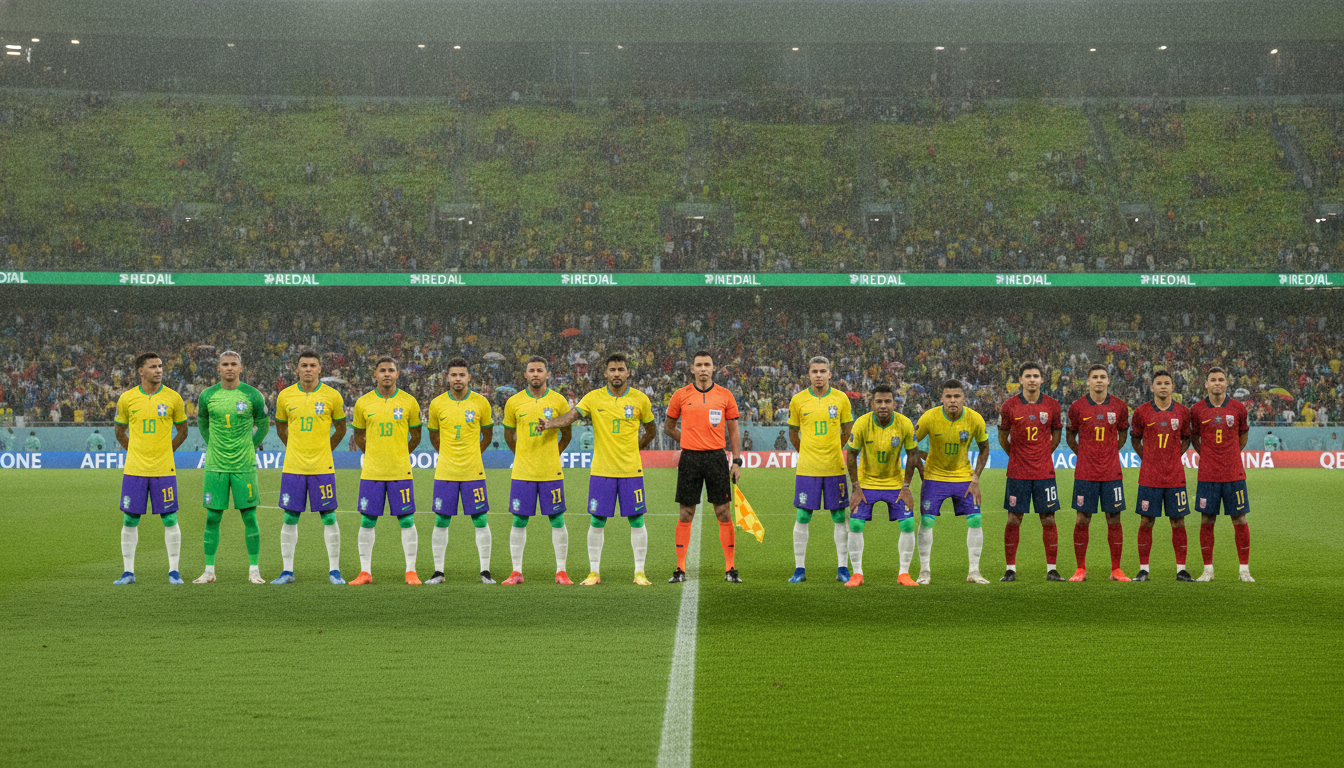
Brazil and Norway have released their confirmed lineups for the 2026 FIFA World Cup Round of 16, with Matheus Cunha starting up front for Brazil and Erling Haaland leading Norway’s attack. The Brazil vs Norway lineups set up a clash between two contrasting styles and a notable network of former Red Bull players on both sides. The match carries quarter-final stakes and immediate tactical intrigue as both teams chase the next stage.
Confirmed Lineups
Brazil will deploy a 4-2-3-1 formation with Alisson in goal, a back four of Danilo, Marquinhos, Gabriel and Santos, a double pivot of Bruno and Casemiro, and a front four featuring Rayan, Gabriel Martinelli, Vinicius Jr. supporting Matheus Cunha as the lone striker. That selection emphasizes Brazil’s blend of experienced leaders and dynamic wide attackers tasked with providing service to Cunha.
Norway line-up in a 4-3-3 with Ørjan Nyland between the posts, a defensive line of Julian Ryerson, Kristoffer Ajer, Heggem and Wolfe, a midfield trio of Martin Ødegaard, Berg and Berge, and an attack led by Alexander Sørloth, Erling Haaland and Antonio Nusa. The Norwegian XI emphasizes a central creative driver in Ødegaard and a direct finishing threat in Haaland, backed by a compact midfield.
Tactical Setups and Formation Battle
Brazil’s 4-2-3-1 gives coach and players a structure that can shift between possession-driven build-up and quick vertical transitions. Casemiro’s presence in the double pivot allows Bruno to step into more advanced distribution roles while the full-backs provide width to stretch Norway’s backline. The trio behind Cunha — Rayan, Martinelli and Vinicius Jr. — combines pace, dribbling and penetrating runs that will test Norway’s ability to contain outside channels.
Norway’s 4-3-3 is built to leverage Ødegaard’s vision and Haaland’s finishing, with Berge and Berg providing the work-rate and balance required to link defense and attack. When Norway progresses through midfield, the formation can congest central areas and invite quick switches to the wings or long deliveries for Haaland to chase. The duel between Brazil’s full-backs and Norway’s wide forwards and overlapping midfielders will be decisive in opening clear scoring opportunities.
Red Bull Background Shapes Both Squads
A notable subplot to the Brazil vs Norway lineups is the Red Bull connection that flows through both teams. Matheus Cunha and Erling Haaland each emerged out of the Red Bull football ecosystem — Cunha with RB Leipzig and Haaland with Red Bull Salzburg — and their career trajectories have been shaped by the high-intensity, attacking football associated with the network. That shared lineage is more than trivia; it reflects similar training environments that emphasize rapid transitions and aggressive forward play.
Norway’s squad contains additional ex-Red Bull pathways in players such as Alexander Sørloth, Ørjan Nyland and Antonio Nusa, each of whom spent time with Leipzig or other Red Bull-affiliated clubs. Those experiences inform the collective tactical literacy of the Norwegian group and contribute to the familiarity between the teams. For Brazil, Cunha’s time in Leipzig gave him exposure to a direct, counter-pressing game that can be amplified by his international teammates’ technical traits.
Key Player Matchups to Watch
Erling Haaland versus Brazil’s central defenders will be the headline matchup; his combination of speed, power and clinical finishing forces opponents into difficult decisions about when to foul, step up or sit deep. Marquinhos and Gabriel must manage spacing, channel discipline and coordinated defending to limit Haaland’s influence in the box. How Brazil handles aerial duels and second balls into the penalty area could determine the match tempo.
On the opposite side, Matheus Cunha’s movement and link-up play will be crucial against Norway’s back four, especially when Brazilian full-backs push forward. Cunha will look to exploit pockets between the lines and drag defenders out of position for runners like Vinicius Jr. and Martinelli to exploit. The one-versus-one duels involving Ryerson and Wolfe against Brazil’s wide attackers will likely create the most frequent attacking openings.
Midfield control centers on Casemiro and Bruno for Brazil against the creative pull of Ødegaard with defensive assistance from Berge and Berg. Casemiro’s ability to screen the back four and break up play will be invaluable in limiting Ødegaard’s time on the ball. Conversely, if Norway wins midfield second balls and finds Ødegaard in space, their quick vertical passes could feed Haaland and destabilize Brazil’s defensive shape.
Bench Strength and Tactical Options
Both teams possess bench options capable of changing the game, and managers will be alert to moments when substitutions can tilt momentum. Brazil’s typical depth allows for creative or physical changes, such as introducing an extra forward to press or a midfielder to reinforce the center. Tactical tweaks might include shifting to a two-striker system late in the game to unsettle Norway’s defensive markers.
Norway’s bench provides options to shore up midfield or add pace on the wings, and a late attacking substitution to support Haaland would be a logical route if chasing a result. Set-piece specialists and physical forwards can be introduced to exploit Brazil’s occasional vulnerability in congested penalty-area situations. Both teams may also use tactical time-wasting or tempo changes late on, especially if the match reaches a narrow scoreline.
Match Stakes and Tournament Context
A win advances the victor to the World Cup quarter-finals and places them among the tournament favorites for a deep run, while defeat ends the campaign at the Round of 16. For Brazil, progression is expected by many given the squad’s depth and World Cup pedigree, but knockout football offers few certainties and Norway’s organized approach can spring surprises. For Norway, the tie represents a chance to justify their status as a dark-horse contender and to advance a nation still building consistent major-tournament credentials.
Narratives around player development, club links and emerging talent add extra significance to the fixture, with scouts and pundits paying close attention to performances that could influence transfers and reputations. The Brazil vs Norway lineups not only determine the immediate tactical structure but can also shape player valuations and international standing depending on how individuals perform on this stage.
In the minutes leading to kick-off, both teams will focus on concentration, quick set-piece rehearsals and the final tactical reminders from their coaching staffs. The match promises a contrast of styles: Brazil’s flair and attacking rotation against Norway’s directness and clinical finishing. As the whistle blows, the confirmed lineups will set the opening pattern, but in knockout football, adaptability often decides the outcome.
Expect intensity from the outset, with both sides seeking early control of midfield and quick opportunities to test the opposition goalkeeper. The balance between organized defending and incisive forward play will determine whether Brazil’s favored status holds or Norway engineers an upset on one of the World Cup’s most anticipated knockout nights.