Dembélé hat-trick sends France to top of Group I with 4-1 win over Norway in Toronto
Ousmane Dembele hat-trick powers France to a 4-1 victory over Norway in Toronto, securing top spot in Group I and reshaping the sides’ knockout trajectories.


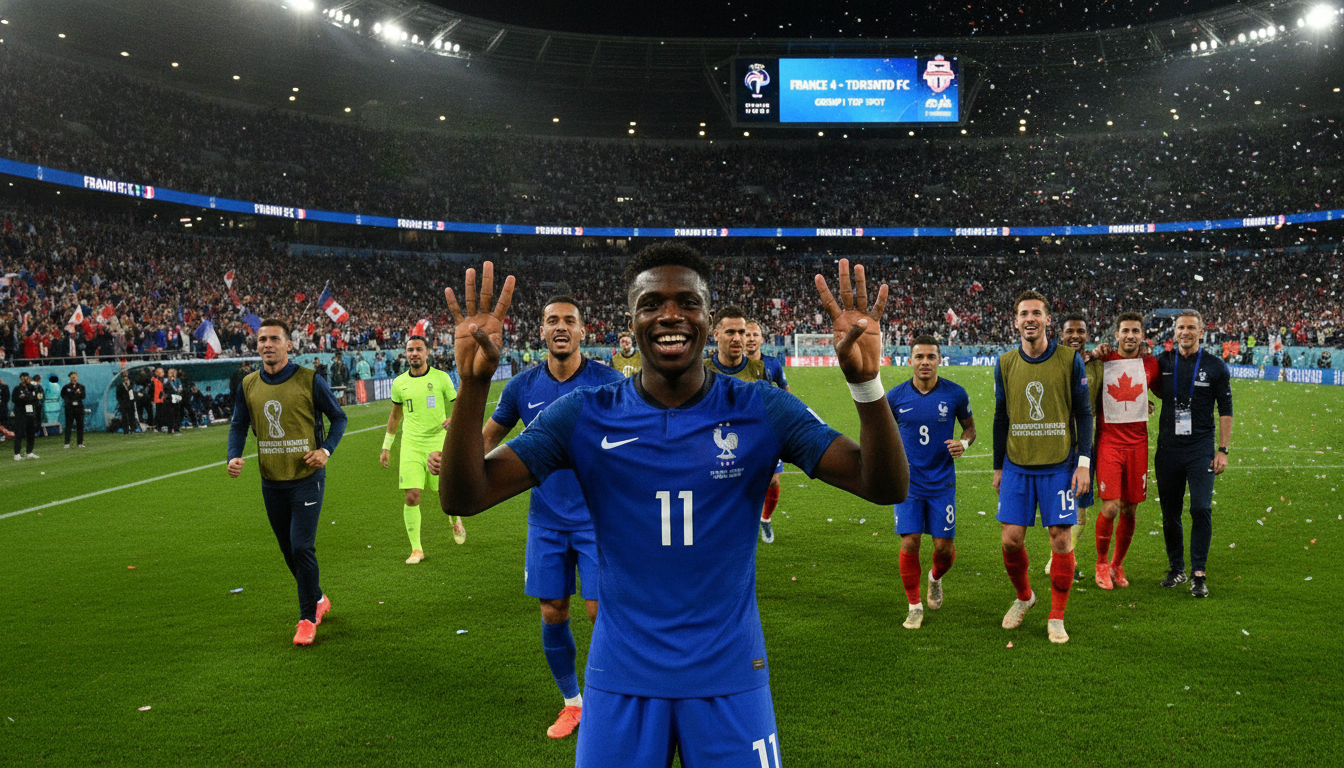
France cruised to a 4-1 victory over a heavily rotated Norway side in Toronto as Ousmane Dembélé produced a first-half hat-trick to seal top spot in Group I. The former Borussia Dortmund winger stole the show, scoring three times before the interval and setting the tone for a dominant Les Bleus display. Norway made extensive changes with several starters rested, but their second-half response was ultimately not enough to overturn an early deficit. The result confirmed France’s place at the summit and sets up a new path for both teams in the knockout phase.
France began the match with control and urgency, using quick transitions and wide runs to unsettle a reshuffled Norwegian backline. Norway, without a number of regulars, tried to grow into the game but struggled to contain Dembélé’s movement and pace. Goalkeeper intervention and a late substitute combination added gloss to the scoreline, but the defining moments came in the opening 35 minutes. The atmosphere at BMO Field mirrored the stakes, with fans treated to a decisive and entertaining first-half showing from the tournament favorites.
Dembélé’s lightning start and first-half hat-trick
Dembélé opened the scoring inside seven minutes after a clever Kylian Mbappé delivery released him into space on the flank, and he finished with a composed strike into the near post. That early goal forced Norway to chase the game and left their makeshift defence vulnerable to France’s wide threats. The winger doubled his tally on 20 minutes with a similar move, drifting beyond his marker and finding the net with a precise, low finish rather than sheer power.
Just when the game appeared to calm, Norway capitalized on a brief French lapse to pull a goal back through Thelo Aasgaard, who reacted quickly to a loose sequence and cut the deficit. France, though, answered emphatically before the break when Dembélé completed his hat-trick, again exploiting space on the right and converting a chance that left the Norwegian goalkeeper stranded. The trio of strikes before half-time effectively settled the contest and underlined Dembélé’s capacity to change a match within minutes.
Norway’s extensive rotation and second-half fightback
Norway’s coach handed rest to several first-choice players after qualification was already secured, and that rotation showed in their early defensive organisation. The visitors nonetheless improved after the interval, putting sustained pressure on France and generating a series of promising attacks. Their persistence produced a penalty opportunity just after the restart following a foul in the area that handed them a clear chance to halve the margin further.
From the spot, Norway’s effort was kept out by France’s goalkeeper, whose save deflated a momentum swing and robbed the visitors of the platform they desperately needed. Despite controlling much of the second-half possession and threatening repeatedly in the final third, Norway were unable to convert their territorial advantage into enough goals to threaten a comeback. The bench reshuffle had supplied impetus, but individual finishing and a key late stop decided the outcome in France’s favour.
Goalkeeping interventions and key saves
France’s goalkeeper played a pivotal role at crucial moments, producing a decisive stop from the penalty and several other routine saves that preserved the lead. Norway’s keeper also kept his team in contention with a pair of excellent first-half stops, denying attempts from France’s midfielders that might otherwise have extended the advantage before the break. Those exchanges between the sticks provided a tense undertone to an otherwise one-sided scoreboard.
The penalty save in the second half proved to be the match-defining intervention, nullifying Norway’s best route back into the game and swinging momentum back to France. Both goalkeepers had moments of quality, but France’s shot-stopper ultimately had the bump of fortune teams seek when protecting a slender lead. The contrasting fortunes for the two keepers underlined how individual contributions can shape the course of a high-stakes international fixture.
Tactical shifts and substitutions that shaped the match
France’s coach made measured changes on the hour mark, introducing fresh legs to maintain control and reduce the risk of late slips. Those substitutions altered the balance of the middle third, allowing Les Bleus to recycle possession with greater safety and probe the Norway defence through different channels. The introduction of attacking options also kept Norway guessing and limited their ability to press as effectively as they did in the early stages of the second half.
One substitute pairing combined to add the fourth goal, a tidy sequence of interplay that closed the contest and gave the scoreline a more comfortable appearance. Norway’s alterations had been designed to inject energy and physicality, and while they did generate more attacking phases after 60 minutes, the visitors lacked the clinical finish required to turn territory into goals. The way France managed their changes reflected an emphasis on control and match management rather than frantic defending of a lead.
Implications for Group I and the knockout picture
With the win, France finished top of Group I and will approach the knockout round with momentum and a relatively favourable path through the bracket. The result also meant Norway must regroup and refocus quickly ahead of their next opponents, with their remaining fixture carrying greater urgency. Both teams will use this match as a benchmark for selection and tactical tweaks heading into the single-elimination stage.
The standings shake-up clarifies several potential match-ups for the next phase, and coaches from both sides have decisions to make about personnel and approach. France can now plan for a tie that might suit their strengths in wide play and rapid transitions, while Norway must address finishing and defensive cohesion if they are to progress. The tournament enters a phase where small margins and smart management increasingly determine outcomes, and this game offered a clear illustration of that reality.
What Dembélé’s performance means for France’s options
Dembélé’s hat-trick provides the French coaching staff with both selection headaches and welcome choices as the tournament advances. His form on the right flank creates genuine competition among the wide attackers and forces opponents to reassess how they defend against Les Bleus’ pace and dribbling. Consistent contributions of this kind also bolster squad depth, giving France multiple pathways to break down organised defences.
Beyond the tactical considerations, the psychological boost from a player producing such a decisive display cannot be overstated. Teammates and staff will take confidence from a performance that combined individual brilliance with team structure. France’s staff will now decide whether to retain the same configuration or rotate to manage fitness, but Dembélé has certainly strengthened his case for a prominent role in the knockout rounds.
France’s victory in Toronto was comprehensive in its scoreline and instructive in its execution. Ousmane Dembélé’s first-half hat-trick provided the decisive moments and allowed the squad to manage the remainder of the game with control and pragmatism. Norway’s late pressure and second-half improvements showed resilience, but the early damage proved too great to overcome. The result settles Group I’s top spot and sets both nations on distinct but clear courses as the tournament moves into the knockout phase.