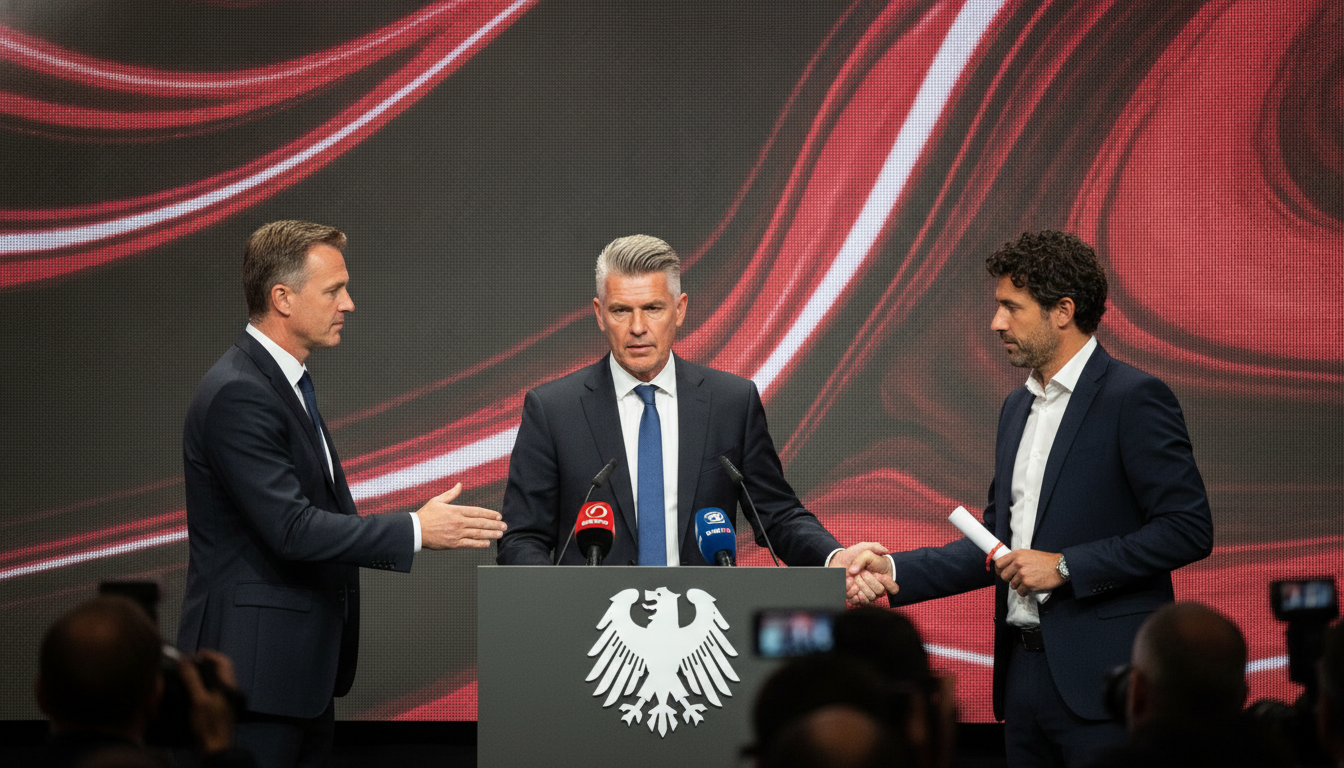
Eintracht Frankfurt replace Albert Riera with Adi Hütter as club seeks return to identity and intensity
Eintracht Frankfurt have dismissed Albert Riera and reappointed Adi Hütter, aiming to restore the club’s distinctive playing identity and reconnect with supporters after a turbulent six months.


Eintracht Frankfurt announced the dismissal of Albert Riera and the immediate return of Adi Hütter, a move that signals a clear tactical and cultural reset at the Bundesliga club. The change follows a period of growing discontent among supporters and a series of public disputes that eroded confidence in Riera’s brief tenure. Club officials framed the decision as necessary to re-establish a recognisable footballing identity and to repair fractured relationships inside and outside the dressing room.
Club statement and immediate steps
The club released an official communication confirming the coaching change and underlining the strategic reasons for Hütter’s return. Eintracht emphasised the need for a coach who understands the institution, speaks the language of the dressing room and can deliver a style of play that matches supporter expectations.
Frankfurt have moved quickly to stabilise preparations for the coming season, scheduling a series of training sessions and public engagements to reintroduce Hütter to players and fans. The club expects the new management to implement an intensive pre-season programme designed to build fitness, tactical cohesion and a renewed team atmosphere.
Supporter reaction and the backlash against Riera
Riera’s appointment six months earlier was met with vocal opposition from sections of the fanbase, who staged protests and orchestrated atmosphere boycotts at matches. Those demonstrations reflected deeper anxieties about communication, cultural fit and whether the coach could articulate an identity familiar to Eintracht’s passionate supporters.
The protests were notable not only for their scale but for their persistence, putting additional pressure on a coach trying to settle into a new league and a new environment. Club leaders ultimately determined that the discord between the stands and the touchline had become an obstacle to on-field progress and long-term planning.
Player-management relations during Riera’s reign
Tensions between the coaching staff and leading players emerged as a defining feature of the final months under Riera. Two high-profile situations involving senior figures illustrated the strain: a reduction in playing time for a veteran midfielder and a public questioning of a striker’s commitment amid injuries and form concerns.
Those episodes prompted awkward exchanges with the media and left players navigating conflicting messages in public and behind closed doors. The visibility of these disputes compounded doubts about whether Riera had established the lines of communication and trust necessary to manage a squad with established personalities.
Adi Hütter’s background and the path to reconciliation
Hütter returns to Eintracht with a detailed knowledge of the club, its culture and the Bundesliga landscape. He has a track record at the club that includes successful campaigns and a bond with supporters, but his previous departure left unresolved tensions that the coach has publicly acknowledged.
Upon rejoining, Hütter offered a measured apology for how his earlier exit was handled and made clear his commitment to repairing relationships. Early signs suggest supporters have been willing to accept that overture, with strong turnout at initial training sessions that signalled a desire to move forward collectively.
Pre-season indicators: Burkardt and attacking rhythm
The opening friendly fixtures under Hütter produced encouraging signs for Frankfurt’s attack, most notably from their leading striker who responded with multiple goals. Those performances have been read as evidence that the player feels central to Hütter’s plan and that confidence is returning after a difficult run of form and public scrutiny.
More broadly, the friendlies showed increased pressing intensity and quicker transitional play, elements that align with Hütter’s established coaching principles. While pre-season results are not a guarantee of competitive success, the early displays offered a tangible contrast to the more conservative and disjointed approach that characterised the club’s recent league form.
Tactical priorities and squad management for the season
Hütter has outlined a flexible tactical approach that accommodates variations in formation and personnel, stressing the need for a team that can switch between back three and back four structures. He has also indicated plans to emphasise aggressive ball recovery and forward momentum, asking players to press actively and move with urgency after turnovers.
The manager’s immediate priorities include clarifying roles for senior players, restoring match-day intensity at home fixtures and resolving any lingering doubts about squad unity. Success will depend on how quickly the team internalises Hütter’s principles and how effectively the coaching staff translates training patterns into consistent match performances.
Eintracht now enter a new phase in which the club’s hierarchy, the manager and the playing group must translate renewed optimism into results while rebuilding the bond with a demanding fanbase that expects a specific brand of football.