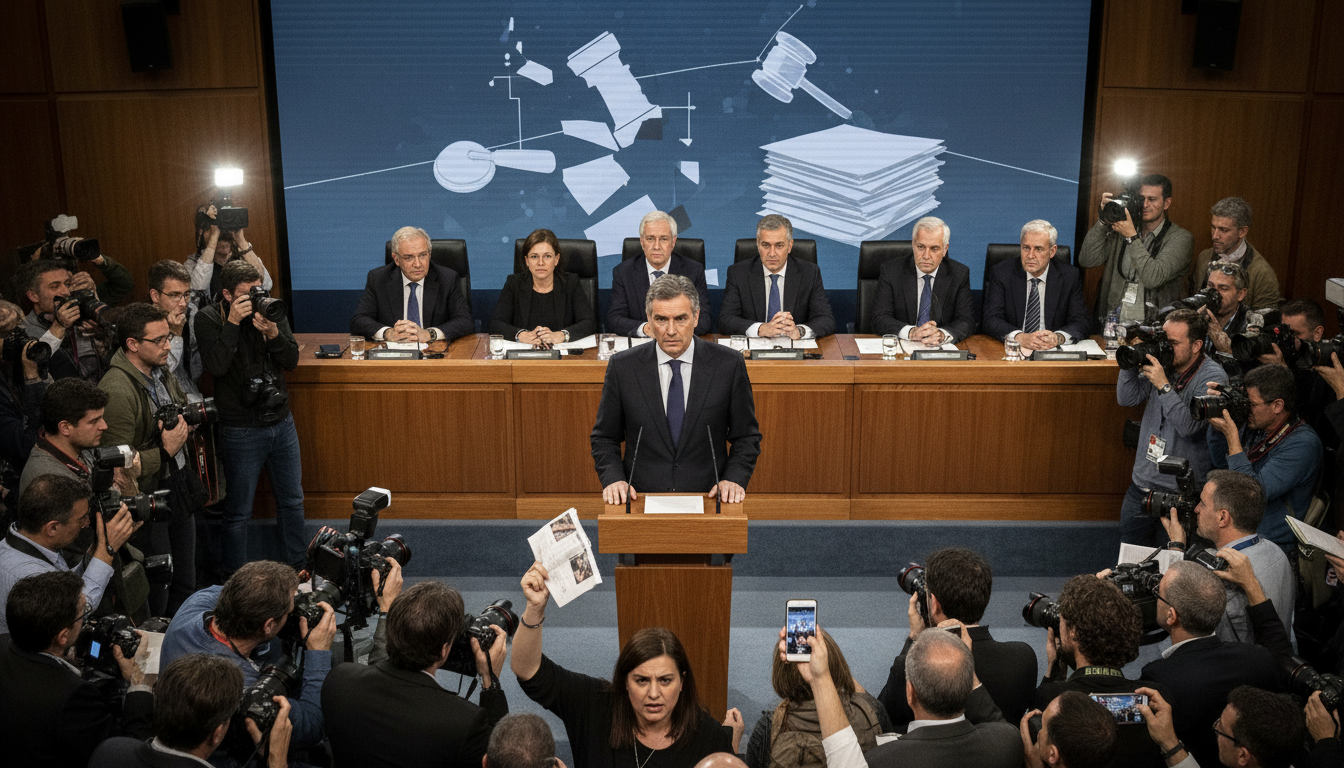
Florentino Perez Press Conference Sparks Sexism Accusations and Media Backlash at Real Madrid
Florentino Perez’s explosive press conference has drawn accusations of sexism and attacks on the media as Real Madrid confronts calls for elections and fallout from the Negreira controversy.


Real Madrid president Florentino Perez delivered a combative press conference this week that reignited debate over his leadership and bedside conduct. Perez used the platform to call for club elections, criticize national sports media, and address the long-running Negreira allegations, drawing sharp criticism for comments directed at journalists. The event has deepened divisions around the club at a moment of growing on-field instability and prompted responses from rival clubs, national outlets, and observers of Spanish football. The sequence of events has shifted attention from sporting concerns to questions about governance, tone, and the club’s public relations strategy.
Perez Announces Elections
Perez told assembled reporters he would seek fresh validation from club members through early elections, framing the move as a democratic solution to the club’s current unrest. He portrayed the ballot as a test of confidence and an opportunity to reset leadership priorities, while also suggesting that critics within the media and rival clubs had politicized Real Madrid’s recent struggles.
Critics quickly pointed out structural barriers to candidacy in Real Madrid’s electoral system, noting that the financial threshold required to stand effectively restricts competition. Observers described the announcement as a high-stakes gamble intended to mobilize supporters but unlikely to produce a competitive field of alternatives.
Comments Toward Journalists Prompt Outcry
During the press conference Perez made remarks that many journalists and media organizations described as sexist and demeaning, including questions about the expertise of specific reporters. Those comments immediately provoked condemnation from prominent national outlets and professional associations that said the language crossed accepted norms for public discourse.
The exchange with a female journalist in particular drew sustained scrutiny, and the timing of personnel changes at one national newspaper shortly afterward intensified attention. Media watchdogs and commentators said the episode underscored persistent concerns about the treatment of women in sports journalism.
Negreira Case and Accusations of Media Bias
Perez addressed the Negreira case in detail, accusing press coverage of unfairness and suggesting that reporting had amplified the club’s problems rather than focusing on broader context. He framed parts of the investigation as politically motivated and urged media outlets to recalibrate coverage in favor of balance.
The Negreira matter—the controversy surrounding historic payments to a former refereeing official and subsequent legal and sporting inquiries—remains a sensitive topic across Spanish football. Perez’s comments sought to shift public debate toward procedural questions and perceived antagonism from specific newspapers and broadcasters.
Rival Clubs and Public Statements
Within an hour of the press conference, FC Barcelona issued a formal statement responding to Perez’s remarks, emphasizing concerns about the tone and substance of his attacks. The response was measured but firm, signaling that the incident had escalated beyond routine inter-club rivalry into a matter of public relations and institutional accountability.
Other clubs, pundits, and league figures also weighed in, with some condemning the personal nature of the criticisms and others urging a return to focus on sporting matters. The breadth of the reaction suggested that Perez’s intervention had widened the debate beyond Real Madrid’s membership circle.
Dressing Room Turmoil Adds Pressure
Off the field, Real Madrid’s dressing room has been described by multiple insiders as fractious in recent months, a condition that has compounded scrutiny of the president’s statements. Coaching changes and reported locker-room disputes have fed narratives that leadership at every level, from the dugout to the boardroom, requires reassessment.
The arrival of high-profile signings did not mute those concerns, and some players and staff have been publicly and privately reported as frustrated by inconsistent messaging and perceived instability. Analysts said the confluence of sporting underperformance and public controversy makes a sustained period of introspection more likely.
Potential Consequences and Next Steps
The fallout from the press conference has several potential trajectories: legal or journalistic complaints related to the comments; intensified scrutiny of the club’s electoral rules; and renewed media attention on governance and ethical standards. Each outcome could alter the political calculus at Real Madrid and shape how the club manages internal dissent.
While Perez framed elections as a course-correcting mechanism, skeptics argued that the move may entrench polarization if not accompanied by clear operational changes. For members, players, and sponsors, the immediate priority will be whether the climate created by this episode can be stabilized before it affects results on the pitch.
The crisis of confidence triggered by this week’s events will test Real Madrid’s institutional resilience and the willingness of its leadership to accept outside critique. The next weeks are likely to see formal responses from media organizations, potential member motions, and continued coverage that will determine whether the episode becomes a short-lived controversy or the start of a broader governance reckoning.