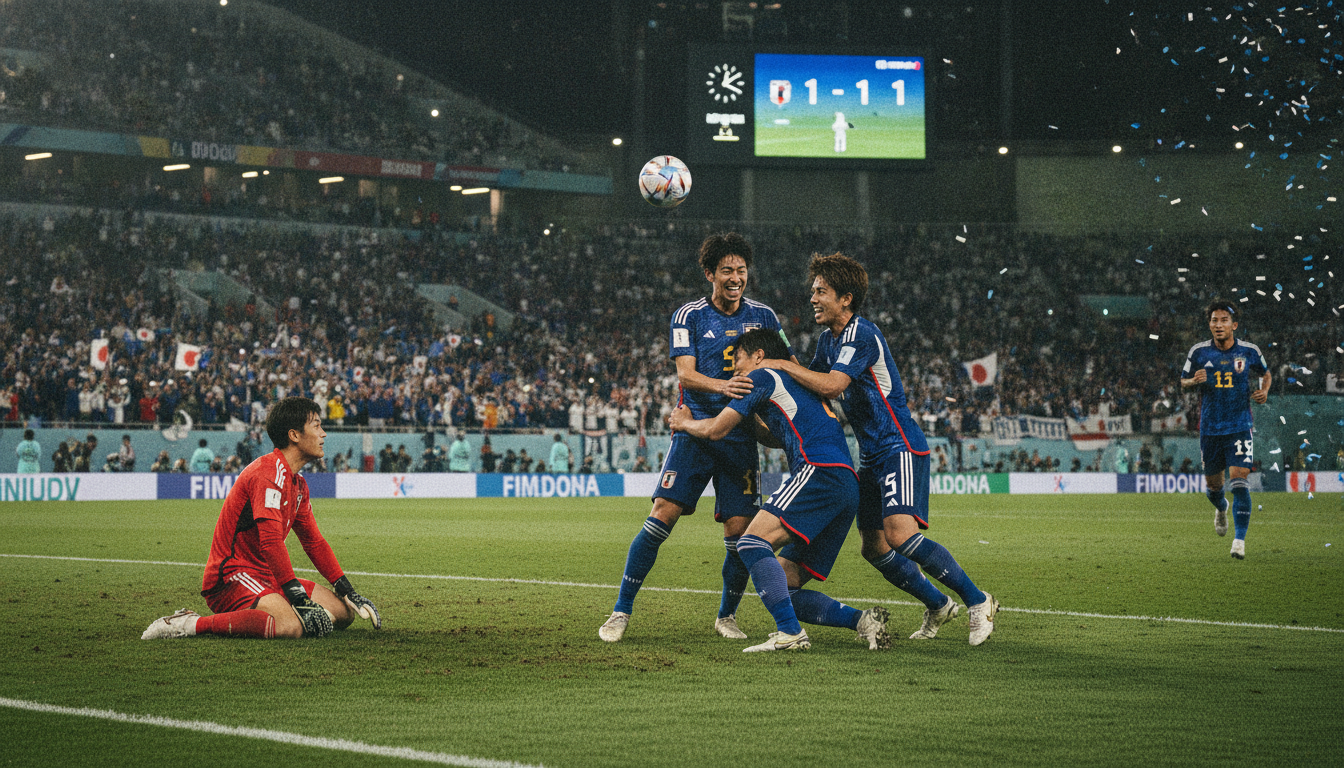
Kamada header rescues Japan in draw with Netherlands as late equalisers emerge at World Cup
Daichi Kamada’s 88th-minute header secured a dramatic Japan draw with Netherlands, reinforcing a tournament trend of late equalisers and contentious commentary from officials.
Japan drew level with the Netherlands thanks to Daichi Kamada’s header in the 88th minute, turning what had been a cagey contest into late drama. The Japan draw with Netherlands continued a pattern at this World Cup in which fixtures have been decided or altered in the final moments. Earlier in the day, Germany and Curaçao combined for an eight-goal spectacle while UEFA president Aleksander Čeferin’s blunt assessment of the tournament added an off-field storyline. The late scores and public remarks together shaped a day in which both on-pitch twists and outside commentary dominated headlines.
Kamada’s late header turns the tide
Daichi Kamada rose to meet a cross and produced the decisive header that denied the Netherlands victory and gifted Japan a share of the points. The goal arrived after a largely subdued first half and a second period that had lacked genuine attacking rhythm until the closing stages. Kamada’s finish underlined Japan’s resilience and provided a fitting punctuation to a match that threatened to slip into tedium before erupting in the final moments.
That late intervention will carry extra weight for Japan in group calculations and morale, giving the side belief that matches can be altered with concentration and persistence. For the Netherlands, the failure to protect a lead will be dissected for its lapses in control and the inability to kill off the game when opportunities presented. Both teams will leave with lessons from a contest that was defined more by its finish than its middle periods.
Eight-goal thriller between Germany and Curaçao steals attention
Earlier on the same matchday, Germany and Curaçao delivered an eight-goal contest that provided the kind of entertainment neutral fans crave. The game swung in momentum and tone, producing goals at both ends and offering a stark contrast to the more measured proceedings between Japan and the Netherlands. Supporters from Curaçao were applauding their team’s efforts despite the scoreline, a reminder that football’s emotional stakes vary widely across supporters and nations.
The spectacle supplied moments of individual quality and defensive frailty in equal measure, and it highlighted how different tactical approaches can lead to wildly divergent scorelines on the same day. Coaches and analysts will point to both attacking intent and structural weaknesses when assessing the performances. Such high-scoring affairs also remind tournament followers that unpredictability remains a core feature of the World Cup.
Čeferin’s remarks spark debate beyond the pitch
The tournament’s narrative was further complicated by UEFA president Aleksander Čeferin’s comment about a “huge number of completely uninteresting” matches, a line that quickly circulated across social channels and media outlets. Coming during a day of dramatic late goals and a high-scoring game, the remark was seized upon as blunt and ill-timed by some and as an expression of a widely held frustration by others. The uproar underlines how comments from influential figures can shape public conversation as much as the action on the field.
Reactions to Čeferin’s words split between those who saw him voicing a common sentiment about fixture balance and those who considered the phrasing dismissive of smaller nations and their fans. Tournament organizers and national federations are likely to navigate the fallout carefully, mindful that public perception of the competition depends on more than results alone. The exchange demonstrates how off-field commentary can become entwined with sporting outcomes and narratives.
Late equalisers emerging as a tactical and psychological factor
A string of late goals at the tournament has begun to influence how teams approach the final phases of matches, both tactically and mentally. Substitutions, game management and defensive concentration have been tested repeatedly as teams attempt to either preserve slim leads or manufacture last-minute breakthroughs. Coaches will be studying the patterns and adjusting their plans to account for the frequency of decisive moments after the 80th minute.
The psychological effect is also significant: teams that repeatedly find late goals gain a confidence boost that can carry through the group stage, while those that concede late can see morale and belief dented. Tournament fitness, depth of squad and the ability to maintain focus under pressure have all been highlighted by these conclusions, and managers will likely factor late-game scenarios more explicitly into training and matchday decision-making.
Group dynamics and scheduling shape fan interest
Beyond individual matches, the mix of fixtures has produced conversations about which nations will draw the most attention and why. Games such as Germany against Curaçao grab headlines for their entertainment value, while matches involving geographically or culturally proximate countries attract concentrated interest from particular audiences. The varied appeal of fixtures has been reflected in viewing patterns and stadium atmospheres across the tournament.
Several matches were lined up to follow, with Ivory Coast versus Ecuador underway and Sweden set to face Tunisia later in the day, illustrating how the schedule compresses diverse narratives into a single matchday. For many supporters the choice of which match to follow depends on national affiliation or the promise of competitive balance. Tournament organizers and broadcasters will take note as they shape coverage and highlight packages for viewers around the world.
What teams take away and what to watch next
For Japan, the point secured by Kamada’s header offers both a tactical template and a reminder that matches can be salvaged with persistence until the final whistle. The Netherlands will return to training to address moments of vulnerability that allowed the contest to be reopened. Meanwhile, the high-scoring tie involving Germany and Curaçao will prompt analysis from multiple perspectives, from attacking creativity to defensive organization.
Coaches will prepare for the immediate demands of the next fixtures with an eye to the emerging pattern of late drama, and squads will likely emphasize concentration and fitness in the coming days. As the group stage progresses, the accumulation of points from late equalisers could have a decisive impact on who advances and which tiebreakers come into play.
The evening’s events — a dramatic late equaliser, a multi-goal thriller and a headline-grabbing off-field comment — combined to produce a matchday that exemplified the unpredictable mix of sport and narrative the World Cup produces.