Javier Tebas Defends LaLiga and Critiques Premier League Model at July 28, 2026 Welcome Event
LaLiga’s Javier Tebas defended Spain’s model on July 28, 2026, criticizing Premier League losses and praising self-regulation to protect club sustainability.


Javier Tebas used LaLiga’s annual welcome ceremony for newly promoted clubs on July 28, 2026, at the league’s Madrid headquarters to reaffirm his stewardship of Spain’s top competitions.
He framed the debate as one of long-term stability versus short-term financial spectacle, directly contrasting LaLiga’s self-regulatory framework with what he described as systemic losses in the Premier League.
Tebas also referenced comments and challenges tied to Real Madrid and its representatives, making clear the remarks were part of a broader defence of LaLiga’s financial controls.
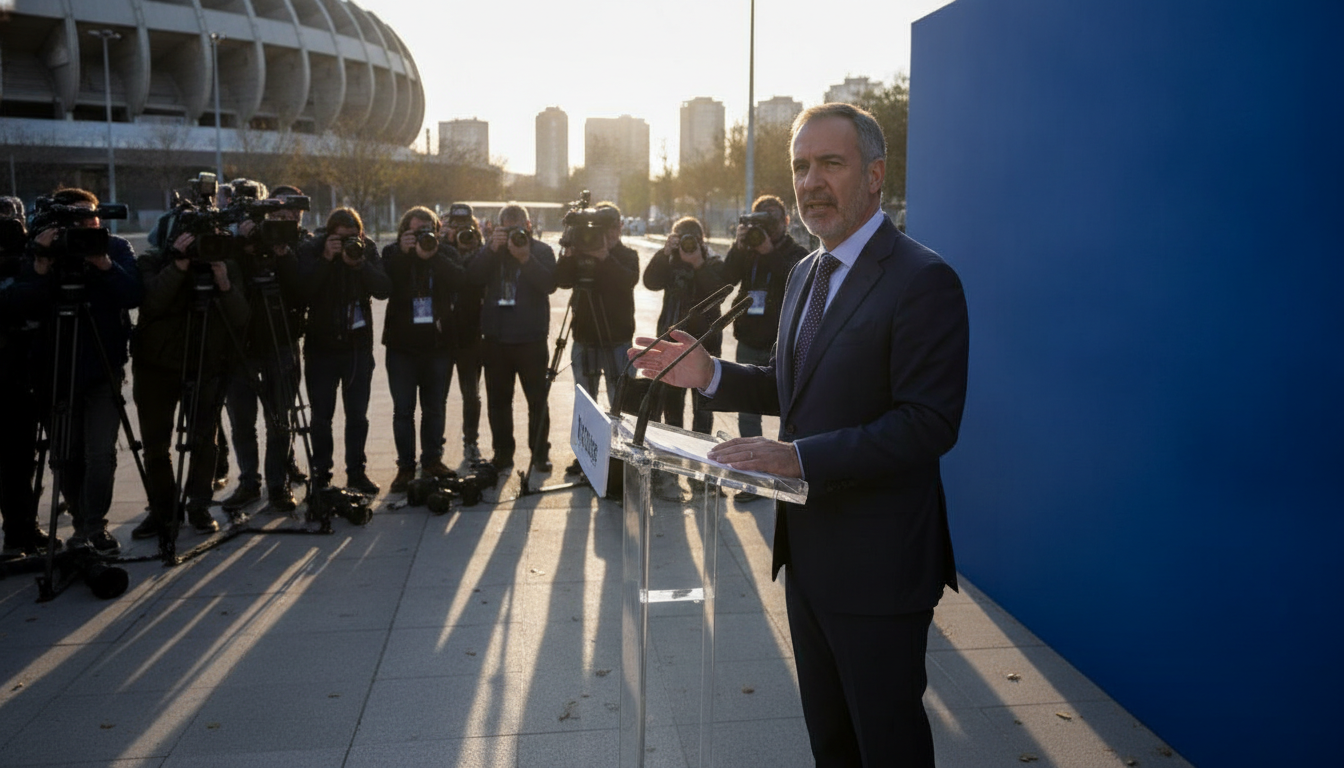
Tebas speaks at LaLiga headquarters to incoming clubs
Tebas opened the institutional ceremony by addressing the clubs promoted to LaLiga and the Segunda División, setting the tone for the new season with a focus on governance.
He framed his remarks around the responsibility of the league to protect the institutions and ensure durability for clubs at every level of Spanish football.
The president used the occasion not only to welcome teams but to underline the benefits, in his view, of LaLiga’s financial rules and collective approach to economic oversight.
Direct critique of Premier League finances and model
Tebas launched a pointed critique of the Premier League’s financial trajectory, characterising the English top flight as having accumulated significant operating losses in recent years.
He asserted that the Premier League had sustained annual losses of roughly £1 billion in consecutive years and claimed cumulative losses in the order of £10 billion over a longer period.
Those figures were presented as part of a larger argument that a model driven by relentless spending and risk-taking may undermine the long-term survival of clubs and weaken institutional memory.
Claims about regulation and the role of government
A central plank of Tebas’s argument was the contrast in regulatory approaches between Spain and England.
He told assembled officials that the British model had prompted government intervention and the introduction of an external regulator, while LaLiga remained, in his description, a self-regulated competition governed by club-agreed financial controls.
The point was used to defend the league’s Fair Play and economic rules as a collective safeguard, designed to prevent boom-and-bust cycles that can damage clubs and communities.
Reference to Real Madrid and competitive context
Tebas addressed recent sporting fortunes as part of his broader critique, making reference to what he described as doubts raised by representatives of Real Madrid.
He noted that public skepticism of LaLiga’s systems often surfaces amid the sporting circumstances of a single club and pointed out that Real Madrid had not won the league title in his cited two-year period.
By doing so he sought to disentangle institutional criticism from episodic sporting results and to frame scrutiny as sometimes driven by short-term competitive frustration.
Leicester example and concerns over club survival
In arguing for sustainability, Tebas invoked the example of Leicester City’s celebrated but anomalous Premier League title, using it to illustrate the ephemeral nature of sporting triumph.
He argued that championship success does not guarantee permanence, and that financial imprudence can place historic achievements at risk of dilution or decline.
The example was used to caution that sporting parity must be matched by financial prudence if clubs are to remain viable custodians of their communities.
Implications for broadcasting, investment and competition
Tebas’s remarks implicitly addressed several high-stakes issues that shape modern football: how broadcasting revenue is distributed, how foreign investment is regulated, and how competitive balance is maintained.
His emphasis on self-regulation and collective fiscal rules signals LaLiga’s intent to keep economic governance under the control of clubs and the league, rather than cede oversight to outside authorities.
That approach is pitched as a means to protect smaller clubs from the shocks of unrestrained spending while preserving the institutional continuity of Spain’s football pyramid.
Spain’s league chief also suggested that different regulatory choices yield different outcomes in market behaviour, with consequences for ticket prices, youth development, and local ties.
Tebas argued that a sustainable model prioritises the long-term viability of clubs and their social role, an argument aimed at officials and fans wary of boom-driven cycles that leave debt-laden institutions behind.
Reactions and potential ripple effects across European football
The intervention from LaLiga’s president is likely to rekindle debate across Europe about the optimal balance between competitiveness and prudence.
Clubs, broadcasters and national regulators may revisit their assumptions about how to reconcile commercial growth with the need for stable finances.
The comments also raise questions for cross-border competitions and for UEFA’s evolving regulatory agenda, with potential knock-on effects for how revenue sharing and licensing conditions are negotiated.
Tebas’s public stance will also be interpreted in Madrid and beyond as a defensive posture in the ongoing conversation about the shape of elite club football.
By highlighting the risks he associates with the Premier League model, he is attempting to make the case that LaLiga’s path, while perhaps less flashy, better preserves the institutions that sustain the sport.
The ceremony on July 28, 2026 gave Tebas a platform to crystallise his argument: that governance choices made at league level matter as much as on-field results.
Whether his critique prompts wider policy debates in England, or shifts perceptions among investors and fans, will depend on how stakeholders respond to the twin imperatives of growth and sustainability.
Despite the sharp tone of some remarks, the speech reaffirmed LaLiga’s publicly stated priorities: tighter economic controls, protection for lower-tier clubs, and a league structure intended to preserve historical and community value.
Those priorities will face tests in the coming seasons as broadcasting markets, sponsorship dynamics and global investment patterns continue to evolve.
LaLiga now prepares for the new season with renewed emphasis on economic rules and with Tebas publicly defending the federation’s chosen path.