Jürgen Klopp emerges as favourite to become Germany coach after Nagelsmann exit
Jürgen Klopp reportedly favourite to become Germany coach after Nagelsmann exit; DFB to seek talks while Germany rebuilds following World Cup disappointment.

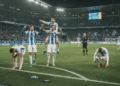
Germany’s football federation has signalled Jürgen Klopp as the frontrunner to replace Julian Nagelsmann as Germany coach, saying it will seek talks with the former Liverpool and Borussia Dortmund manager. The announcement follows Nagelsmann’s departure after Germany’s last-32 exit at the 2026 World Cup, and comes amid public debate about the national team’s next steps. Klopp, currently Head of Global Soccer at Red Bull, has said recently that he was not ready to discuss the role, but the DFB’s statement places him at the centre of the conversation about a wider sporting reset. The possibility of Klopp returning to frontline national management has reignited discussion on tactics, culture and the timeline for appointing a new coach.
DFB confirms intention to approach Klopp
The German Football Association made clear it intends to open discussions with Jürgen Klopp as it begins the process of finding Nagelsmann’s successor. In a formal statement following the World Cup elimination, the DFB said it will seek talks with Klopp, identifying him as a priority contact. Federation officials have framed the outreach as an early step in a deliberate process rather than an immediate appointment. The organisation’s public positioning underlines both the symbolic appeal of Klopp and the need for a high-profile figure to restore confidence after the tournament exit.
Klopp’s public stance and current role at Red Bull
Klopp has publicly downplayed immediate speculation about taking over the national team and emphasised his commitment to his current position. Since January 2024 he has served as Head of Global Soccer at Red Bull, a role he has described as substantive and not a part-time undertaking. After Germany’s loss to Paraguay in the World Cup last 32, Klopp said it was not the right moment to discuss the national team job. His comments indicate a clear separation for now between his corporate responsibilities and any potential return to coaching duties at international level.
Germany’s World Cup record and the wider context
Germany’s exit at the last-32 stage extended a troubling World Cup run that began with group-stage failures in 2018 and 2022. The four-time world champions have not recorded a knockout victory since lifting the trophy in 2014, a statistic that has intensified scrutiny of the national setup. The performance in North America and Mexico exposed tactical frailties and raised questions about player development pathways and selection priorities. Those failures have driven the DFB’s willingness to consider high-profile candidates who might instil renewed belief in the squad.
Support for Klopp’s potential appointment and scepticism
Many former players, fans and pundits see Klopp as a figure capable of restoring atmosphere and a winning mentality within the national team. His track record of transforming club environments at Borussia Dortmund and Liverpool is frequently cited as evidence that he can rebuild team cohesion and competitive hunger. At the same time, critics caution that managerial change alone cannot address structural issues across Germany’s domestic game and youth development systems. The debate underscores a divide between those hoping a charismatic coach can lift performance quickly and others demanding deeper institutional reforms.
Practical obstacles and timeline for a decision
If the DFB moves ahead with Klopp as a primary candidate, practical considerations will shape the pace and outcome of any negotiations. Klopp’s commitments at Red Bull, contract terms, and his own willingness to return to the intensity of international management are all factors that would influence timing. The federation will also need to define a mandate for the new coach, balancing short-term recovery with a longer-term rebuild ahead of Euro 2028 and future World Cups. Any appointment process is likely to include comprehensive discussions about squad strategy, coaching staff, and performance metrics.
What changes a new coach would be expected to make
Observers expect a new Germany coach to address tactical clarity, defensive organisation, and selection consistency after the World Cup exit. Restoring a competitive identity may involve clearer roles for senior players, a more cohesive pressing structure, and a renewed emphasis on integrating younger talent. The federation and potential coach would need to agree on a realistic path to restore Germany’s standing in major tournaments. Beyond on-field tactics, cultural changes around preparation, leadership, and communication are widely regarded as necessary to reverse the recent decline.
Germany now faces a period of introspection about how best to combine immediate recovery with long-term competitiveness. The DFB’s public intent to speak with Jürgen Klopp places him at the centre of that conversation while he maintains distance from the speculation. Any decision will need to reconcile Klopp’s current professional commitments with the federation’s expectations for rapid improvement. The coming weeks are likely to bring focused dialogue inside the DFB and among potential candidates as Germany charts its next chapter.