Luis Enrique Joins Elite After Third Champions League Triumph with PSG
Luis Enrique becomes the fifth manager to win three Champions League titles as PSG’s tactical reset and shared scoring deliver back-to-back European glory.

Luis Enrique has completed a landmark achievement by securing his third Champions League / European Cup title, guiding Paris Saint-Germain to continental success and joining an exclusive group of managers. The triumph crowns a rapid rebuild at PSG after his appointment in July 2023 and follows earlier continental success he achieved with Barcelona. The victory underlines a tactical and cultural shift at the Parc des Princes that transformed a star-laden squad into a more balanced, collective unit.
Historic milestone for a modern coach
Luis Enrique now stands alongside Bob Paisley, Pep Guardiola, Carlo Ancelotti and Zinedine Zidane as only the fifth manager to claim three Champions League or European Cup trophies. That elite company reflects a rare consistency at the highest level of European club football and cements Enrique’s reputation among the era’s top coaches. His three titles combine the success he enjoyed with Barcelona and the recent back-to-back wins he has delivered at PSG.
The achievement also marks a personal vindication for a coach who has long mixed bold tactical ideas with a pragmatic streak when necessary. Enrique’s pathway to this point has been shaped by stints across Spain and Europe, and his ability to adapt his methods to different player groups has been central to PSG’s turnaround. The result reshapes how critics and peers will judge his managerial legacy going forward.
A cultural reset after the Mbappé era
PSG’s title run came after the club’s most high-profile forward, Kylian Mbappé, departed for Real Madrid in 2024 on a free transfer. That exit initially looked like a potential setback for the French champions but instead triggered a deliberate rebalancing across the squad. Under Enrique’s guidance the team shifted from a star-centric attack to a more distributed offensive model, with goals shared across the roster.
Journalist Guillem Balagué has pointed to Enrique’s stated preference for collective scoring as a turning point, noting the coach once said he preferred five players scoring ten goals each over one player scoring fifty. The statistical evidence supports that blueprint: PSG recorded a notably higher total of goals across competitions in the season following Mbappé’s departure, and their attacking output became less predictable for opponents. The club’s approach has emphasized movement, interchanging roles and making the most of a deeper pool of finishing options.
Scoring records and Champions League dominance
PSG’s European campaign this season featured an exceptional offensive return and matched a long-standing tournament record for goals scored in a single edition. The team’s 45 goals in the Champions League equalled the mark previously set by Barcelona in 1999–2000, highlighting the potency of Enrique’s system in continental competition. That number reflects both the quality of PSG’s forward play and the tactical emphasis on creating numerous scoring opportunities.
Beyond raw goal figures, PSG’s run demonstrated a capacity to maintain high levels of performance through different phases of elite competition. Their attacking versatility allowed them to respond to varied defensive schemes and to exploit spaces created by rapid positional rotations. The statistical milestones underline how the club’s collective approach translated into consistent threat throughout the campaign.
Discipline, cohesion and emotional control
A striking element of PSG’s transformation under Enrique has been the team’s on-field discipline and emotional control. Observers noted the squad accumulated fewer yellow cards than counterparts in Europe’s top domestic leagues, a metric that reflects calmer decision-making and collective focus. That discipline helped PSG avoid suspensions and maintain consistent line-ups during crucial stretches of the season.
The calmer temperament is also a product of Enrique’s management style, which emphasized responsibility and mutual support among players. That dynamic reduced individual frustration and produced a team that defended and attacked as an organized unit. The discipline was visible both in the way PSG managed delicate game situations and in how they executed tactical plans against varied opposition.
Bond with supporters and personal resonance
Enrique’s connection with PSG supporters deepened as the club’s fortunes improved, and that bond was visible in a series of fan tributes during key moments of the campaign. Supporters have acknowledged not just the on-field success but also the coach’s personal story, including the memory of his daughter, Xana, who died in 2019. After PSG’s earlier European success, fans produced a flag commemorating Enrique and Xana planting a Barcelona flag in the centre circle, a symbolic reference to past triumphs and personal resilience.
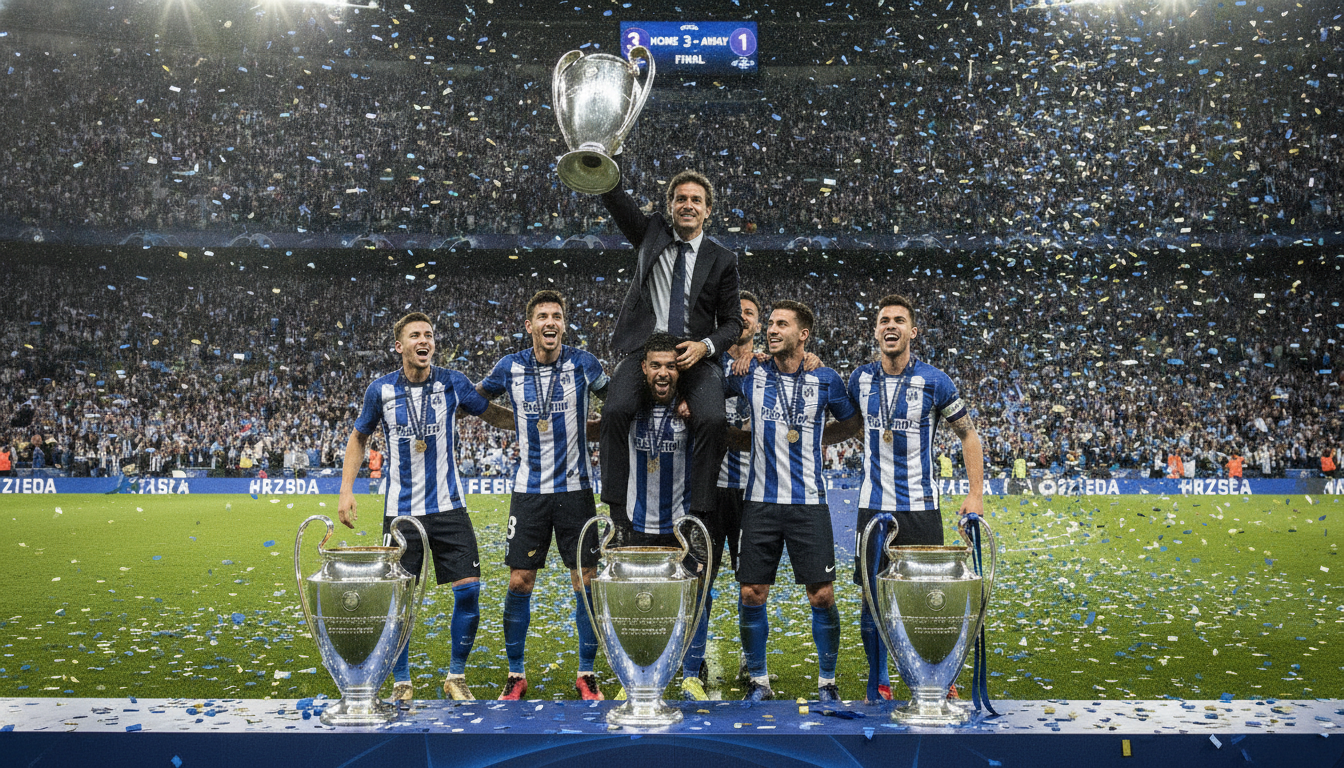
The emotional link continued in major fixtures, where giant banners and vocal backing created a strong atmosphere around the team. In the immediate aftermath of the title win, Enrique celebrated with club president Nasser Al-Khelaifi and was carried aloft by his players, moments that encapsulated both sporting reward and collective catharsis. Those scenes illustrated how cultural identity and personal narratives can become intertwined with club achievement.
From hesitation to conviction: Enrique’s route to PSG
When first approached about the PSG job, Enrique was reportedly reluctant, concerned that a roster of established stars might not match his vision for the type of football he wanted to play. According to Balagué, the discussion shifted from whether PSG could win trophies to what kind of team they would be, and Enrique agreed only when convinced he could implement an attractive, offensive philosophy. That initial scepticism has given way to tangible results as his blueprint took hold.
Once on board, Enrique focused on reshaping team dynamics, instilling tactical clarity and asking players to buy into a collective identity. The change required both recruitment adjustments and a recalibration of roles for existing players, but the payoff was a more fluid, resilient side. The coach’s ability to translate his ideas into on-field patterns has been central to PSG’s European success.
The rapid nature of that transformation — and its completion with a major trophy — will be studied by clubs and managers interested in how to convert star power into sustainable team performance.
Luis Enrique’s third Champions League title not only enhances his standing among the modern game’s most accomplished managers but also serves as a case study in cultural change within a top club. The route from initial hesitation to continental triumph combined tactical clarity, shared scoring responsibility and a renewed bond with supporters. That mix allowed PSG to convert potential into silverware and to etch Enrique’s name alongside the few coaches who have reached this rarefied summit.