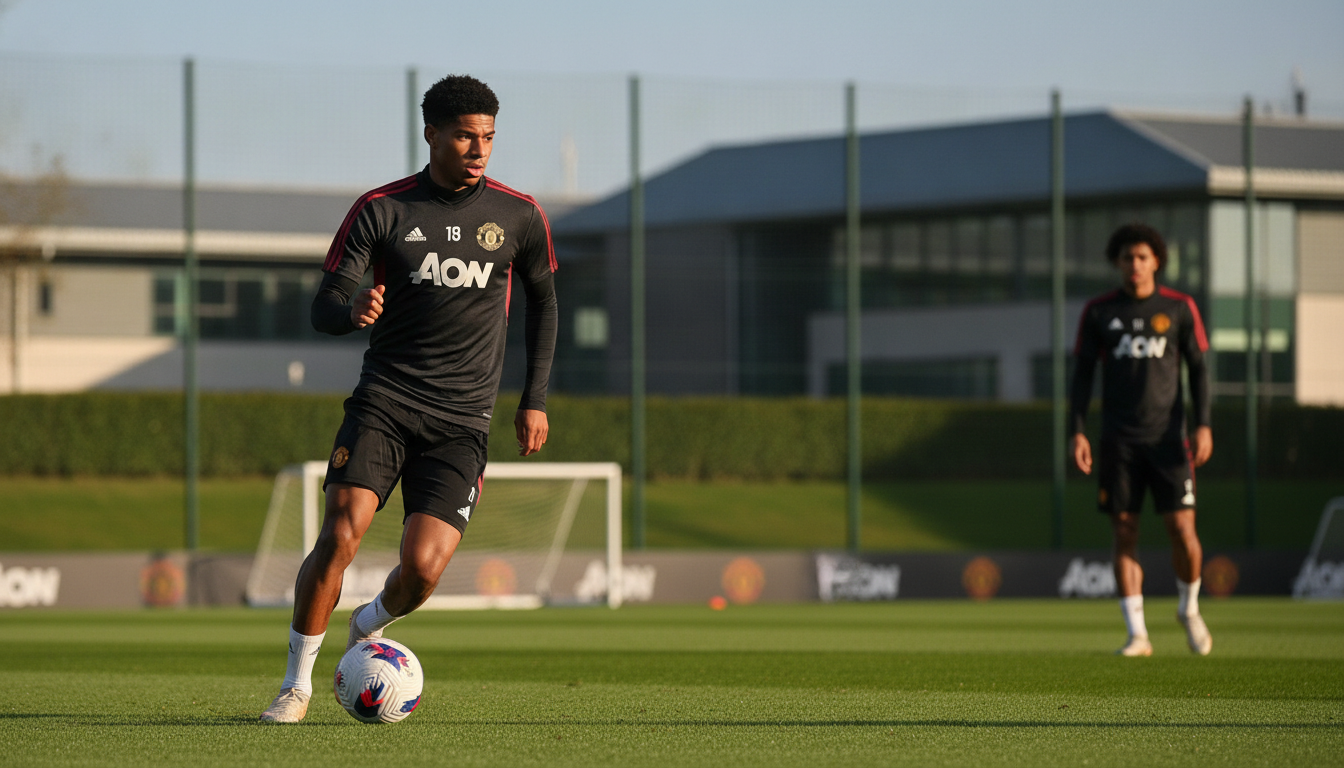
Manchester United weigh Crysencio Summerville move as Rashford’s future shapes winger strategy
Manchester United consider Crysencio Summerville as a winger target while Marcus Rashford’s future will decide transfer plans; club added Santos and Tielemans.


Manchester United are exploring a move for winger Crysencio Summerville as the club balances summer recruitment with uncertainty over Marcus Rashford’s long-term role. The potential signing of Summerville is understood to hinge on decisions around big-name forwards and the composition of the attacking unit. United have already bolstered the midfield this window with the arrivals of Andrey Santos and Youri Tielemans, leaving the club to prioritise improvements in the final third. The next six weeks of the transfer window will be decisive as Manchester United weigh internal options against available targets.
Summer signings and the squad picture
Manchester United’s early activity in the transfer market has focused on strengthening midfield depth and balance. The acquisitions of Santos and Tielemans signal a desire to refresh the engine room and improve ball progression and defensive cover. Despite interest in other targets, a proposed move for an Atalanta attacker fell through, leaving the club to reassess where further reinforcements will be most effective. The priority now appears to be adding pace and creativity on the wings to complement the existing front-line options.
The winger position remains a clear area of attention as Manchester United evaluate whether to supplement or reshape their attacking choices. The club is weighing internal solutions against external targets and will be guided by squad balance and tactical fit. If a senior forward departs, that would create flexibility to pursue a younger, high-energy wide player. Conversely, retention of established stars would likely shift recruitment toward rotational options and tactical specialists who can thrive under Michael Carrick’s regime.
Why Crysencio Summerville is on the shortlist
Summerville’s profile fits the kind of wide attacker United seek: direct, quick, and able to influence the final third from either flank. His performances since leaving Leeds have shown a player with a strong attacking instinct and a capacity to stretch defences with pace and intelligent off-ball movement. Available reports place him in a price bracket that could be attractive this summer, especially if his current club faces the financial realities of relegation. That combination of on-field attributes and transfer-market accessibility explains why he has been flagged as a viable target.
Beyond raw speed, Summerville offers versatility that could be valuable in a squad needing adaptive attacking shapes. He can operate as an inverted winger, a traditional wide forward or in a more advanced inside-right role, providing tactical options for the coaching staff. For a club managing high squad wages and established players, a young, hungry wide option presents an efficient way to inject energy without disrupting the core offensive framework. Summerville would also offer United a domestic and continental option with room to develop under senior guidance.
Marcus Rashford’s role and transfer leverage
Marcus Rashford’s future at Manchester United is the central variable affecting late-window decisions in the forward line. The England international returned to form during a recent loan spell, producing consistent attacking returns and showing adaptability across positions in the final third. That recent uptick has prompted the club to consider whether keeping Rashford and building around him remains the best sporting path, rather than selling a high-value asset to fund other moves.
Any potential sale of Rashford would reshape recruitment priorities immediately, creating a clear need for a proven wide forward or a multi-role attacker who can replace his direct contributions. Yet the club must balance transfer income against the cost of recruiting a ready-made replacement and the risk of disrupting team cohesion. For Manchester United, the decision will hinge on assessing Rashford’s projected contribution under Michael Carrick and whether alternative signings offer a better risk-reward profile.
Tactical fit under Michael Carrick
Michael Carrick’s approach in pre-season planning and early training sessions has emphasised an attacking mindset with structured transitions and positional fluidity. That tactical blueprint would allow a player like Summerville to thrive if asked to make penetration runs and provide direct service into the box. Carrick’s system also values wide players who can contribute defensively and support the midfield’s ability to recycle possession and press in coordinated phases.
Retaining Rashford would give Carrick a more experienced, multifunctional option capable of playing on either flank or through the center, helping to maintain tactical balance across competitions. The manager’s choices will be influenced by which combinations offer the most sustainable output across a long domestic and European calendar. For recruitment, that means any incoming winger must demonstrate not only attacking output but also tactical discipline and adaptability.
Financial realities and market timing
The financial backdrop to this transfer window is an important constraint on Manchester United’s decision-making. Clubs dealing with relegation or other fiscal pressures may be more willing to accept relatively modest offers for promising players, and that dynamic underpins the reported availability of certain wide attackers. United must navigate valuation, wage structures and squad registration rules while also preserving room for further moves if departures materialise.
Timing is also critical: with only weeks left in the window, negotiation leverage, medical scheduling and potential sell-on clauses all factor into whether a deal can be completed. The club’s assessment will balance an immediate need for fresh attacking options against the premium often required to secure players at short notice. For strategic planners at Manchester United, patience versus expediency will be a recurring debate as the deadline approaches.
Comparing development trajectories and squad projection
When contrasting a signing like Summerville with the option of keeping Rashford, the club must consider both immediate output and longer-term trajectory. Rashford offers proven Premier League experience and a known quantity under pressure, while a younger signing would bring potential growth and resale value. Manchester United’s board and technical staff must weigh short-term competitive objectives against sustainable roster building.
The projection of the squad for the upcoming season suggests a hybrid approach is viable: retain core experienced attackers while supplementing with younger, high-ceiling players who can be integrated gradually. That model reduces the risk of destabilising the dressing room while refreshing the offensive options. Ultimately, the final decision will reflect a broader transfer strategy that balances competitiveness, financial prudence and long-term squad planning.
Manchester United’s transfer choices over the coming weeks will reveal whether the club prioritises immediate attacking returns or opts to reinvest in younger, high-potential talent that can be nurtured under Carrick’s coaching staff.
The outcome will depend on bids received, internal performance assessments and how the club judges its readiness to compete across multiple fronts next season.