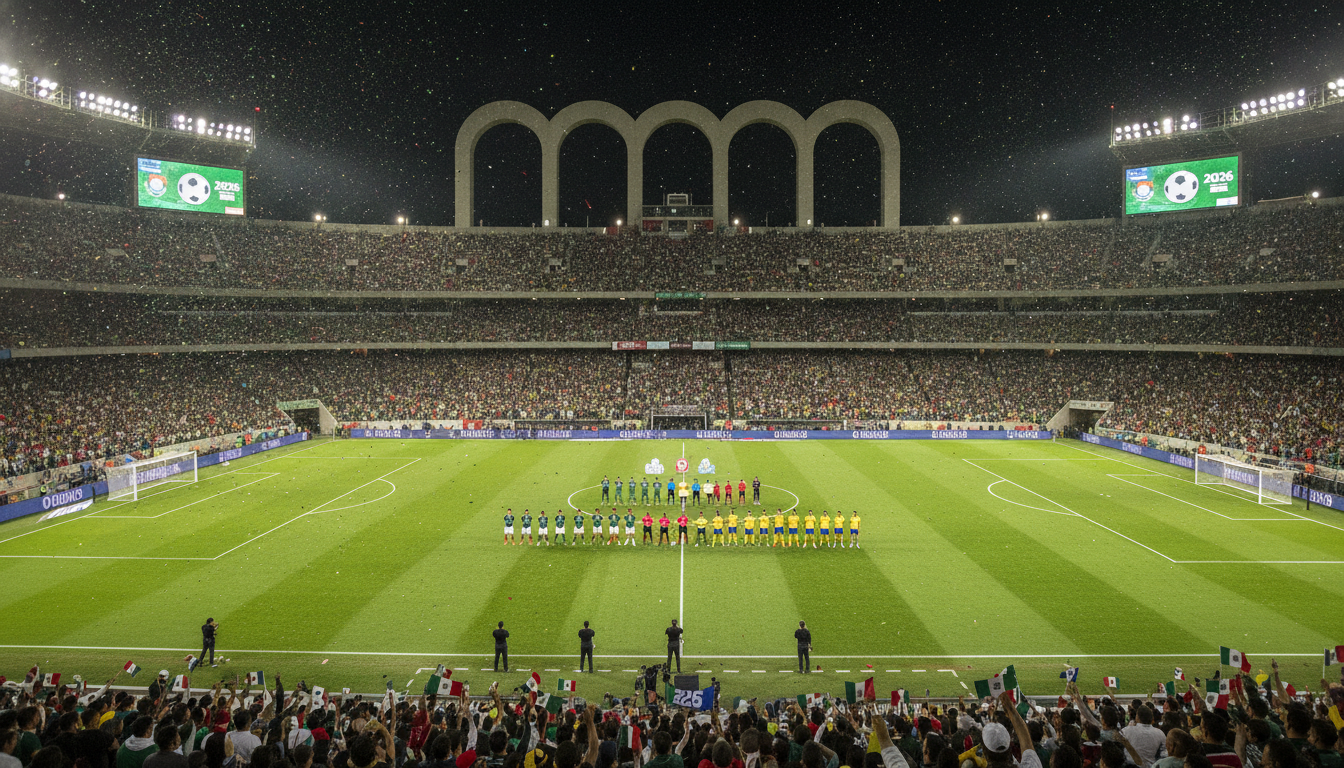
2026 World Cup: Mexico to Open Tournament at Estadio Azteca Against South Africa
Mexico opens the 2026 World Cup at Estadio Azteca against South Africa on June 11, 2026, marking the nation’s first home World Cup matchday since 1986. The fixture launches a 103-game tournament co-hosted by the United States, Canada and Mexico and carries heavy historical and emotional weight for the host nation. Expectations will be high at the Azteca as El Tri attempt to convert home advantage into momentum in the early stages of the competition.


Azteca to Host 2026 World Cup Opener
Estadio Azteca in Mexico City will stage the opening match of the 2026 World Cup, returning the tournament to Mexican soil nearly four decades after 1986. The stadium’s capacity, altitude and frenzied atmosphere make it one of the most distinctive venues on the global calendar and a symbolic choice for kick-off. Organizers and local authorities have prepared enhanced security and crowd-management measures to handle the intense demand for tickets and to ensure smooth passage for fans and teams.
The decision to begin the tournament at the Azteca underscores Mexico’s central role in the 2026 event and acknowledges the stadium’s place in World Cup lore. The opening night will be closely watched by broadcasters and sponsors, and the match is expected to draw large global audiences given the expanded format and multiple host nations. For Mexico, the occasion provides both a showcase and a test as the hosting responsibilities add pressure to immediate sporting expectations.
Mexico’s Return to Home World Cup Nights
Mexico’s first home World Cup match since 1986 carries a mixture of nostalgia and unfinished business for supporters and players alike. In 1986, El Tri reached the quarter-finals on home ground, creating a benchmark the national team has sought to match in the decades since. That run remains the last time Mexico reached the last eight, adding historical significance to the 2026 opener and fueling aspirations among fans and federation officials.
Beyond history, the present squad faces the practical challenge of converting domestic support into results, particularly under the spotlight of an opening match. Managerial decisions, squad selection and match-day tactics will all be scrutinized with the knowledge that a positive start can shape momentum in the group stage. Mexico’s blend of experienced internationals and younger talents will be measured against South Africa’s approach in a game that promises intensity from the first whistle.
South Africa’s Tactical Challenge and Coaching Experience
South Africa arrive in Mexico City with a tactical plan shaped by experience and the specific demands of playing at altitude. The Bafana Bafana coach has previously managed teams in high-pressure environments and will look to balance defensive compactness with quick transitions to exploit spaces. Facing Mexico on their home turf requires pragmatic preparation, including physical conditioning and strategies to counteract both crowd influence and local climate conditions.
Set pieces and wide play are likely to be focal points for South Africa as they seek to unsettle Mexico’s rhythm, while Mexico may try to dominate possession and tempo. Player matchups in midfield and on the wings will determine control of the game and create scoring opportunities on either end. For South Africa, a measured plan that neutralizes Mexico’s strengths and capitalizes on counterattacks could yield a valuable result in the opening fixture.
Historic Echoes: 1986 Memories and New Expectations
The opening in Mexico inevitably evokes memories of the 1986 tournament when the national side progressed to the quarter-finals in front of home crowds. That campaign remains a touchstone for Mexican football culture and is often referenced as both inspiration and a reminder of expectations. The 2026 World Cup return presents an opportunity to reframe the national narrative and to build a new chapter that matches or surpasses past achievements.
Fans, pundits and former stars have multiplied previews comparing eras, players and tactics, but modern football’s dynamics differ markedly from four decades ago. Advances in sports science, expanded tournament format and the international spread of talent mean today’s Mexico team competes in a far more complex environment. The cultural significance of hosting, however, remains intact and will shape atmosphere, media coverage and the emotional tenor of the opening match.
Tournament Logistics, Broadcasts and Global Reach
The opening match at the Azteca will be part of a 103-game schedule that culminates at MetLife Stadium near New York on July 19, 2026. Coordinating fixtures across three host countries brings logistical complexity for teams, broadcasters and fans, especially regarding travel, time zones and venue readiness. FIFA and local organizing committees have highlighted transport plans, hospitality arrangements and broadcast infrastructure to ensure the tournament’s opening night meets global expectations.
Television and streaming outlets have slated the match for prime windows in multiple markets, and the kickoff time has been set to maximize global viewership while accommodating local fans. Sponsors and partners will capitalize on the high-profile launch, leveraging branding and activation opportunities throughout the stadium and in host cities. For supporters unable to attend, the global broadcast will offer the first glimpse of tournament narratives, from early group-stage storylines to breakout performances.
What to Watch in the Opening Match
Several on-field elements will determine the tone of the 2026 World Cup from the outset, beginning with Mexico’s starting eleven and tactical shape. The host nation will likely field a lineup aimed at combining attacking intent with midfield stability, while any selection surprises could signal a manager’s willingness to take early risks. Individual battles in midfield and on the flanks will be decisive, particularly given the Azteca’s unique playing environment.
Fitness and acclimatization will also be key, especially for visiting players unaccustomed to Mexico City’s altitude and climate. Look for rotation patterns, substitution timing and how each coach manages energy levels across the first 60 minutes. Set-piece deliveries, defensive organization and conversion of chances may ultimately separate the sides in what is expected to be a lively, tightly contested opener.
In addition to the on-field contest, crowd engagement and pre-match ceremonies will play a role in shaping the evening’s narrative. The opening event is designed to be both a sporting contest and a cultural showcase, with fan choreography, ceremonies and visual presentations that reflect Mexico’s traditions. The combination of spectacle and competitive intensity will provide the initial snapshot of how this expanded World Cup seeks to merge sport and pageantry.
The opening match at Estadio Azteca will set the tone for the 2026 World Cup, offering El Tri a chance to harness home support and South Africa a platform to announce their intentions on the world stage. Both teams face immediate pressure to deliver performances that meet expectation, but the broader success of the tournament will be judged over the coming weeks across multiple cities and venues. As the world tunes in, the Azteca’s famous night will stand as the first chapter of a new World Cup story.