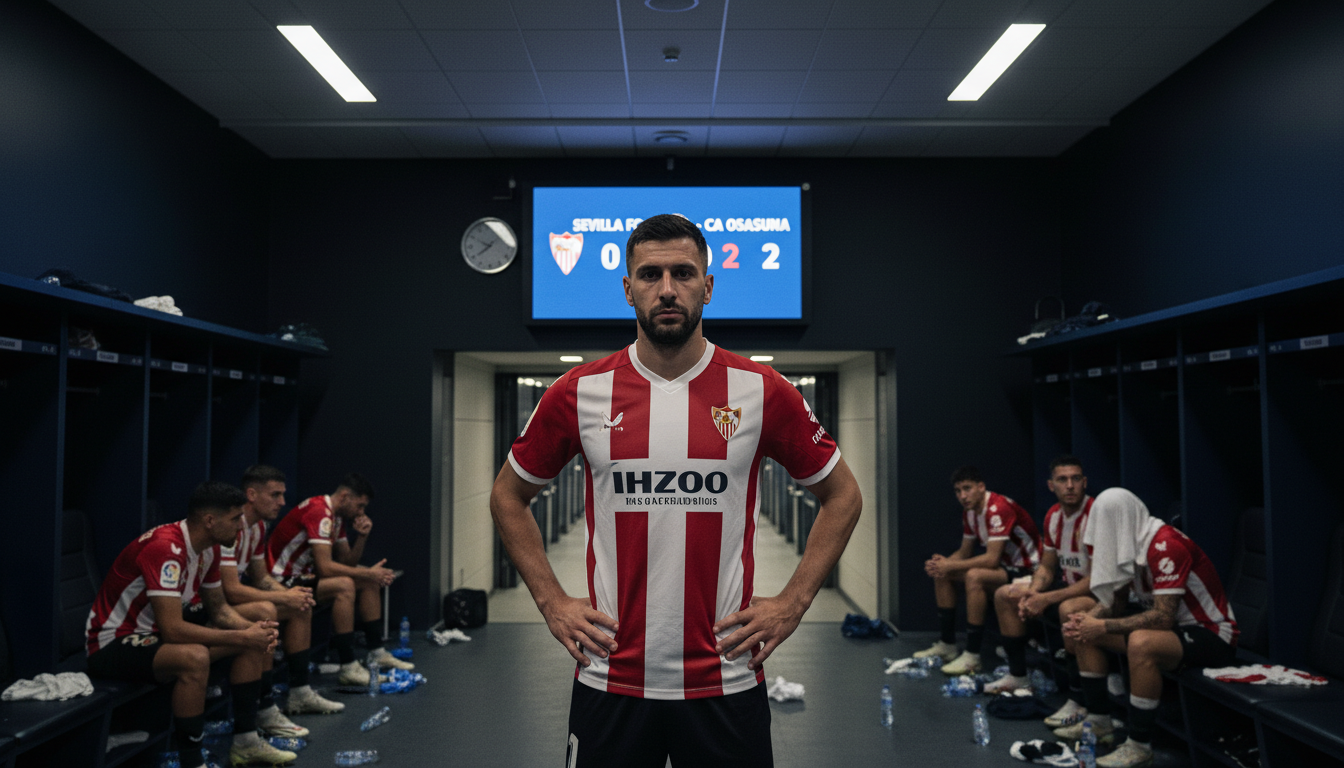
Nemanja Gudelj message pledges accountability and unity after Sevilla defeat at El Sadar
Nemanja Gudelj message to Sevilla fans captain vows responsibility and unity after El Sadar loss, promising the team will give its soul in Monday’s match.


Nemanja Gudelj sent a public message to Sevilla supporters after the club’s defeat at El Sadar, taking responsibility as captain and promising a full response on the pitch. The captain said the squad feels deep frustration and vowed that the players will give everything in the upcoming match on Monday. His remarks, posted on social media, were aimed directly at the club’s fans who traveled and those who remain loyal in Nervión.
Captain Nemanja Gudelj Addresses Sevilla Supporters
Nemanja Gudelj opened his message by acknowledging the collective frustration felt by the squad after the loss to Osasuna. He framed the disappointment as shared among players, staff and families, but singled out the Sevilla fan base with a direct appeal. Gudelj stressed that the team understands the weight of the current situation and accepted responsibility as both captain and member of the club.
In his post he promised to lead by example and to marshal the dressing room in pursuit of better results. He used emphatic language to reassure supporters that the squad would respond and fight for the club’s reputation. The tone was conciliatory yet resolute, a mix intended to calm concerns while signaling determination.
Gudelj also referenced the special bond between the players and the stands at the Ramón Sánchez Pizjuán, evoking past nights of unity and success. He asked supporters not to doubt the team and pledged that players would not doubt themselves. That appeal to shared history and mutual support underpinned the core of his message.
Match context and Gudelj’s role at El Sadar
Sevilla suffered a setback at El Sadar when Osasuna secured the victory, a result that prompted visible frustration among the visiting squad. Nemanja Gudelj did not start the match but entered during the second half and was part of the group that ultimately could not turn the result around. His post after the game made clear that the players felt responsible for the outcome.
The defeat revived questions about form and consistency that have been present at different points this season. Gudelj’s intervention as captain sought to address those concerns publicly and to offer a simple response to a complex set of issues. He focused less on tactical critique and more on collective accountability and a promise to correct course.
From a leadership perspective Gudelj’s presence off the bench and his subsequent statement reflect the role he now occupies within the squad. Whether he continues to appear mainly as a substitute or regains a regular starting role will be determined by the coaching staff, but his message positioned him as a central voice in the dressing room.
Promises ahead of the Monday fixture
A central element of Gudelj’s message was the promise that the team would "give its soul" in the next match scheduled for Monday. He asked supporters to remain behind the team and suggested that the stadium environment can once again deliver the kind of lift the players need. The commitment was framed as immediate and tangible, with players expected to respond on the field.
That pledge places additional pressure on the next fixture but also offers a clear rallying point for fans and the squad. Gudelj made it explicit that the players were ready to shoulder responsibility and to try to restore pride in front of the home crowd. The captain’s vow creates expectation while attempting to channel frustration into collective effort.
The appeal to unity ahead of Monday is a standard but significant tactic in professional football, particularly when clubs face a sequence of difficult results. By promising full commitment, Gudelj attempted to reset the narrative and to ask for backing rather than criticism from the stands.
Reaction from supporters and club atmosphere
Initial responses from sections of the Sevilla fan base were mixed, reflecting a club that remains passionately engaged but increasingly anxious about recent results. Some supporters praised Gudelj for speaking openly and accepting responsibility, while others directed criticism at the broader squad or the sporting project. Social media and fan forums showed a blend of encouragement and impatience.
Within the club the message appeared aimed at dampening discord and at preventing fracture between team and supporters. Public statements by captains can be effective in redirecting anger into unified backing when they are matched by performances. Gudelj’s appeal emphasized trust in the supporters and an expectation that such trust will be reciprocated by greater effort on the pitch.
Maintaining a constructive atmosphere in Nervión will depend on how the players respond when they next take the field. A positive display could quickly shift mood and validate Gudelj’s words, while another poor performance would likely intensify scrutiny of both players and management. The coming days will be a delicate period for relationships across the club.
Implications for coaching and squad decisions
Gudelj’s message also places focus on the coaching staff and their tactical choices, without mentioning any individual by name. When a captain makes a public pledge of this nature it often prompts questions about lineup decisions and strategy for upcoming matches. The coaching staff will be under pressure to find solutions that produce immediate improvement.
Selection choices may be influenced by the need to respond to the message of unity and commitment called for by the captain. Coaches will weigh form, fitness and tactical fit against the psychological impact of altering personnel after a dispiriting result. Any significant changes in approach will be observed closely by supporters looking for signs of decisive action.
The internal dynamics of training and preparation may shift in the short term as players strive to back up the captain’s public assurance. Managers often capitalize on moments like this to reinforce discipline and to tighten standards, aiming to translate rhetoric into measurable performance. The effectiveness of those measures will inform assessments of leadership and strategy.
Wider significance for Sevilla’s season
While a single message from a captain cannot alter the course of a season on its own, Gudelj’s intervention does underscore the seriousness with which the club is treating a series of unsatisfactory results. The appeal to history and to the special home atmosphere at Nervión suggests that the team is looking to draw on tradition as a source of momentum. That emotional framing is intended to produce immediate behavioral change.
Longer term the episode highlights the pressures facing clubs with demanding fan bases and high expectations. Leadership both on and off the pitch will be examined as Sevilla seeks to stabilize results and reestablish the consistency expected by its supporters. The captain’s words offer a narrative of accountability but also set a standard that the squad must meet in competition.
If the team responds with a strong performance in the upcoming match the message will be remembered as a turning point. If not, the public admission of frustration will be seen as an honest expression of concern that did not translate into corrective action. For now the club faces a short but critical window to demonstrate that the promise made by Nemanja Gudelj was more than words.
Nemanja Gudelj’s message after the loss at El Sadar was an attempt to bridge player and supporter in a moment of strain, to accept responsibility and to create the conditions for a response on the pitch. The coming match will serve as the first test of that pledge, and the atmosphere in Nervión will reflect whether the team has succeeded in converting words into performance.