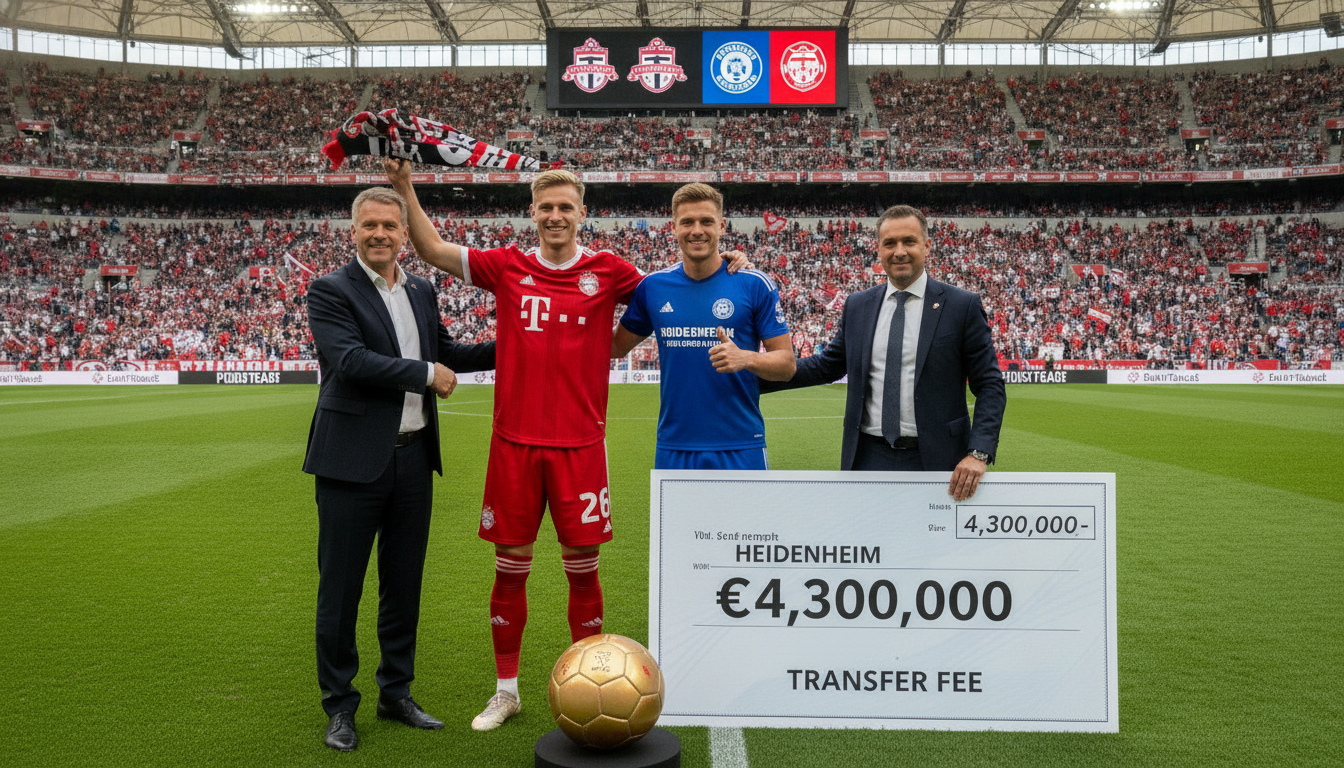
Niklas Dorsch transfer nets Heidenheim around €4.3m as midfielder heads to Toronto
Heidenheim to receive roughly €4.3m from Niklas Dorsch transfer to Toronto, despite the midfielder’s market value being listed near €2.5m.


Strong opening: Deal confirmed and sums involved
Niklas Dorsch transfer to Toronto has been confirmed in reports, with Fabrizio Romano stating that 1. FC Heidenheim will receive close to €4.3 million for the 28-year-old midfielder.
The figure is notable given that independent valuations have placed Dorsch’s market worth nearer to €2.5 million, making the move a clear financial win for the German club.
Heidenheim reacquired Dorsch in August 2024 for €3.5 million, and the sale to Toronto allows the club to recoup that outlay and generate a margin.
Heidenheim’s €4.3m windfall from Dorsch sale
The payment to Heidenheim represents one of the club’s more significant outgoing transfer receipts in recent years.
Sources indicate the package will rank Dorsch among the club’s top sales, trailing only a couple of previous transfers in overall value.
For a club of Heidenheim’s scale, converting a player back into a net positive transfer inflow provides immediate financial flexibility.
Dorsch’s career path and ties to Heidenheim
Dorsch first joined Heidenheim in 2018 on a free transfer and developed through the club’s system before moving on to Belgium.
He was sold to KAA Gent in 2020, where an activated release clause produced a fee of roughly €3.5 million at the time.
After spells elsewhere, Dorsch returned to Heidenheim in 2024, adding experience and continuity ahead of this latest move to MLS.
On-field profile and statistics
Across his Bundesliga tenure, Dorsch accumulated 118 top-flight appearances, establishing himself as a reliable midfield presence rather than a prolific goalscorer.
He scored four goals in the Bundesliga and added three more across 63 appearances in the 2. Bundesliga with Heidenheim during his earlier spell.
Those numbers underline a player valued for ball progression, positional sense, and passing rather than high output on the scoresheet.
Transfer economics: fees, valuation and reported figures
The reported incoming sum of roughly €4.3 million contrasts with market estimates around €2.5 million, highlighting how negotiated deals can diverge from valuation models.
Heidenheim paid €3.5 million to re-sign Dorsch in 2024, so the new transfer both offsets that cost and produces a modest profit for the club.
Such discrepancies between market value and transaction price reflect variables including contract length, squad needs, and a buying club’s strategic priorities.
Why the fee is significant for Heidenheim’s business model
Heidenheim operates with a smaller budget than many Bundesliga clubs, so transfer gains carry amplified impact on operational planning and recruitment.
Turning a re-signing into a profitable exit strengthens the club’s ability to reinvest in scouting, academy development, or targeted transfers.
The sale also reduces wage obligations and frees a roster spot for Heidenheim to pursue younger or more affordable options.
Toronto’s rationale: what the club gains on the field
Toronto’s acquisition of Dorsch brings an experienced European midfielder to MLS, one who can add structure in central areas and guide younger teammates.
The club will likely value Dorsch’s positional discipline, passing range, and experience across German and Belgian leagues as assets suited to a competitive MLS campaign.
Expectations around his role will be framed by Toronto’s tactical needs and how the coaching staff plans to integrate a midfield profile focused on control and transition.
Contractual and timing considerations
Reports suggest the transfer was negotiated with attention to contractual details that made the deal attractive to all parties involved.
For Heidenheim, the timing allowed a recovery of transfer spend from the preceding window; for Dorsch, the move represents a fresh chapter abroad.
From Toronto’s perspective, recruiting a player with European top-flight experience during the MLS season can bolster depth immediately.
Implications for Heidenheim’s squad planning
Losing Dorsch removes a seasoned central option, prompting Heidenheim to explore internal promotions or the transfer market for a replacement.
The club may prioritize players with similar technical profiles or opt for a tactical shift that suits the personnel already available.
Whatever the direction, the sale creates a clear mandate: convert the transfer proceeds into sustainable squad upgrades or long-term investments.
Broader Bundesliga context and market trends
This transaction illustrates ongoing trends of Bundesliga mid-table and smaller clubs monetizing assets to sustain growth and competitiveness.
Cross-border moves to MLS have become routine for players seeking new challenges and for clubs looking to match financial objectives with squad evolution.
Heidenheim’s handling of the fee matches a pragmatic approach embraced by many clubs outside the league’s top echelon.
What supporters and observers should watch next
Fans will monitor how the club deploys the incoming funds and whether replacements arrive who preserve the team’s tactical balance.
Observers should also watch Dorsch’s adaptation to MLS style and whether he can translate his Bundesliga experience into consistent influence for Toronto.
The next transfer window and Heidenheim’s early-season form will likely reveal the longer-term effects of this deal.
The sale of Niklas Dorsch to Toronto, reported to bring roughly €4.3 million to Heidenheim, underscores a pragmatic transfer outcome that benefits the German club financially while offering the player a new career chapter abroad.