Ramis demands urgency as Osasuna pre-season begins without Ante Budimir
Ramis starts Osasuna pre-season on July 10, 2026, demanding intensity, backing youth and squad stability while the club stays alert to transfer opportunities.


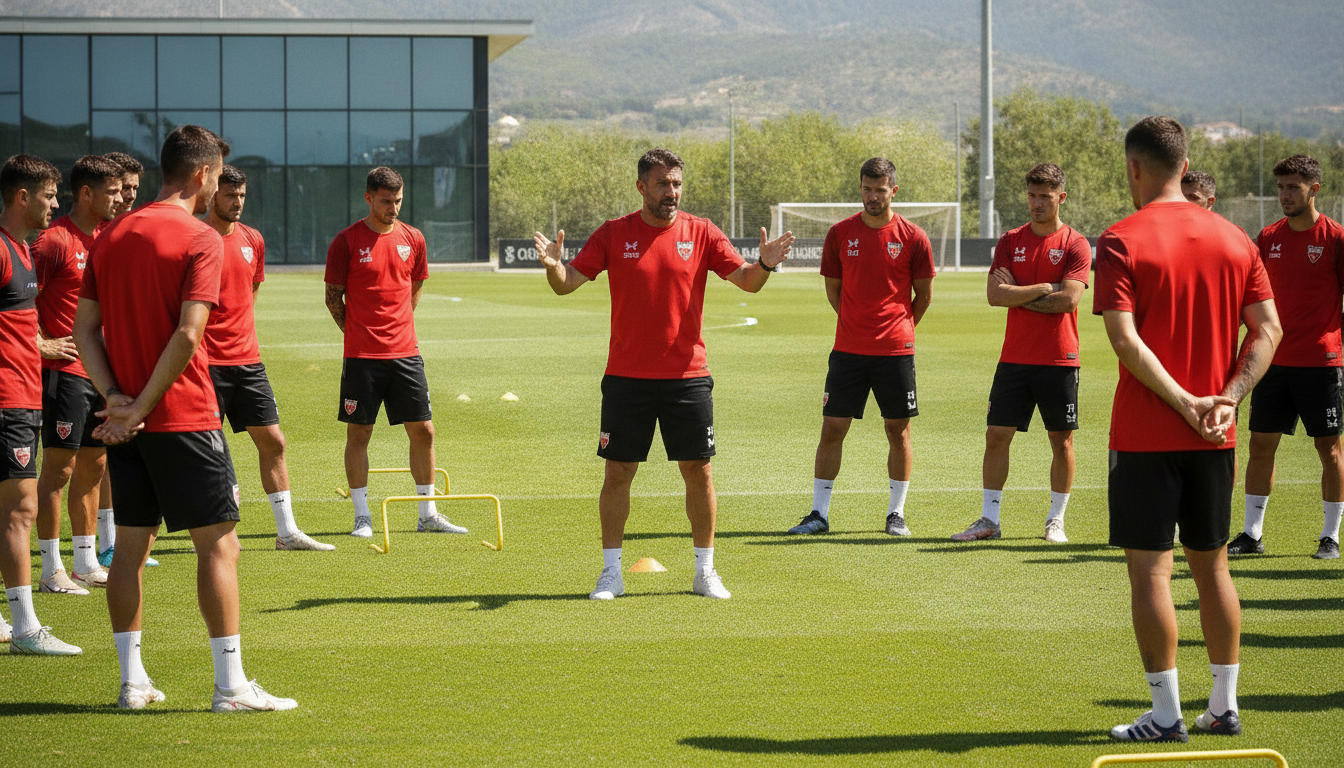
Luis Miguel Ramis took charge of Osasuna’s first training session on July 10, 2026, and made clear that the Osasuna pre-season will be run at high tempo even as striker Ante Budimir was absent. The new coach told players that time cannot be wasted in preparation and that the work done in training will determine the team’s capacity to compete when the season starts. Ramis framed the opening day as the start of a process focused on fitness, cohesion and preventing injuries.
Ramis sets a demanding tone from day one
Ramis used his debut with the first-team to set expectations about standards and urgency across the squad. He underlined that in professional football every minute matters and that the pre-season must be used efficiently to avoid repeating past difficult moments. The coach emphasized immediate accountability and said the aim is to build habits now that will pay off on matchdays.
The message combines physical intensity with attention to detail and tactical clarity. Ramis insisted that the team must train with the same competitive edge it will need on Sundays, and he framed the period as the time to instill those competitive habits. His approach signals a pragmatic, results-oriented start to the Osasuna pre-season.
First impressions in the dressing room and on the pitch
Ramis described his first contact with the squad in the locker room as very positive and used the initial moments to get to know players personally. He and his coaching staff spent time speaking with individuals during breaks in training, listening to their feedback and assessing readiness. The coach believes these conversations are as important as drills for translating training into match performance.
The opening sessions at Tajonar combined conditioning with ball work aimed at rebuilding the feel for competition. Staff prioritized load management and progressive intensity to protect players from injury while reintroducing tactical patterns. That balance of work and care underscores a cautious but purposeful Osasuna pre-season.
Player dialogue and the method for adoption of ideas
Ramis has made player communication central to his method, using stoppages and one-to-one exchanges to measure understanding. He said that familiarizing players with his ideas is a process that happens through repetition in training and through continuous dialogue. The coach expects that those daily interactions will be what allows the squad to translate preparation into performance during competitive fixtures.
The coaching team is also bearing down on coherence across sessions so players receive consistent messages. Technical staff are coordinating to ensure drills reflect the tactical scenarios Ramis wants replicated on matchdays. That structured, conversation-led approach is intended to accelerate assimilation and sharpen in-game decision-making.
Squad stability and trust in the sporting direction
Despite possible summer transfers, Ramis expressed calm about squad makeup and voiced confidence in the club’s sporting leadership. He praised the work of Braulio and Cata and said the club will avoid rushed decisions, preferring measured moves that truly strengthen the group. The coach added that most first-team players appear focused, content and committed to the work at Tajonar.
Ramis also highlighted the value of homegrown talent, pointing to several Promesas players who will be integrated to support the senior squad. He framed the use of academy prospects as a complementary resource rather than a stopgap, suggesting the club will blend experience and youth. That mix, he argued, provides depth and continuity without destabilizing the core group.
Targeted reinforcement: full-backs and wide options
Ramis identified the areas most in need of reinforcement as the wide defensive roles where departures have left limited cover. The coach noted that the exits of Víctor Muñoz on the wing and Javi Galán have reduced options and left the team with a single natural player for those positions. He said the club is monitoring the market and will act if an opportunity appears that improves squad balance and competition for places.
At the same time Ramis stressed selectivity in recruitment, preferring signings that address specific tactical needs and cultural fit. He insisted that Osasuna will not sign players for volume but for impact, and that any additions must be compatible with the club’s style and budget. That restrained stance reflects a longstanding club policy of careful transfer activity.
Training detail and injury prevention have been prioritized during the opening days. Coaching staff have staged tailored sessions to ramp up intensity while limiting spikes in load that can trigger injuries. Ramis and his medical team are coordinating individualized programmes so players returning from the off-season ramp up safely and are available for the earliest friendlies.
The absence of Ante Budimir at the start of pre-season was noted but not dramatized by the new coach. Ramis said he would like every player to be present from day one, but acknowledged the realities of the market and individual circumstances. The club continues to manage communications around player availability and expects to have a clearer picture of squad composition as July progresses.
Ramis framed the season build-up as a “beautiful path” to undertake together with the players and stressed that competitive preparation is consolidated in the week-to-week work. He believes the team’s response in training will be the best indicator of how Sundays will unfold and wants the squad to internalize the demands of the coaching staff quickly. That long-term mindset underpins the early decisions taken at the start of Osasuna pre-season.
Club sources say the sporting department will remain vigilant for chances to strengthen the squad without destabilizing it. The emphasis is on targeted additions in the wide defensive and wing areas while continuing to promote promising talent from the Promesas. Sporting leadership has been tasked with marrying tactical requirements to financial prudence as the club navigates the summer window.
Ramis has already started weaving tactical motifs into small-sided exercises and positioning drills, insisting that understanding will come through repetition and match-like scenarios. He is prioritizing team shape, pressing triggers and transitions, areas where Osasuna historically demands discipline and collective effort. Those priorities will shape the forthcoming friendly schedule and the internal metrics used to assess progress during the Osasuna pre-season.
The coach’s message to supporters was one of pragmatism and ambition: use the pre-season to prepare carefully, but with enough intensity to arrive at the season ready to compete. Ramis wants the team to learn quickly and to translate the early work into consistent results, relying on a mixture of first-team continuity and youth integration. For now the focus remains squarely on building a resilient, well-drilled squad that can meet the demands of the coming campaign.