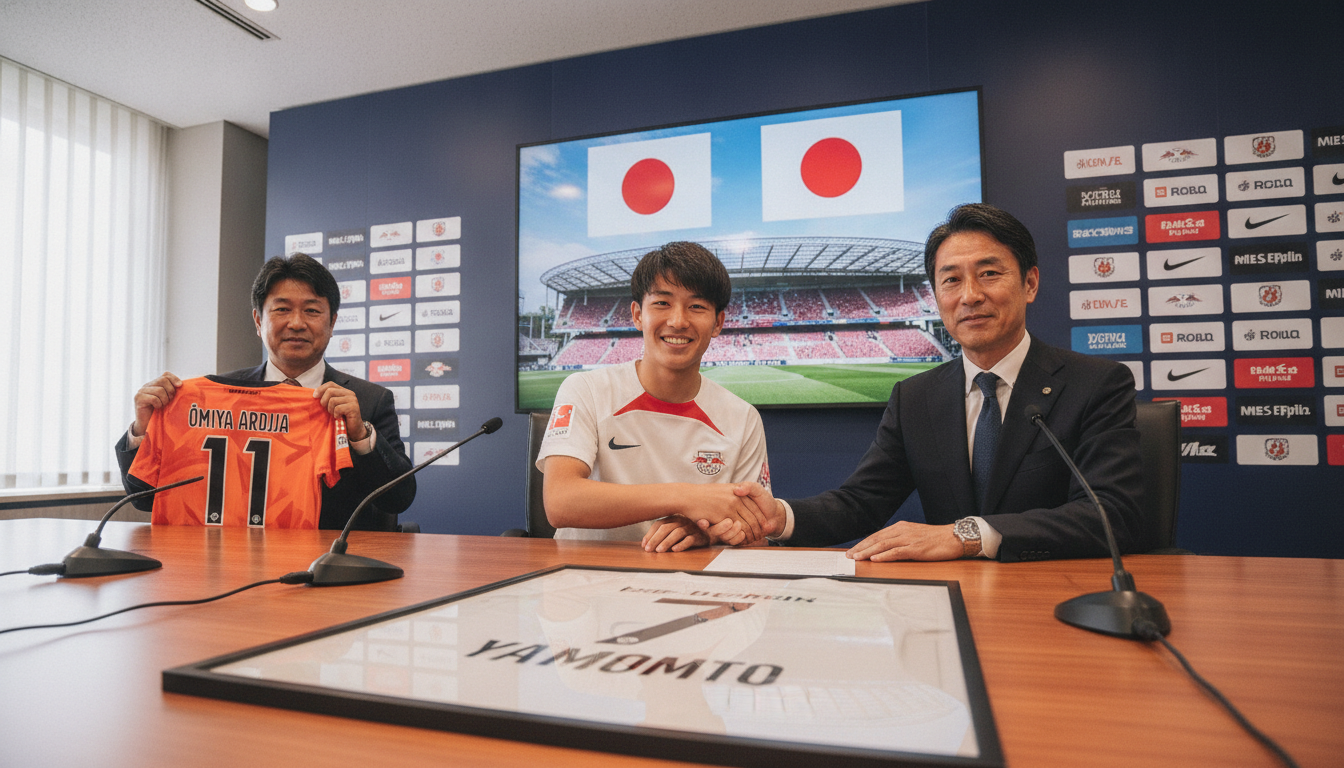
RB Leipzig sign Ota Yamamoto and immediately loan him to RB Ōmiya Ardija
RB Leipzig have signed Japanese attacker Ota Yamamoto from Kashiwa Reysol on a contract until 2031 and loaned him for one year to RB Ōmiya Ardija. Contract details were confirmed on June 30 2026.


Leipzig complete signing of Ota Yamamoto
RB Leipzig announced the signing of 22 year old Ota Yamamoto from Kashiwa Reysol on June 30 2026. The club confirmed a contract running until 2031 and described the move as part of their long term planning for offensive depth.
The transfer brings a young Japanese attacker into Leipzigs squad list while keeping development pathways open. Leipzig emphasized that Yamamotos profile fits their recruitment focus on versatile forwards with potential to develop within the club and the wider RB network.
Immediate loan back to RB Ōmiya Ardija
Leipzig will send Yamamoto on a one year loan to RB Ōmiya Ardija with immediate effect. The arrangement returns the player to a familiar environment where he spent the previous season on loan.
The loan is intended to guarantee playing time and a platform for continued progression before he integrates into Leipzigs first team. For Leipzig the move preserves control of Yamamotos contract while allowing him to refine his game in a setting that suits his immediate needs.
Breakout season at Ōmiya last campaign
Yamamoto scored 10 goals and supplied three assists in 19 appearances during his loan at Ōmiya last season. Those numbers underline a clear step forward in end product and consistency for a player still in his early twenties.
His productivity contributed to Ōmiyas attacking output and raised Yamamotos profile in both Japan and within the RB group. The statistical return helped prompt Leipzig to secure him on a long term deal and to keep him in the RB system for another year to build on that momentum.
Technical profile and positional versatility
Ota Yamamoto is primarily an attacking midfielder who can also play as a second striker or operate out wide on the wing. That versatility gives coaches multiple tactical options and allows him to be deployed in systems that require interchange between the No 10 and forward lines.
Reports from his time at Ōmiya point to an ability to combine quick combinations in tight spaces and to make late runs into the box. Those traits make him a useful asset in high tempo systems where link up play and off the ball movement are important.
Yamamoto also demonstrated an eye for goal during his recent loan which will be a focus for Leipzigs coaching staff. Continued development of his decision making in the final third and adaptation to faster transitional play will determine how quickly he can move into Bundesliga contention.
How the transfer fits Leipzigs model
The signing reflects Leipzigs existing strategy of acquiring young prospects and using the RB network to manage their growth. By keeping Yamamoto within the group the club retains influence over his development pathway while securing long term contractual control.
Loaning him back to Ōmiya provides a stable platform where he is already settled and can play regularly without the immediate pressure of breaking into a Bundesliga squad. This approach has precedent within the RB family and allows the parent club to monitor progress closely while limiting disruption to the player.
From a sporting perspective Leipzig benefit by adding a young, technically capable forward to their asset base. From a planning perspective they buy time to assess how his profile will translate to European football while ensuring he continues to receive meaningful minutes in competitive matches.
Implications for Kashiwa Reysol and the Japanese pathway
Kashiwa Reysol lose a promising homegrown attacker but gain recognition for producing talent that attracts European interest. Selling or transferring players to European clubs has become an established route for leading J League academies aiming to showcase their development programmes.
Yamamotos move will be watched by clubs across Japan as another example of a pathway from domestic competition to a high profile European group. For younger players at Kashiwa and elsewhere the transfer highlights that strong performances domestically and on loan can lead to opportunities beyond Japan.
The deal also underlines the increasing interconnectedness of Japanese football and European recruitment networks. Clubs in Japan will likely continue to position promising players for moves abroad while ensuring those moves include development guarantees such as playing time or familiar loan destinations.
Leipzig will keep a close eye on Yamamotos progress during the coming season and evaluate his readiness for a move to Germany. The club will likely monitor technical and physical adaptation markers as well as his ability to handle different tactical demands.
What to watch during the loan season
Expectations for Yamamoto at Ōmiya will focus on maintaining or improving his goal contribution rate and on developing consistency across a full campaign. Regular appearances and responsibility in key attacking phases will be central to measuring his readiness for a step up.
Key indicators to follow include his minutes per goal metric his assist frequency and his involvement in build up sequences leading to scoring chances. Observers will also assess his adaptability to different attacking roles and his capacity to influence games against a variety of opponents.
Leipzig will be interested in how he handles pressure situations and whether he can produce decisive moments in high stakes matches. Progress in those areas would strengthen the case for bringing him into a European training environment sooner rather than later.
The coming season will also test his physical resilience and ability to maintain form across a long campaign. Managing workload and avoiding injuries will be important for a young player making successive leaps in competition level.
Yamamotos performances will be tracked by clubs across Europe and by national team scouts. Continued development could open opportunities for future transfers or international recognition as he approaches his mid twenties.
This move is a clear statement of Leipzigs long term intent regarding young attacking talent. The club has secured Yamamoto on a lengthy contract and chosen to place him where he can keep developing while remaining within their sporting family.
Expectations are measured but positive with a focus on steady progress rather than immediate impact at the Bundesliga level. For Yamamoto the loan represents an opportunity to refine his game expand his skill set and prepare for life in Europe under the auspices of one of the continent’s more structured development systems.
Leipzig will hope that another season at Ōmiya results in tangible improvements that can be evaluated at the end of the loan term. If Yamamoto builds on last season’s numbers and adapts his game in the targeted areas he will position himself well for a future bid to join Leipzigs first team.
Yamamoto’s transfer underlines a continuing trend of young Japanese players moving to Europe while using familiar environments to bridge the transition. The coming year will be pivotal in determining whether he follows the path of those who have successfully adapted or whether he requires additional seasoning before making the leap.
For now the arrangement gives all parties clarity on the immediate next steps while keeping the long term ambition of integration into European football firmly alive. The focus in the short term will be on performance development sustained playing time and incremental growth in responsibilities on the pitch.