Spain reach World Cup semi-final after Merino’s late winner sinks Belgium 2-1
Spain reach World Cup semi-final with a 2-1 win over Belgium in Los Angeles, extending their unbeaten run to 26 matches after Mikel Merino’s late strike.

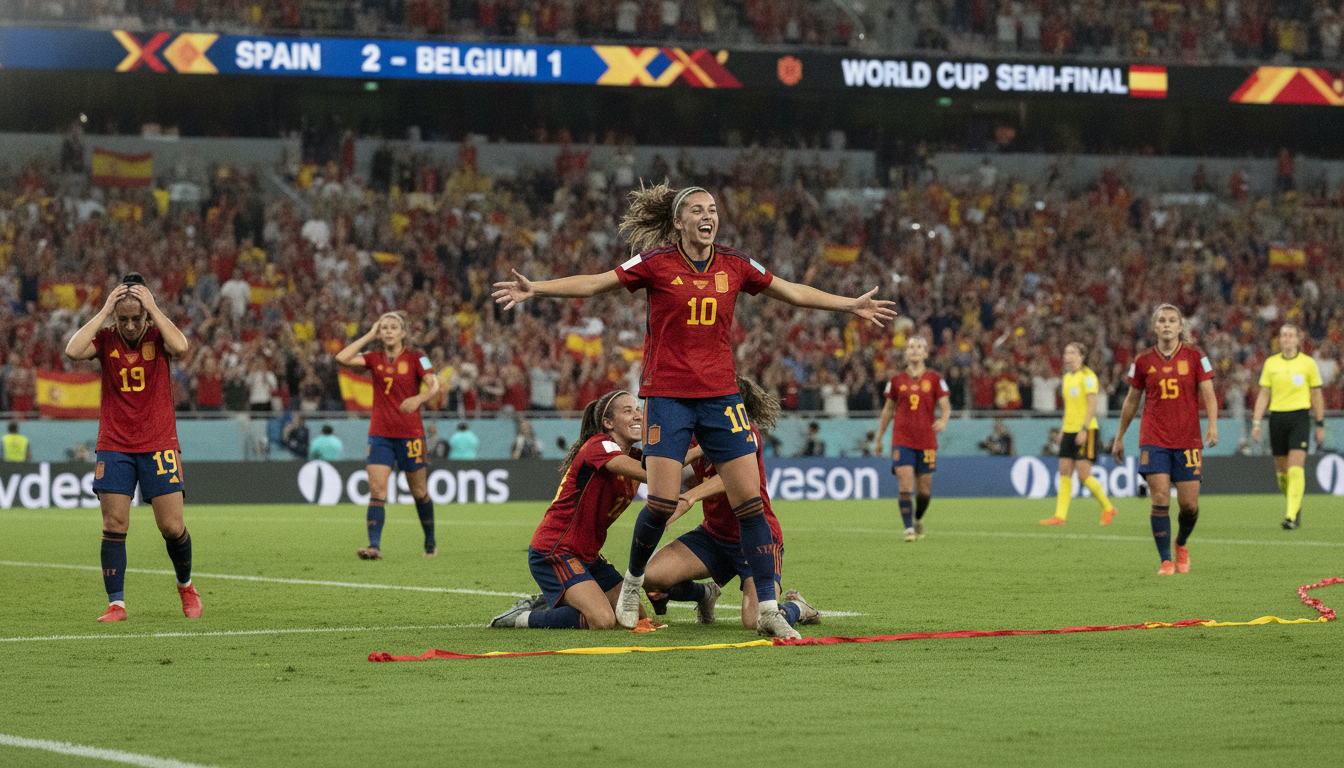
Spain reach World Cup semi-final after dramatic 2-1 victory in Los Angeles, with Mikel Merino scoring in the 88th minute to settle a tight quarter-final against Belgium. The win, sealed at SoFi Stadium on Friday, July 10, 2026, kept Luis de la Fuente’s side unbeaten across 26 matches and propelled La Roja into a semi-final meeting with France. Spain controlled large spells but were pegged back by Charles de Ketelaere just before half-time, before substitute Merino converted after Pau Cubarsi’s long-range effort created the decisive opportunity. The result underlined Spain’s depth and late-game threat as they prepare for a heavyweight semi-final on Tuesday, July 14, 2026.
Merino’s late intervention decides tight contest
Mikel Merino, introduced from the bench in the second half, produced the decisive moment with just minutes remaining when he tapped home after Belgium’s young goalkeeper misplayed a long-range attempt. Pau Cubarsi’s powerful shot forced a parry that landed kindly for Merino, who showed composure to finish and send Spain into the last four. The goal arrived in the 88th minute and came a couple of minutes after Merino’s substitution, demonstrating Spain’s bench impact and tactical timing. That strike not only decided the tie but also extended Spain’s run of competitive resilience in knockout fixtures.
Injury setbacks destabilize Belgium before kick-off
Belgium arrived in Los Angeles already hampered by the tournament-ending loss of Amadou Onana from the Round of 16, and the squad suffered another blow during pre-match warm-ups. Captain Youri Tielemans was ruled out late, missing the quarter-final, which forced Rudi Garcia into a last-minute reshuffle of midfield options. The visitors then lost Thibaut Courtois to injury during the match and were forced to introduce Senne Lammens for his World Cup debut in goal. Those forced changes disrupted Belgium’s continuity and placed extra pressure on a side already managing fitness worries.
Spain dominated possession but faced a setback before half-time
From the opening whistle Spain dictated the tempo and territory, combining short passing and wing play to create openings, with Lamine Yamal growing into the game after an initially quiet start. Spain’s first goal arrived when Fabian Ruiz converted following a spilled save from Thibaut Courtois on a Dani Olmo effort, ending a lengthy goalless run for Ruiz with the national team. Despite that early control, Spain were hit by a sucker-punch in stoppage time of the first half when Charles de Ketelaere rose to head past Pau Cubarsi and level the score. The equaliser underlined the threat Belgium still posed from set pieces and aerial duels, even when largely on the back foot.
Substitutions and late drama shaped the closing stages
Both managers used their benches decisively, bringing on players to change the rhythm and seek a decisive edge, and it was Spain’s late choices that paid off. Merino, who had previously come on to influence Spain’s win against Portugal, again proved the perfect supersub by finding the net in the final moments. Belgium’s forced goalkeeper change after Courtois left with an injury produced mixed results; Senne Lammens made several important stops but was left vulnerable by Cubarsi’s long-range attempt that led to the match-winner. The substitutions highlighted the tournament’s fine margins and how a single introduction can tilt a knockout fixture.
Yamal’s influence grows despite mixed tournament form
Lamine Yamal, who will celebrate his 19th birthday on July 13, 2026, showed flashes of the impact that made him a headline name for Spain, taking on defenders and creating chances down the flank. While the Barcelona teenager has not yet produced a full, sustained dominant performance in this World Cup, he won the match’s Superior Player award on Friday and remains central to Spain’s attacking plans. Yamal’s willingness to take on defenders and his combination play with midfield runners have given La Roja an added dimension in transition. Spain will look to harness his growing confidence ahead of the semi-final against France.
Records and streaks: unbeaten run and defensive milestones
The victory extended Spain’s unbeaten streak to 26 matches under Luis de la Fuente, a run that covers competitive tournaments and friendlies carried into major knockout stages. Belgium’s equaliser also ended Spain’s record-breaking run of seven consecutive clean sheets, a streak that had emphasised the team’s defensive solidity in recent months. The match therefore represented a balance between Spain’s sustained consistency and the reminders that elite knockout games yield fine margins. Those records will feature in discussions of Spain’s credentials, but the focus now turns to physical recovery and tactical prep for Tuesday’s semi-final.
Spain’s progression was underpinned by a controlled opening and a tactical plan that prioritized ball circulation and wide overloads, yet the quarter-final proved less straightforward than the scoreboard might have suggested. Belgium’s resilience, even when depleted by injuries, forced Spain into moments of direct play and defensive attention, particularly around set-piece situations where Charles de Ketelaere punished a lapse. The match illustrated how knockout football can disrupt possession dominance and demand clinical finishing in the final third.
Spain’s coaching staff will leave Los Angeles buoyed by the result but aware of areas needing attention; turnovers in dangerous zones and moments of indecision around defensive coverage produced the only real threats Belgium posed. Luis de la Fuente’s substitutions were decisive, and his management of player minutes will be crucial ahead of a quick turnaround to the semi-final. Recovery protocols and rotation choices will be monitored closely after an intense contest played in front of a packed stadium.
Belgium’s campaign ends with mixed emotions, having shown persistence in the face of successive personnel losses and spirited attacking play at key moments. Rudi Garcia must now evaluate injury timelines and consider the impact of late withdrawals on their tournament narrative. The performance of players like Charles de Ketelaere offered positive takeaways, while the late frustration of losing a match they had held until the final moments will linger.
Tuesday’s semi-final against France sets up a high-stakes encounter between two of Europe’s leading sides, with Spain seeking to translate their unbeaten run into a place in the final. France, boasting a squad rich in pace and power across all thirds, will present different tactical challenges from Belgium, including greater directness and a varied attacking template. Spain’s combination of ball retention, young wide talent, and experienced midfielders will be tested, and careful preparation between now and July 14 will determine who advances to the final.
Spain will arrive in the semi-final with both confidence and caution after showing the capacity to find late solutions, but also with reminders of vulnerability during set-piece situations and transitional moments. The next few days will be dedicated to recovery, tactical sessions emphasizing defensive compactness, and fine-tuning attacking sequences that maximize Lamine Yamal’s strengths. If Spain can maintain discipline and exploit the creativity of their bench, they will enter the semi-final as a threat capable of reaching the final.
The result in Los Angeles was a statement of depth and adaptability for Spain, and it sets up a compelling last-four tie against France on Tuesday, July 14, 2026. Spain’s unbeaten run now stands at 26 matches, their route to the semi-final was secured by a late, composed finish from Mikel Merino, and the team must now quickly refocus for another stern test on the tournament stage.