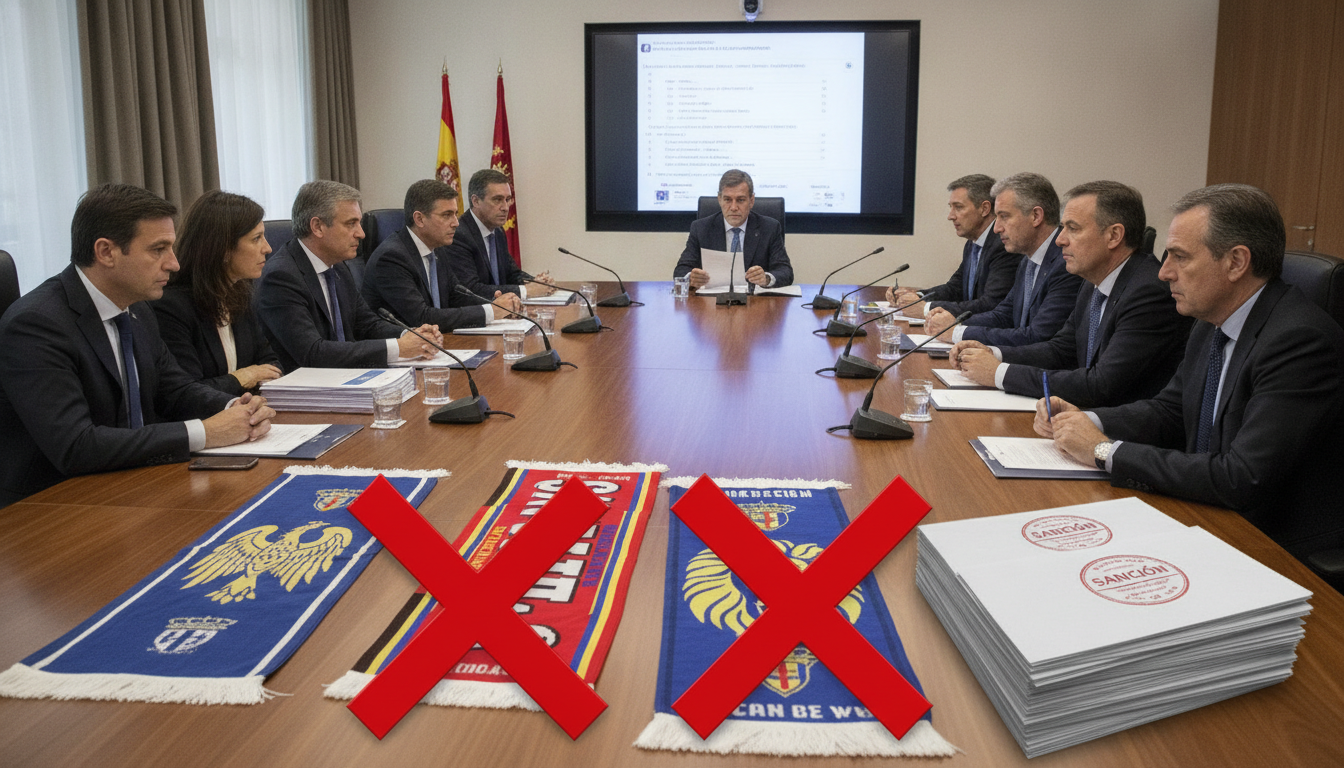
Spain reports record 2,056 sanction proposals as Commission steps up crackdown on violence in sport
Spain’s State Commission closes 2025–26 with a record 2,056 sanction proposals and 119 high-risk matches, intensifying action against violence in sport.


The Interior Minister, Fernando Grande‑Marlaska, chaired the final session of the Permanent Commission for the State Commission against Violence, Racism, Xenophobia and Intolerance in Sport on July 7, 2026, closing the 2025–26 season with stark new figures on fan misconduct and hate-related incidents. The meeting confirmed 2,056 proposals for sanctions, a 14 percent rise on the previous season, and 119 matches formally classified as high risk, up 59 percent, underlining a notable escalation in recorded incidents across Spanish sporting venues. Officials framed the results as both the highest on record for the body and a demonstration of intensified detection and preventive work by law enforcement and sports authorities.
Grande‑Marlaska opens final session and outlines priorities
The minister emphasized that the commission functions as a forum for anticipation and prevention rather than merely a reactive body, positioning the state’s response to violence in sport as strategic and sustained. Grande‑Marlaska highlighted the coordinated role of the National Police and Civil Guard alongside sports federations and clubs, saying enforcement and prevention must proceed in parallel to protect spectators and participants. He underlined that the commission’s remit includes developing measures to anticipate security threats and to propose tools that reduce incidents before they occur.
Record sanction proposals and high‑risk match declarations
Commission statistics show the surge in sanction proposals was most pronounced in professional football, with a majority of cases originating in First Division, Second Division and Primera Federación fixtures, although disciplinary files were opened in basketball, cycling and futsal as well. The 2,056 proposals represent the highest annual total since the commission began recording this series, and the 119 high‑risk classifications mark a substantial jump from the prior season’s figures. Officials said these trends reflect both an increase in problematic behavior and improved capacity to identify and document offences, particularly racist abuse, pyrotechnic use and other conduct contravening Law 19/2007.
Intensified action against ultras and radical factions
As a strategic priority, the commission focused on the activity of extremist supporter groups, and law enforcement reported an uptick in targeted measures; the National Police’s Office for Sports recorded more than 500 sanction requests linked to radical elements this season. In the most serious cases authorities have sought fines that may reach €60,000 and stadium exclusion orders lasting up to three years, measures designed to disrupt organised violence and deter repeat offenders. The ministry described a zero‑tolerance approach to hate and violence in stadiums, stressing that criminal and administrative tools will be deployed jointly with club cooperation to reduce risk.
Formal bans on two supporter groups tied to major clubs
The commission moved to prohibit the promotion or support of two groups identified as non‑compliant: Sadar Bizirik, linked to Club Atlético Osasuna, and Gol Sur 1907, linked to Real Betis Balompié, barring clubs from collaborating with or advertising these collectives. Police reports cited connections between members of those groups and established ultras outfits such as Indar Gorri and United Family, tying them to a series of violent episodes investigated over recent seasons. With these additions, the list of identified radical groups subject to explicit prohibition rises to 20, and officials warned clubs that visible endorsement or facilitation of such groups carries administrative and sporting consequences.
Proposed overhaul of Law 19/2007 to widen scope and strengthen penalties
The commission tabled a draft produced by its working group that advocates a comprehensive revision of Law 19/2007 to adapt the legal framework to evolving forms of misconduct and discrimination in and around sport. Key proposals include expanding the law’s scope beyond matches to cover events, fan travel, public gatherings of supporters and ancillary spaces where hostilities may be fomented, as well as explicitly regulating supporter terraces and organized fan zones. The reform package also seeks to integrate provisions addressing sexism and gender‑based discrimination, to tighten measures against radical groups operating both inside stadiums and in digital environments, and to clarify liability for clubs and event organizers when prohibited conduct is promoted or tolerated.
Digital conduct, supporter terraces and cross‑sector prevention
For the first time the draft emphasizes online behaviour connected to sport, proposing mechanisms to detect and sanction activity on social platforms where violence, discrimination or harassment are encouraged or coordinated. The proposal would empower authorities to treat targeted digital campaigns and the online organization of violent acts as part of the same framework that governs physical incidents, linking prosecution and administrative sanctions when platforms are used to incite or coordinate offences. Additionally, the commission recommends clearer rules governing “gradas de animación” — supporter terraces — to delineate responsibilities for club security, stewarding and surveillance in sections where high energy and close proximity can elevate risk.
Coordination with clubs, federations and justice authorities
Commission members presented a plan to deepen cooperation between state security forces, national federations, league operators and municipal authorities, aiming to streamline evidence sharing and speed disciplinary procedures that follow documented incidents. The minister and police representatives argued that timely exchange of video footage, steward reports and digital traces is essential to secure sanctions and to implement stadium bans, and they proposed formal protocols to expedite case processing. Legal changes proposed by the working group would also clarify the administrative competencies of sporting bodies versus criminal justice authorities, reducing gaps that can delay responses to violent or discriminatory behaviour.
The government signalled that the reform proposal will be subject to consultation with stakeholders, including clubs and fan groups, ahead of any legislative initiative, and that the ministry expects a period of debate on technical details such as sanction levels, evidentiary standards and the interaction between administrative orders and criminal proceedings. Representatives of several federations attending the session stressed the importance of combining enforcement with education and community engagement to change fan cultures over the long term. Authorities also flagged plans to expand training for stewards and police officers assigned to sporting events to improve preventive presence and post‑incident investigation.
The commission’s record figures and the draft law changes arrive amid broader European concern about the return of organised supporter violence and the role of social media in amplifying hostility, and Spain’s approach places emphasis on a mix of punitive measures, regulatory clarity and preventative work. Analysts note that raising maximum fines and lengthening stadium bans are intended to increase the cost of organised disruption, while improved detection and cross‑agency coordination aim to lower impunity for serial perpetrators. Officials acknowledge that legal reform will not be a cure on its own and emphasise multi‑pronged strategies combining policing, club governance and fan education.
Looking ahead, the commission outlined a timetable for next steps that includes formal public consultation, technical revisions to the draft law and a sequence of administrative changes to be implemented ahead of any parliamentary reforms, with the minister urging swift but measured action. Lawmakers will be asked to consider how to balance stronger deterrents with procedural safeguards and the practicalities of enforcement, and clubs will be required to update internal regulations and supporter engagement policies in line with any new rules. The commission also recommended piloting enhanced stewarding protocols and data‑sharing agreements during early domestic cup and pre‑season fixtures to test operational measures.
Spain’s highest figures for sanction proposals and high‑risk match declarations underscore a policy shift toward tougher oversight of fan conduct and a broadened conception of what constitutes violence in sport. The minister framed the season’s results as evidence that improved detection and stronger cooperation across agencies are producing a clearer picture of the problem, while the proposed legal reforms aim to equip authorities and sports bodies with more effective tools to prevent and punish abusive behaviour. The coming months will test whether legislative changes and tighter enforcement can reduce incidents on the terraces and curb organised group violence without undermining legitimate fan culture and free expression.