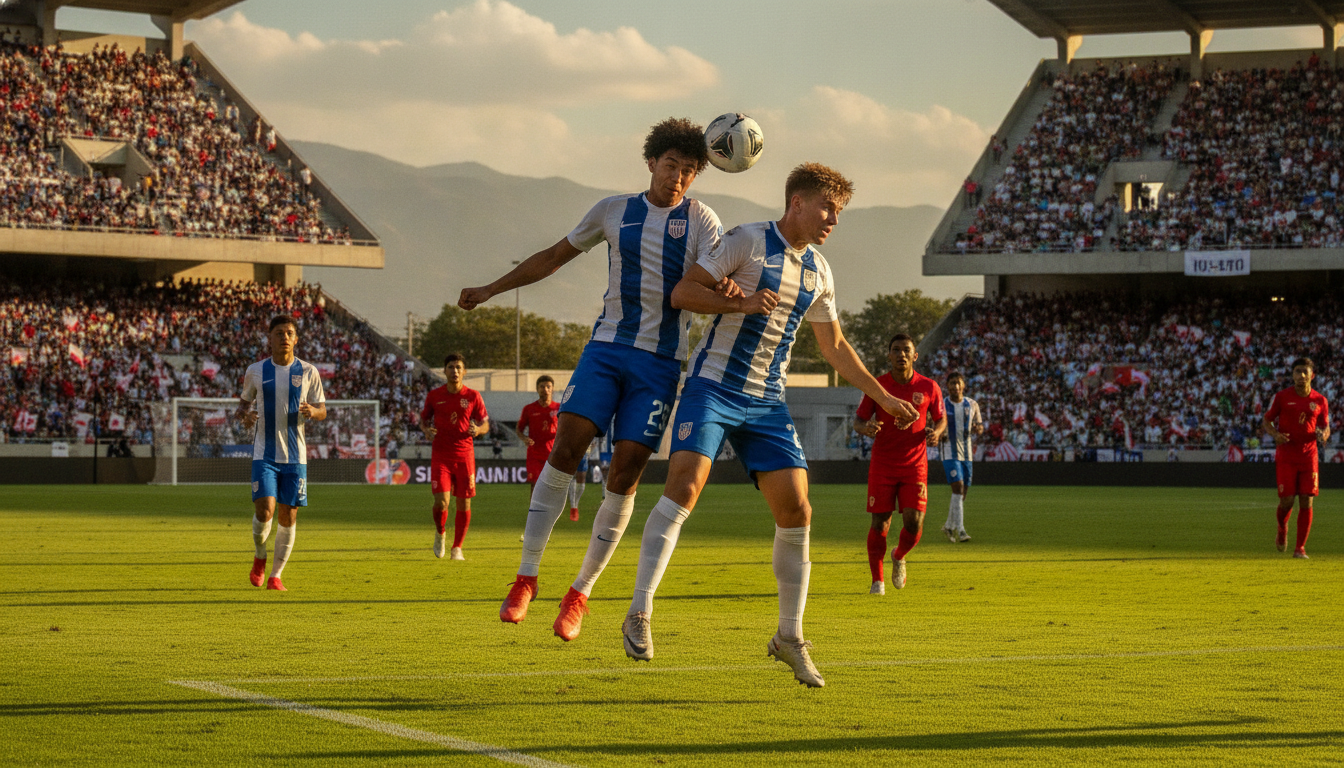
CONCACAF U-20 Championship Preview: Dozens of U.S.-Based Players Set to Represent Other Nations in Mexico
Multiple U.S.-based prospects will feature at the CONCACAF U-20 Championship in Mexico from July 24–August 9, 2026, with 12 teams competing for regional honors. The tournament brings together a mix of MLS academy products, college players and lower-division talents, many of whom train or play in the United States but will wear the colors of other CONCACAF nations. This preview outlines which U.S.-based players are on each roster, highlights names to watch and explains what the tournament could mean for clubs and national-team pathways.


U.S.-Based Talent in Mexico
Several countries have tapped into the U.S. developmental pipeline for their U-20 squads, selecting players who are currently registered with MLS academies, USL clubs, college programs or local academies. Those selections reflect the depth of training opportunities in the United States and the continued trend of dual-national or foreign-born players developing here before representing their home countries at youth level.
Clubs represented across the list include MLS sides, USL organizations and collegiate programs, underlining the hybrid nature of modern talent pathways. With a compact schedule in Mexico, national coaches will rely on these players’ familiarity with high-level training environments in the U.S. to provide competitive minutes.
Country-by-Country Roster Breakdown
Antigua and Barbuda’s delegation includes midfield and defensive options developed in Florida and regional academies, notably Gavin Gonsalves from Miami Strikers FC, Seth Layne of Combine Soccer Academy and Brenden Skilling from One FC. Those selections give Antigua and Barbuda domestic-based depth and some athletes accustomed to the U.S. development model.
Canada’s roster features a mix of MLS club prospects and U.S.-based college players, including Nate Abraham who has ties to the U.S. college game, Moise Archange of Orlando City SC, Felix Samson at FC Cincinnati, Jonathan Ransom from Atlanta United and Marius Aiyenero linked with LAFC. That group blends academy graduates and collegiate players who may push for professional minutes after the tournament.
Costa Rica has called up Isaac Brown, who is active in the U.S. college circuit, while El Salvador’s squad includes a notable contingent of U.S.-based talent such as Christian Coreas from San Diego, Johann Ortiz of Sporting KC, Aiden Benitez who has college experience at Akron, LA Galaxy’s Gabriel Arnold, and a pair of North Carolina FC products William Cabrera and Jonathan Aguirre, plus Peter Cornejo of LA Surf. These names give El Salvador technical options across midfield and attack.
Guatemala’s selections draw from MLS academies and regional programs with Álvaro Medrano of Woodstock Academy, Steven Rivas at D.C. United, Omar Bolaños with Houston Dynamo and Jeffrey Interiano from NYCFC on the list. Haiti will be represented by Orlando City prospect Nikolai Pierre, offering athleticism and familiarity with MLS youth structures.
Country-by-Country Roster Breakdown (continued)
Honduras has included Kendry Villafuere of Inter Miami CF alongside Sam Valle Reyes from Springfield YC, both providing Honduras with attackers comfortable in U.S. training environments. Jamaica’s squad features several U.S.-based names too: Josh Grant of FC Naples, Damario McIntosh at New England Revolution, Cai McLean with Inter Miami CF, Jahmani Bell of Houston Dynamo and Brandon Bent from Miami FC, giving Jamaica a broad selection of forwards and wide players.
Panama’s roster incorporates Gino Sasso from FC Dallas and Ernesto Gomez of Connecticut United FC, both entrants who have come through U.S.-based systems. Across the 12-team tournament, these U.S.-based players will play varied roles from starting XI regulars to rotational prospects expected to push for minutes as the tournament progresses.
This geographical mix highlights how CONCACAF youth sides are increasingly reliant on players who train inside the United States but retain eligibility and allegiance to other national programs. Coaches will balance integration and chemistry with the need to field their strongest sides in short turnaround matches.
Players Likely to Impact Group Stages
Several U.S.-based players arrive with the pedigree to shape the early rounds. Moise Archange, on Orlando City’s books, has the pace and technical skill to trouble defenses and could be a key outlet for Canada in counterattacking situations. Felix Samson’s association with FC Cincinnati suggests he will be a physical presence up front and a target for set-piece opportunities.
From El Salvador, Gabriel Arnold’s background with LA Galaxy’s development system makes him one to watch in possession phases, while Johann Ortiz—linked to Sporting Kansas City—adds tactical discipline and positional versatility. Those attributes may help El Salvador navigate a competitive group-stage schedule and control possession in tight matches.
Defensively, Jonathan Ransom of Atlanta United brings leadership and aerial ability that can stabilize Canada’s backline, and Kendry Villafuere of Inter Miami CF has the club-level training that Honduras may rely on to create and finish chances. Jamaica’s attacking group, featuring Damario McIntosh and Cai McLean, offers physicality and direct play that could be decisive in group matches.
What This Means for MLS and U.S. Development Pathways
The heavy presence of MLS academy players and collegiate athletes on other nations’ U-20 rosters underscores a dual challenge and opportunity for American clubs. On the one hand, MLS academies are producing talent capable of international youth representation, which enhances the league’s reputation for player development. On the other hand, losing promising players to other national teams—even at youth level—can complicate the United States’ long-term talent pool and prompt earlier engagement strategies by U.S. Soccer.
Clubs may view the tournament as both a development exercise and a scouting showcase, with first-team coaches monitoring performances and considering accelerated promotions for standout performers. For college programs, the exposure for athletes competing on an international stage can lead to pro interest and clearer pathways to professional contracts.
The tournament calendar also forces MLS and lower-division teams to manage roster availability, as some players will miss pre-season training or competitive fixtures. Teams that have invested in strong youth development will track minutes and recovery closely to protect long-term value and player health.
Selection Notes and Eligibility Trends
National-team coaches have leaned on the availability of dual-national players who train in the United States, reflecting broader eligibility trends across CONCACAF. Many federations are actively recruiting from the U.S.-based talent pool, recognizing the technical and tactical advantages those players often possess. That has produced rosters featuring college players who balance academics and international duty alongside academy prospects on professional contracts.
The presence of several college players—individuals tied to U.S. university programs—illustrates the ongoing role of the American collegiate system as a player-development route. Those athletes bring maturity and competitive match experience, but they also must reconcile summer international duty with academic schedules and potential summer league obligations.
Coaches faced with short tournaments like this prioritize players who can adapt quickly to tactical plans and withstand congested match schedules. Fitness, mental resilience and the ability to execute a coach’s plan within limited training time are often decisive factors in squad selection and minute distribution.
Tournament Format, Schedule and Stakes
The CONCACAF U-20 Championship runs from July 24–August 9, 2026, in Mexico and features 12 teams competing in a compressed schedule that moves from group play into knockout rounds. Teams will play multiple matches within short rest windows, so squad rotation and depth will be important for those aiming to progress deep into the competition. The tournament offers a platform for young players to demonstrate readiness for senior international consideration and attract attention from clubs across the region.
Match locations across Mexico and quick travel requirements will test logistics and recovery strategies for visiting teams, particularly those with players traveling from U.S.-based clubs and colleges. National federations will need to coordinate closely with clubs over player release, medical support and post-tournament reintegration.
This edition of the competition also gives coaches a final look at a generation of players ahead of the 2026–2027 season, allowing federations to calibrate their youth-to-senior transition plans and to identify candidates for under-23 and senior camps in the months ahead.
The CONCACAF U-20 Championship is a concentrated showcase of rising talent, and the substantial number of U.S.-based players representing other nations highlights how football in the region is interconnected. National teams will rely on those athletes’ club education and competitive experience in the U.S. as they pursue favorable group draws and knockout ambitions in Mexico.
As the tournament unfolds, club and national-team scouts will monitor performances closely for indicators of readiness to step up to senior levels. The coming weeks should clarify which U.S.-based prospects can capitalize on the platform and which federations have successfully integrated foreign-trained players into cohesive youth units.