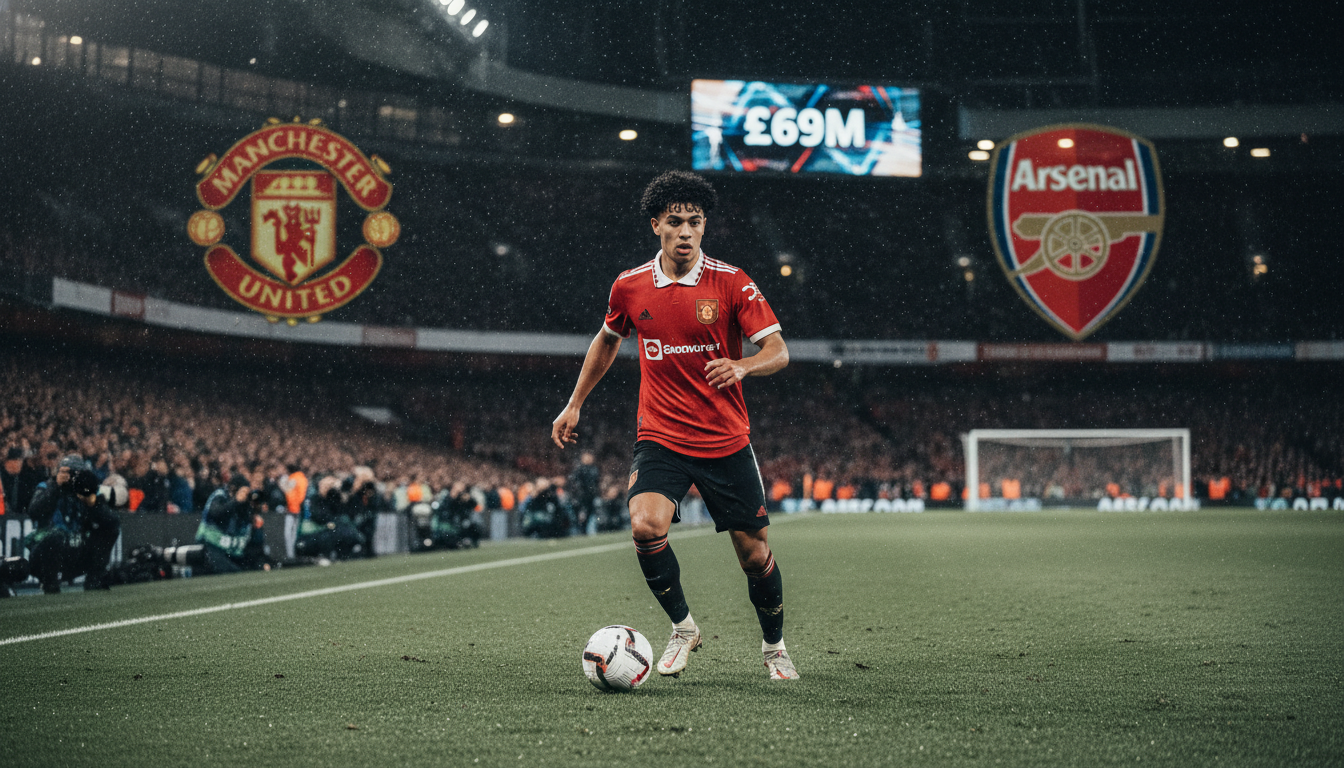
Manchester United and Arsenal make formal enquiries for William Gomes
Manchester United and Arsenal have opened contact over William Gomes, with the 20-year-old Porto forward drawing Premier League interest ahead of the summer window.


Manchester United and Arsenal lodge enquiries for William Gomes
Manchester United and Arsenal have both made initial approaches to FC Porto regarding William Gomes, according to reports. The contacts are understood to be exploratory, focused on availability and the conditions required to reach an agreement this summer.
Clubs in England have monitored Gomes since his move from São Paulo, and the latest outreach signals that both Old Trafford and the Emirates are assessing whether to progress to formal bids. These early-stage conversations are typical summer practice as teams map out targets and priorities ahead of negotiations.
Porto’s response: contract details and retention plans
FC Porto have signalled reluctance to lose Gomes immediately, pointing to the forward’s contract which runs until 2029. The club’s stance is strengthened by a reported release clause set at around £69 million, a figure designed to secure Porto’s position in any transfer negotiation.
Porto sources indicate a preference to retain Gomes for at least another season to aid continuity and squad planning after a title-winning campaign. That position leaves interested clubs weighing whether to activate the clause, present a higher offer, or wait until Porto may soften its stance later in the summer.
Player profile: pace, technique and positional versatility
William Gomes is a left-footed attacker who primarily operates from the right flank but is comfortable on either wing. He combines raw pace with close control, an ability to unlock tight spaces, and a goal threat from distance, attributes that have helped him score regularly at club level.
Over the season Gomes featured primarily as a rotational option but still registered a notable goalscoring return, underlining his efficiency when called upon. His work rate off the ball and willingness to track back add a defensive dimension that appeals to clubs seeking multifaceted wide forwards.
Fit at Old Trafford and Emirates: tactical considerations
At Manchester United, Gomes would compete with existing wide options and add depth to a squad balancing attacking variety with physical presence. United currently have several right-sided alternatives, and any move for Gomes would likely be judged on how he complements the first-choice attackers and the manager’s tactical blueprint.
Arsenal’s recruitment plans have also focused on wing players, and Gomes would provide another profile to support the club’s pace-oriented attack. The Gunners recently signed reinforcements on the flanks and would consider Gomes as a long-term investment, particularly given his youth and adaptability across both sides of the forward line.
Other suitors and the wider European interest
Interest in Gomes is not confined to England, with clubs from Italy and Spain also linked to the Porto forward. Atletico Madrid, AS Roma and Newcastle United have been mentioned in reporting as clubs that have opened lines of inquiry, reflecting a broad European market for his services.
That competition increases Porto’s negotiating leverage and gives Gomes multiple potential destinations to weigh, from leagues prioritising tactical discipline to those favouring fast transitions and direct attacking play. The diversity of suitors means any transfer would need to align with the player’s development plan and the purchasing club’s immediate needs.
Transfer timeline, valuations and likely scenarios
Negotiations in this case are expected to follow one of two paths: a straightforward activation of the release clause by a suitor prepared to meet the reported fee, or a protracted dialogue in which interested clubs attempt to broker a deal below the clause and potentially agree on loan-back or staged payment terms. Porto’s preference to keep Gomes for another season complicates the second option.
Timing will be driven by the clubs’ recruitment windows and their respective transfer priorities, with decision points likely to occur after domestic seasons conclude and before pre-season preparations. For United and Arsenal, squad planning and budget allocation will determine whether Gomes becomes a priority target or remains an attractive but secondary option.
Gomes’s representatives will also influence the outcome, balancing immediate playing time against long-term career development at a new club. A move to a top-five European league would carry expectations of rapid adaptation and contribution, while remaining at Porto would offer continuity and guaranteed competitive minutes.
A strong performance in the closing stages of the domestic season and continental competitions has elevated Gomes’s profile, prompting clubs to reassess their winger department strategies. How Porto respond to formal offers, if any arrive, will be crucial to shaping the market this summer.
Recruiting a young, versatile winger like Gomes typically involves careful scouting of his decision-making in high-pressure moments and his consistency over a sustained run of matches. Clubs are likely to conduct detailed analysis of his off-ball movement, finishing efficiency, and how he combines with central attackers.
Financial considerations extend beyond the transfer fee to wages, agent fees, and potential add-ons tied to performance or team success. These elements often determine whether a club moves early in the window or waits for clearer market dynamics and a more advantageous negotiating position.
If a deal does emerge, it will also be shaped by regulatory timelines and the availability of paperwork to meet registration deadlines. Clubs operating across multiple competitions must synchronize transfers with preseason planning to integrate new signings effectively.
Manchester United and Arsenal face competing internal demands in structuring their squads, and adding Gomes would be measured against other transfer targets and academy prospects. That internal competition may decide whether a formal offer is forthcoming or whether interest remains at the exploratory stage.
A scenario in which Porto refuses to sell could still end with an agreement for a future transfer that allows Gomes to remain in Portugal on loan for another season. Such arrangements have precedent and provide a middle ground when sellers want to protect squad stability while agreeing to a sale.
William Gomes’s age and potential give buying clubs the opportunity to shape his development path, either by offering immediate first-team minutes or by planning a phased integration through rotational duties. The chosen route will depend on managerial style and the urgency of the club’s competitive objectives.
Interest from England’s top sides underscores the growing valuation of young South American forwards who adapt quickly to European football. How Gomes navigates this period will be pivotal for his career trajectory, whether he moves to one of the Premier League’s heavyweights or stays to consolidate at Porto.
Porto’s negotiation strategy will be watched closely by other clubs who see Gomes as emblematic of a wider transfer theme: investing in youth with immediate upside and resale potential. The club’s final decision will balance sporting ambition with the financial realities of the market.
Gomes’s own priorities—regular playing time, a clear development plan, and a supportive environment—will be central to any agreement. His next move, if it comes, will be as much about opportunity and fit as it is about headline figures and release clauses.
The coming weeks should clarify whether exploratory talks evolve into formal bids, and whether Porto’s reported asking price prompts a bidding war or a different resolution to this transfer story.