2026 World Cup managerial exits leave six national coaches departing after tournament setbacks
Six national coaches left their posts during the 2026 World Cup as federations and managers responded to short-term results and broader campaign goals.

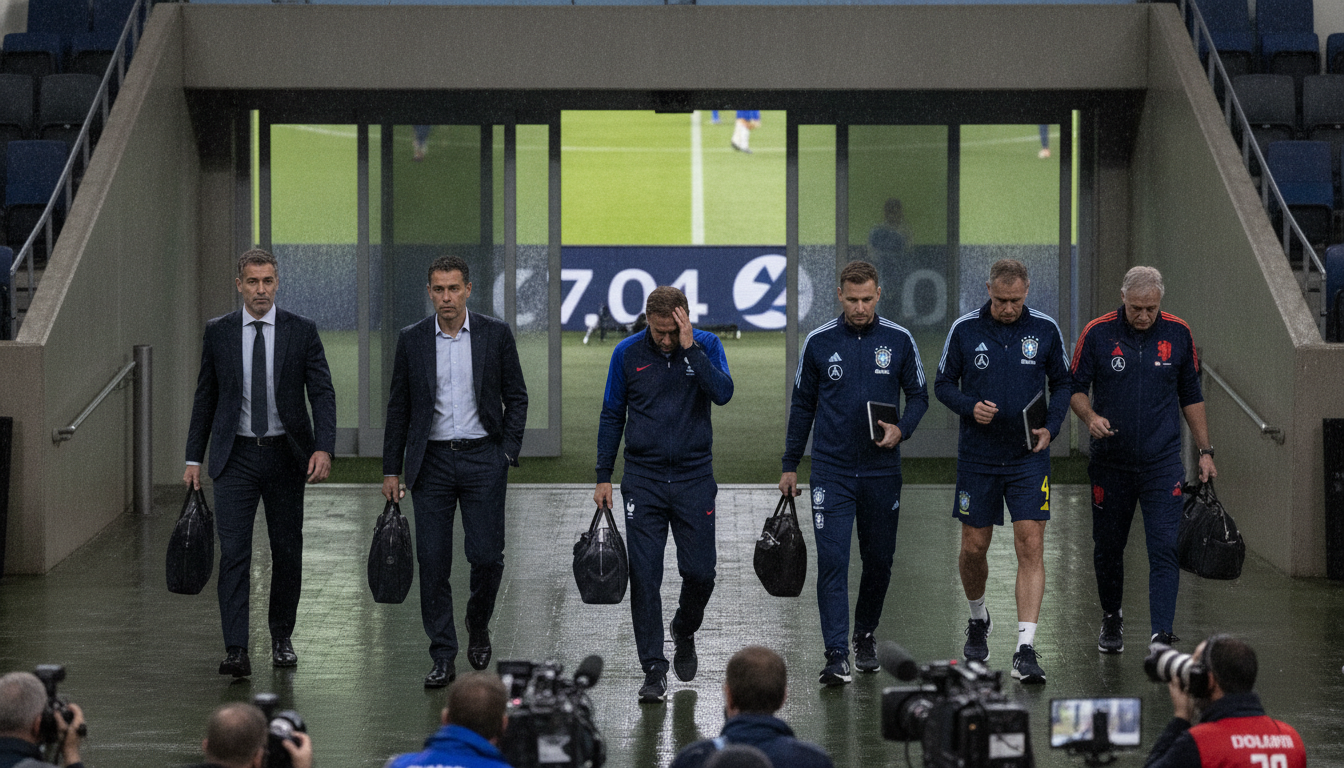
The 2026 World Cup managerial exits have already claimed six high-profile national team coaches, underscoring how swiftly tournament outcomes can reshape leadership at the international level. The departures ranged from voluntary resignations to immediate dismissals after heavy defeats, and each carried its own context of expectation, accountability and institutional pressure. As federations begin planning the next cycle, the fallout from these exits will influence selections, tactical direction and recruitment over the coming months.
Koeman quits after Netherlands exit to Morocco
Ronald Koeman opted to resign following a dramatic knockout defeat in which the Netherlands were eliminated by Morocco in a penalty shootout. His tenure, which began in 2023, ended amid intense scrutiny after a match the Oranje had looked poised to win until late concessions turned the tie.
Koeman framed his decision as taking responsibility for falling short of the nation’s ambitions at the World Cup, choosing to step down rather than await a formal review. The resignation highlights how narrow margins in single matches, especially in penalty deciders, can precipitate immediate managerial change for top footballing nations.
Hong steps down after Brazil ends South Korea campaign
South Korea advanced from the group stage but were knocked out in the Round of 32 by Brazil, prompting coach Hong Myung-bo to announce his resignation. Hong, who took charge in 2024, left after concluding that the team’s exit marked the natural end of his project with the Taegeuk Warriors.
Reaching the knockout rounds represented progress for South Korea, yet the federation and coach agreed the level of ambition required in Asian football now exceeds group-stage qualification. Hong’s departure illustrates how federations and managers increasingly treat World Cup performance as the principal yardstick for program continuity.
Clarke departs after Scotland’s group-stage disappointment
Steve Clarke resigned on 27 June 2026 following Scotland’s early exit from the group stage, ending a spell that had restored stability and competitive credibility to the national side. Clarke had renewed his contract on 18 November 2025 but chose to step down in the wake of the tournament, acknowledging the weight of recent results.
While his World Cup record became the immediate focus of criticism, Clarke’s broader legacy includes securing qualifications and rebuilding belief among supporters. His departure underscores a familiar tension in international football between long-term program building and the short-term demands of major tournaments.
Koubek leaves after Czechia fail to gain traction in Group A
Miroslav Koubek resigned by mutual agreement after Czechia finished at the bottom of their group, failing to register a victory in the tournament. Appointed ahead of the World Cup play-offs, the 74-year-old guided Czechia back to the finals with shootout wins over the Republic of Ireland and Denmark, but the team could not sustain that momentum at the finals.
The Football Association accepted Koubek’s offer to step down after discussions emphasizing the need for fresh direction. His brief tenure — barely seven months — highlights the precariousness of short-term appointments that deliver qualification but struggle to produce competitive continuity on football’s biggest stage.
Tunisia sack Lamouchi after heavy opening defeat
Sabri Lamouchi was dismissed on 15 June 2026 by the Tunisian Football Federation following a damaging 5-1 opening defeat to Sweden, becoming one of the earliest managerial casualties of the tournament. Lamouchi had been appointed with a contract announced on 14 January 2026 that was due to run until July 2028, but the federation moved quickly after the heavy loss.
The swift decision reflected a belief among administrators that prompt intervention could stanch early tournament damage, though subsequent attempts to steady the team under a new coach were unable to reverse Tunisia’s fortunes. The episode underlines how opening-day results can drastically alter a nation’s tournament trajectory and leadership choices.
Beccacece resigns as Ecuador exit in the knockout round
Sebastián Beccacece announced his resignation after Ecuador’s Round of 32 elimination, confirming that his contract with the federation ended with the team’s exit. La Tri produced notable moments during the tournament, including a memorable victory over Germany, but ultimately could not convert that form into a deeper run.
Beccacece cited the failure to meet the objectives he set for the campaign and decided to step away to allow Ecuador to pursue a new direction. His departure is part of a broader pattern in which managers conclude tenures after narrowly missing targets, even when teams display encouraging signs.
Why short tournaments become make-or-break for managers
The World Cup compresses evaluation into a handful of games, leaving little room for gradual improvement and long-term experimentation. International coaches work in brief camps, must implement complex tactical plans quickly and face intense global scrutiny that amplifies perceived failures.
Federations often treat the World Cup as the definitive assessment of a program, making decisions on continuity or change in the tournament aftermath. The six departures at this World Cup reflect that dynamic, where results on the field translate directly into leadership changes off it.
Immediate tasks for federations after the coaching exodus
National associations now confront urgent decisions about recruitment, timelines and the profile of the next head coach, balancing short-term recovery with longer-term development. Choices will include whether to appoint experienced international managers, promote from within, or target coaches with specialist skills in youth development or continental competitions.
Timing will be critical as federations plan for continental qualifiers and friendlies ahead of the next cycle. The appointments made in the coming weeks and months will shape squad selection, tactical identity and preparation for upcoming tournaments, including continental championships and qualification phases.
The departures of Ronald Koeman, Hong Myung-bo, Steve Clarke, Miroslav Koubek, Sabri Lamouchi and Sebastián Beccacece at the 2026 World Cup underline a simple truth of international football: a few matches can redefine careers and reset national ambitions.