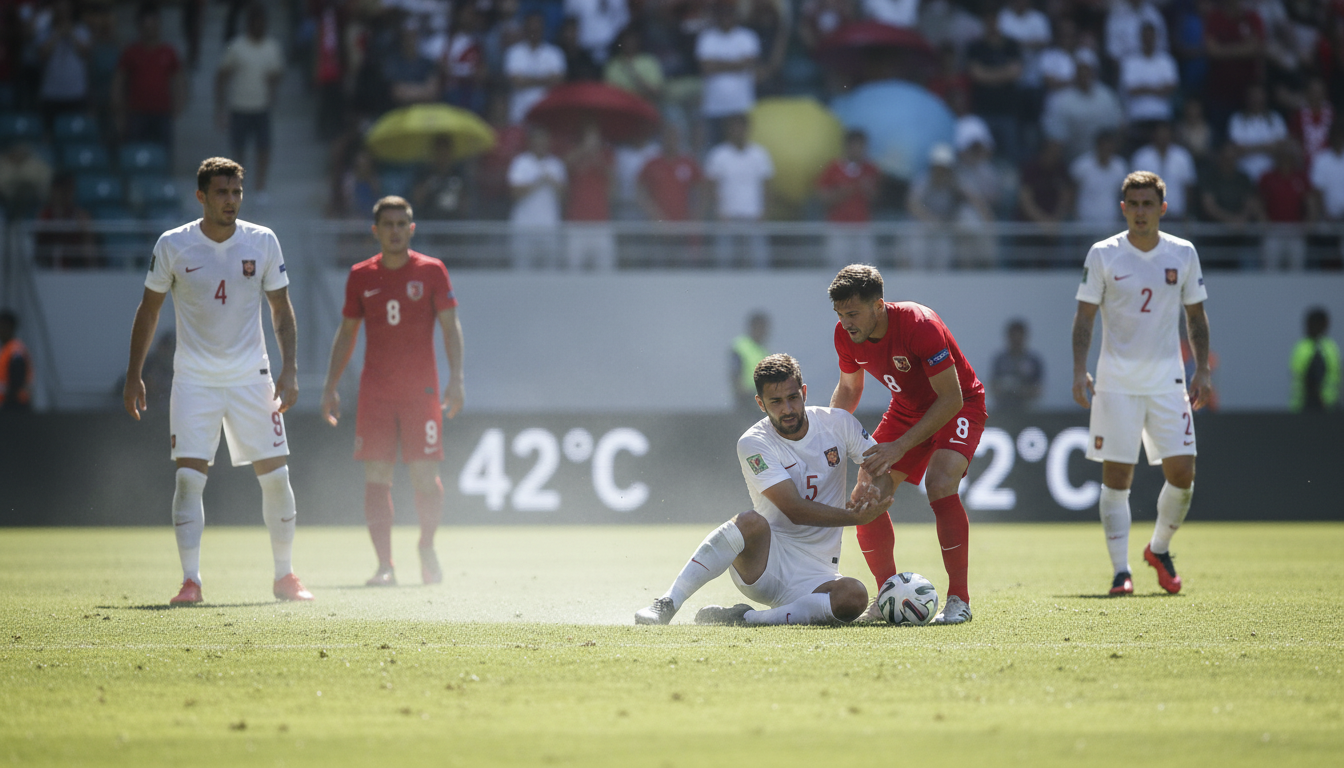
2026 World Cup heat risk: study finds one in four matches could face dangerous WBGT conditions
Study warns 2026 World Cup heat risk: one in four matches could reach 26°C WBGT, spurring FIFA cooling breaks and tougher venue measures for player safety.


The window for the 2026 World Cup across the United States, Mexico and Canada now carries a pronounced heat hazard, according to a new scientific analysis. Researchers estimate that roughly one quarter of the tournament’s 104 matches may experience Wet Bulb Globe Temperature (WBGT) levels at or above 26°C, a threshold associated with elevated heat strain for players and spectators. That projection has intensified scrutiny on match scheduling, stadium infrastructure and the practical measures FIFA and local organizers will deploy to protect health and performance during the June 11–July 19 competition.
WWA analysis projects 26 of 104 matches at elevated WBGT
According to the study released by World Weather Attribution, climate change has materially increased the chance of extreme heat affecting World Cup fixtures in North America since the region last hosted the tournament in 1994. The analysis calculates that 26 of the 104 scheduled games could reach or exceed a WBGT of 26°C, a level at which players are considered to face significant heat stress. Researchers emphasized that the pattern of risk reflects both rising baseline temperatures and the timing of the tournament in the peak Northern Hemisphere summer months.
The WWA findings draw on historical climate data and projected summer conditions to estimate exposure across the 16 stadiums appointed to host matches in three countries. While the network stops short of naming specific venues in its summary, it highlights a clear increase in the probability of heat extremes compared with the 1994 World Cup in the same continent. The report frames the heat risk as an operational concern that tournament planners, teams and broadcasters must address in the months ahead.
How WBGT gauges heat risk for players and fans
Wet Bulb Globe Temperature is a composite metric that accounts for air temperature, humidity, wind speed and radiant heat from the sun to assess how effectively the human body can dissipate heat. Unlike simple air-temperature readings, WBGT captures environmental factors that directly influence physiological strain during sustained physical exertion. At or above 26°C WBGT, the body’s natural cooling mechanisms become markedly less effective, increasing the likelihood of heat-related illness and impaired athletic performance.
Medical and player-safety bodies use WBGT thresholds to set operational guidance for activity modification, hydration, and rest. The international footballers’ union, FIFPRO, recommends additional cooling measures and breaks once match conditions cross that 26°C WBGT benchmark. For players performing high-intensity work over 90 minutes, the combination of humidity and elevated radiant heat can accelerate dehydration and fatigue, making proactive mitigation a tournament imperative.
FIFA’s mandated cooling breaks and stadium cooling systems
FIFA has already mandated a cooling break during each half of matches at the 2026 World Cup to reduce heat strain and allow teams to rehydrate and assess players’ condition. Tournament organizers have pointed to that requirement as an essential baseline response to hotter-than-expected match environments. In addition to mandated pauses, a number of host venues are equipped with active cooling technologies intended to lower temperatures in seating bowls or on pitch-adjacent zones.
The WWA analysis notes that of the 26 matches projected to cross the 26°C WBGT threshold, 17 are expected to take place in stadiums that possess some form of cooling system. That availability is likely to lower—but not eliminate—the risks for players and fans in those settings, since WBGT is sensitive to humidity and direct sunlight beyond mechanical cooling efforts. Organizers will need to integrate stadium engineering with medical protocols and operational timing to make cooling measures effective.
Scheduling and geographic factors that elevate exposure
The tournament’s June 11–July 19 schedule places many fixtures squarely inside the warmest stretch of the year for much of North America, particularly in southern U.S. states and parts of Mexico. Local climate, time of day and stadium orientation will all influence the WBGT experienced during a match, meaning late-afternoon kickoffs and venues exposed to direct sun may show greater susceptibility to dangerous conditions. Organizers have some levers—such as kickoff timing and pitchside shading—to reduce exposure, but those adjustments carry trade-offs for broadcasters, teams and supporter access.
Climate variability can also change the risk picture from one week to the next, so the matches that appear safe today could face hazardous conditions on a hot spell. That temporal unpredictability creates an operational challenge: medical teams and venue managers must plan for worst-case scenarios while still managing the logistical demands of a global, multi-city event. The WWA projection serves as an early warning rather than a deterministic schedule of which matches will be affected.
Player welfare, tactical adjustments and broadcast implications
When environmental stress increases, the practical impact on games is immediate and multifaceted. Teams are likely to adapt tactics by reducing tempo in sustained possession phases, introducing more frequent rotations where permitted, and relying on substitutes to preserve player health. Coaches and sports-science staff will need detailed WBGT monitoring to inform in-game decisions and substitution strategies. Players may also adjust pre-match practices, recovery plans and hydration protocols in response to higher heat exposure.
Broadcasters and rights holders face their own set of considerations, as cooling breaks and altered match pacing affect commercial slots and live programming. Networks will need to accommodate potential additional stoppages and may press for kickoffs at cooler local times to preserve picture quality and viewer comfort. Medical timeouts, stretcher incidents and increased on-field treatment for cramping or heat exhaustion could also affect the viewing experience and require real-time editorial sensitivity.
Local preparedness: medical readiness, fan safety and urban planning
City authorities, stadium operators and the tournament’s health coordinators will have to scale medical readiness to the heightened probability of heat incidents. That preparation commonly includes expanded first-aid capacity, cooling stations, visible hydration points, and clear fan messaging on heat symptom recognition and prevention. Emergency-response plans should also integrate nearby hospitals and rapid-transport protocols for severe heat cases to reduce delays in care.
For fans, heat exposure during multi-hour journeys to and from stadiums poses a separate risk that extends beyond the venue itself. Transit authorities and hospitality partners can mitigate that exposure through shaded waiting areas, additional water distribution, and flexible entry procedures that minimize queue times. Urban planning measures—temporary or permanent—such as expanded tree cover, misting zones and improved public-shelter access can reduce cumulative heat impacts during high-attendance days.
Organizers weighing engineering solutions and operational trade-offs
Beyond short-term medical and scheduling responses, tournament hosts must weigh longer-term engineering measures to make venues resilient to intense summer heat. Investments in mechanical cooling, retractable roofing, shade structures and pitch technologies can meaningfully lower WBGT readings on matchdays. Yet these upgrades require substantial capital and are unevenly distributed across host cities, producing a patchwork of protective capability that organizers must manage.
Operational changes—like shifting high-profile matches to evening slots or clustering fixtures in cooler regions—carry commercial, logistical and equity implications. Evening kickoffs may alleviate daytime heat but can conflict with global broadcast windows, affecting audiences in other time zones. Decisions about which communities bear the burden of heat exposure also have political dimensions, as local organizers balance legacy infrastructure improvements against short-term tournament needs.
The WWA analysis underscores a clear and growing vulnerability as global temperatures rise, and it gives organizers, teams and cities a narrow runway to refine planning and protect health. With one in four matches projected to reach a WBGT level recognized as risky, the intersection of climate science and sports operations is now a central consideration for the 2026 World Cup.