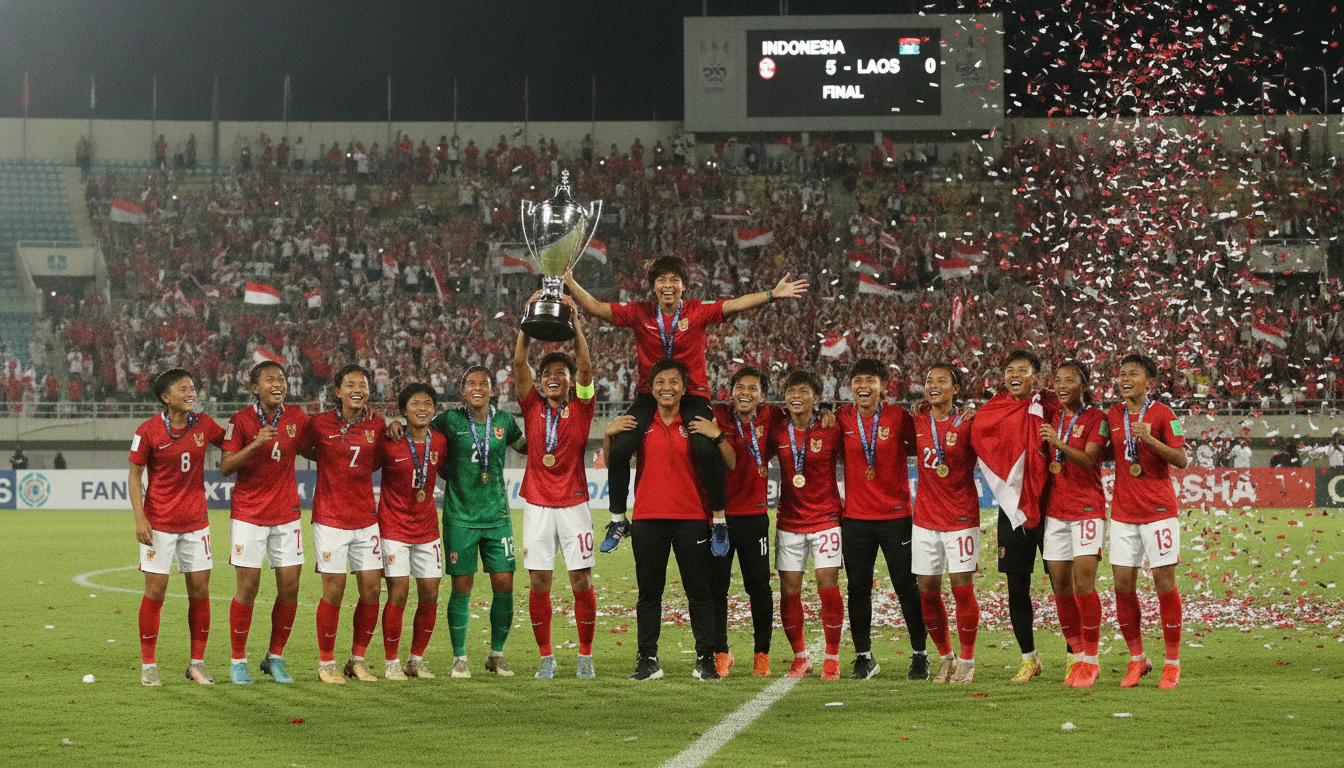
Indonesia Clinches Second AFF Women’s Cup with 5-0 Final Rout of Laos
Indonesia secure second AFF Women’s Cup title after a 5-0 victory over Laos on July 22, 2026, in Kuala Lumpur; Singapore beat Cambodia on penalties for third.


Indonesia captured the AFF Women’s Cup title in emphatic fashion on July 22, 2026, defeating Laos 5-0 in the final at Kuala Lumpur Football Stadium. The win gives Indonesia their second championship in the regional tournament and capped a campaign that shifted decisively after halftime. The first-half goal from Sydney Hopper set up a tense break, but Indonesia’s dominant second half produced four additional goals and left Laos with little reply.
Indonesia’s second-half onslaught
The match was level on nerves at halftime with Indonesia holding a narrow 1-0 advantage following Sydney Hopper’s 33rd-minute strike. Laos matched them physically and tactically in the opening 45 minutes, but could not withstand the momentum swing after the break.
Just three minutes after the restart Isabelle Nottet doubled Indonesia’s lead in the 48th minute and opened the floodgates. The visitors used the second half to press higher, recycle possession quickly and exploit space behind the Laos back line, producing three more goals over the following 36 minutes.
Goal details and match timeline
Sydney Hopper’s early finish in the 33rd minute proved clinical and timely as Indonesia took a slender lead into the interval. Hopper’s run and composed finish gave Indonesia the breakthrough they needed before Laos adjusted their shape at halftime.
Isabelle Nottet’s 48th-minute strike arrived immediately as Laos were regrouping, and Estella Loupatty added a third in the 56th minute to put the contest beyond doubt. Felicia Zeeuw’s 68th-minute goal and Emily Nahon’s 84th-minute finish completed the scoring, leaving the scoreboard reading 5-0 as Indonesia celebrated a comprehensive victory.
Laos’ performance and resilience
Laos entered the final having shown grit and defensive organization throughout the tournament, and their first-half performance reflected those strengths. The team contained Indonesia for long stretches before the second-half pressure exposed gaps and forced frequent defensive transitions.
Despite the heavy scoreline, Laos created moments of danger and tested Indonesia’s concentration on several occasions. The final will be a learning moment for Laos’ coaching staff as they build experience and depth at regional level.
Singapore edges Cambodia for third place
In the third-place match, Singapore secured a 4-3 penalty shootout win over Cambodia after the teams finished 1-1 in regulation. Danelle Tan put Singapore ahead with a 24th-minute goal, and Cambodia’s Soeurn Vipha converted a 70th-minute penalty to level the contest and force the shootout.
The penalty decider was tense and showcased individual composure from both sides, with Singapore ultimately prevailing to claim the tournament’s final podium spot. That result offers Singapore a morale-boosting finish and tangible momentum for upcoming regional fixtures.
Tactical analysis and coaching decisions
Indonesia’s coaches made effective adjustments at halftime, shifting personnel and committing to quicker transitions in the middle third. The substitutions and altered pressing patterns allowed Indonesia to turn half-chances into clear scoring opportunities during the second half.
Laos attempted to respond with tactical tweaks of their own, but the physical and technical advantages of Indonesia in wide areas proved decisive. In the third-place match, both Singapore and Cambodia showed contrasting styles—Singapore relied on structured buildup while Cambodia looked to quick counters—which contributed to the evenly contested affair.
Key players and moments that decided the final
Sydney Hopper’s opener was the pivotal early moment that set the tone for Indonesia’s eventual dominance in the final. Isabelle Nottet, Estella Loupatty, Felicia Zeeuw and Emily Nahon each contributed decisive finishes that underlined Indonesia’s attacking depth.
Goalkeeper performances at both ends of the tournament were also important, with saves and penalty composure affecting outcomes in tight matches. The distribution of goal-scoring across multiple Indonesian players demonstrated a balanced attacking unit rather than reliance on a single individual.
Tournament implications for Southeast Asian women’s football
Indonesia’s title win reinforces the nation’s growing competitiveness in Southeast Asian women’s football and highlights the investment in talent development across the region. The emphatic final result signals that Indonesia can produce high-intensity performances on big stages within ASEAN competitions.
Laos, Cambodia and Singapore all leave Kuala Lumpur with different but positive takeaways about player development and tactical identity. The tournament provided valuable match experience and a clearer picture of which teams are closing the gap and which need to broaden their talent pools.
Indonesia’s victory on July 22 will be measured not only by the trophy but by the momentum it creates ahead of future regional and continental assignments. The distribution of goals and the resilience shown by other teams suggest the next AFF Women’s Cup will be competitive and closely watched across the region.