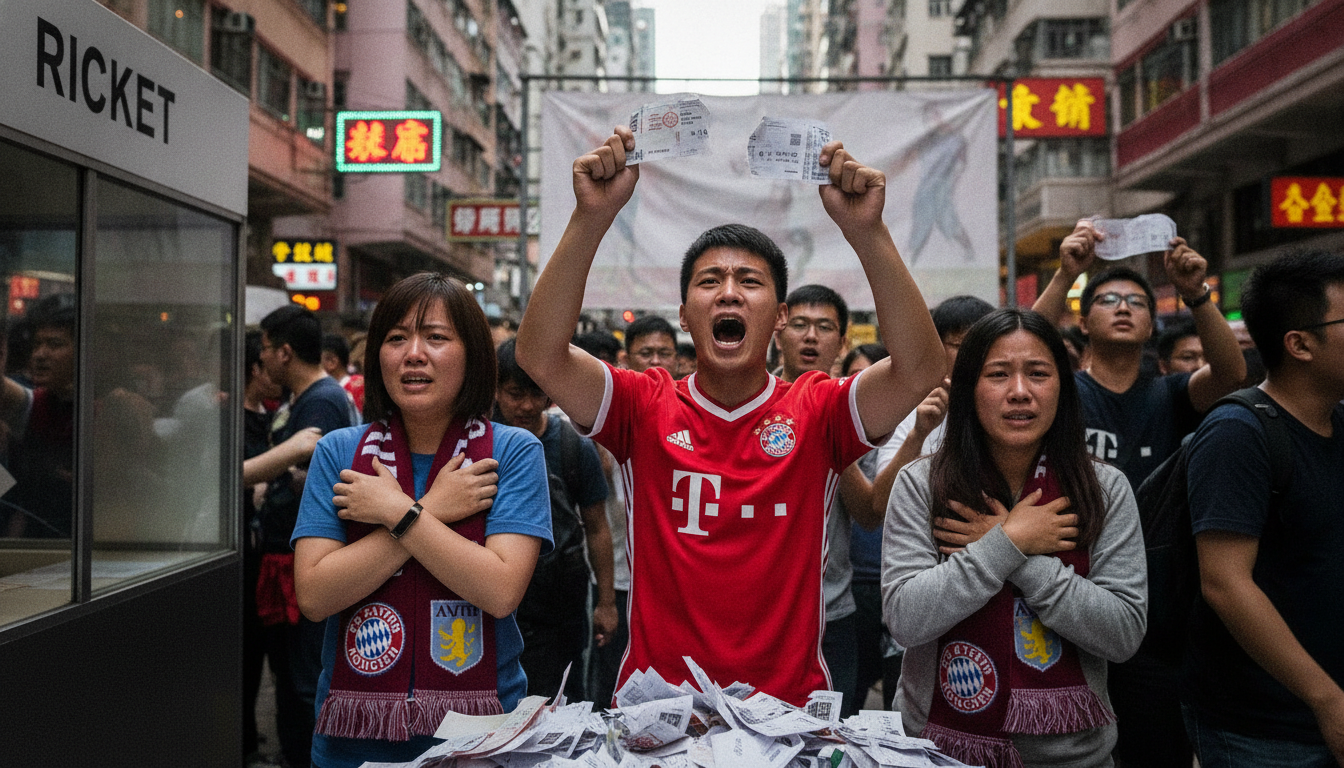
Bayern Munich vs Aston Villa ticket price cut in Hong Kong sparks fan anger amid weak sales for other friendlies
Promoters cut top-tier tickets for the Bayern Munich vs Aston Villa Hong Kong clash, prompting fan backlash as Manchester City, Inter, Chelsea and Juventus friendlies also struggle to sell out.


The decision to reduce top-tier ticket prices for the Bayern Munich vs Aston Villa match in Hong Kong has provoked sharp criticism from supporters ahead of an August friendly schedule.
Organisers introduced a sponsor-backed price reduction that cut HK$1,000 from the most expensive category, and the move has been framed by some fans as evidence of opportunistic pricing and poor demand management.
Ticket price cut and immediate reaction
With face-value tickets originally set between HK$2,688 and HK$388, Now Sports unveiled a “special sponsor offer” that trimmed prices in the three highest bands by HK$1,000, HK$900 and HK$700 respectively.
The reductions effectively lowered some seats that had been on sale at nearly HK$1,900 to close to HK$1,200, prompting buyers who paid full fare to voice frustration on social media.
Fans accused promoters of prioritising revenue over loyalty, saying the late cuts penalised early purchasers and undermined confidence in the ticketing process.
Sales figures and festival attendance
Organisers report that roughly 30,000 tickets have been sold for the initial phase of the Hong Kong Football Festival, which is staged at the 50,000-seat Kai Tak Stadium.
That tally leaves substantial capacity unused for certain fixtures, and it underscores how high price points have influenced overall sales despite marquee club names being involved.
Event officials have defended the pricing strategy as flexible and market-responsive, but the public response indicates significant dissatisfaction among local and regional supporters.
Struggling friendlies beyond the Bayern-Aston Villa clash
The Bayern Munich vs Aston Villa game is not the only friendly encountering ticket resistance this week in Hong Kong.
Saturday’s match between Manchester City and Inter Milan and the friendly between Chelsea and Juventus the following Wednesday have both shown slow uptake, with organizers reporting thousands of unsold seats.
Analysts say a combination of pricing, condensed scheduling and fan fatigue from repeated high-profile exhibitions may be weighing on demand for some matches.
Promoters and sponsor offer under scrutiny
Promoters Kuokai Sports and Scramble Events have come under particular scrutiny as the public debate has shifted to accountability and commercial practice.
While the sponsor-led discount was presented as a limited-time promotional offer, critics argue the move exposed flaws in initial pricing assumptions and communication with the fan base.
Promoters have acknowledged the adjustment but insist that sponsor involvement was intended to broaden access and boost attendance, not to marginalize early buyers.
Fan sentiment and social media fallout
Reactions across Mainland and Hong Kong social platforms have ranged from disappointment to anger, with several ticket holders saying they feel shortchanged by the late reductions.
Some supporters have called for refund windows or partial reimbursements for those who purchased before the cuts, while others have called for clearer ticketing policies on price changes ahead of events.
Fan groups and independent advocacy organizations said the episode highlights the need for stronger consumer protections around event ticketing, particularly for high-profile international matches.
Economic and reputational considerations for future tours
The commercial model behind summertime exhibition matches often depends on premium pricing for limited VIP and top-tier inventory, but this incident has illustrated the fragility of that approach.
Clubs, promoters and rights holders must balance short-term sponsorship deals and revenue targets with the longer-term value of fan goodwill in key markets such as Hong Kong and Mainland China.
Market watchers suggest that recurring reliance on last-minute price adjustments could erode trust and complicate future negotiations with local partners and broadcasters.
Impact on stadium atmosphere and local partners
Occupancy levels at Kai Tak Stadium will determine not only revenue but also the matchday atmosphere, which is a major selling point for clubs visiting overseas.
Lower-than-expected attendance for some fixtures risks delivering muted games that fall short of the spectacle both fans and clubs expect from international exhibitions.
Local hospitality businesses and sponsors tied to the festival could also see a reduced return on investment if ticket uptake does not improve across the remaining schedule.
Possible remedies and industry responses
Some industry stakeholders suggest solutions including staggered release pricing, guaranteed partial refunds when post-launch discounts occur, and clearer terms of sale to protect early buyers.
Clubs and tournament operators in other markets have experimented with fan loyalty credits and exchange windows to address similar controversies, and those models may be considered as Hong Kong organisers respond.
Legal experts note that consumer protection laws vary by jurisdiction and that any proposed remedy will need to align with local regulations and contractual obligations to sponsors.
What this means for fans and the upcoming matches
For fans planning to attend, the immediate implications are mixed: lower headline prices on some tiers may open access for cost-sensitive supporters, while upset earlier buyers may pursue remedies through promoters or secondary resale channels.
Supporters hoping for full-capacity atmospheres should watch how organisers manage remaining inventory and whether additional promotions are rolled out to fill stands.
Clubs involved in the schedule have largely remained neutral in public comment, deferring to local partners on commercial decisions while focusing media attention on match preparation.
The price cut for the Bayern Munich vs Aston Villa match has brought into sharp relief the tension between lucrative summer exhibitions and the expectations of long-standing supporters.
How promoters handle refunds, communication and future pricing will shape local sentiment as the Hong Kong fixtures proceed, and the episode may influence how clubs and rights holders structure similar events in the Asia market going forward.