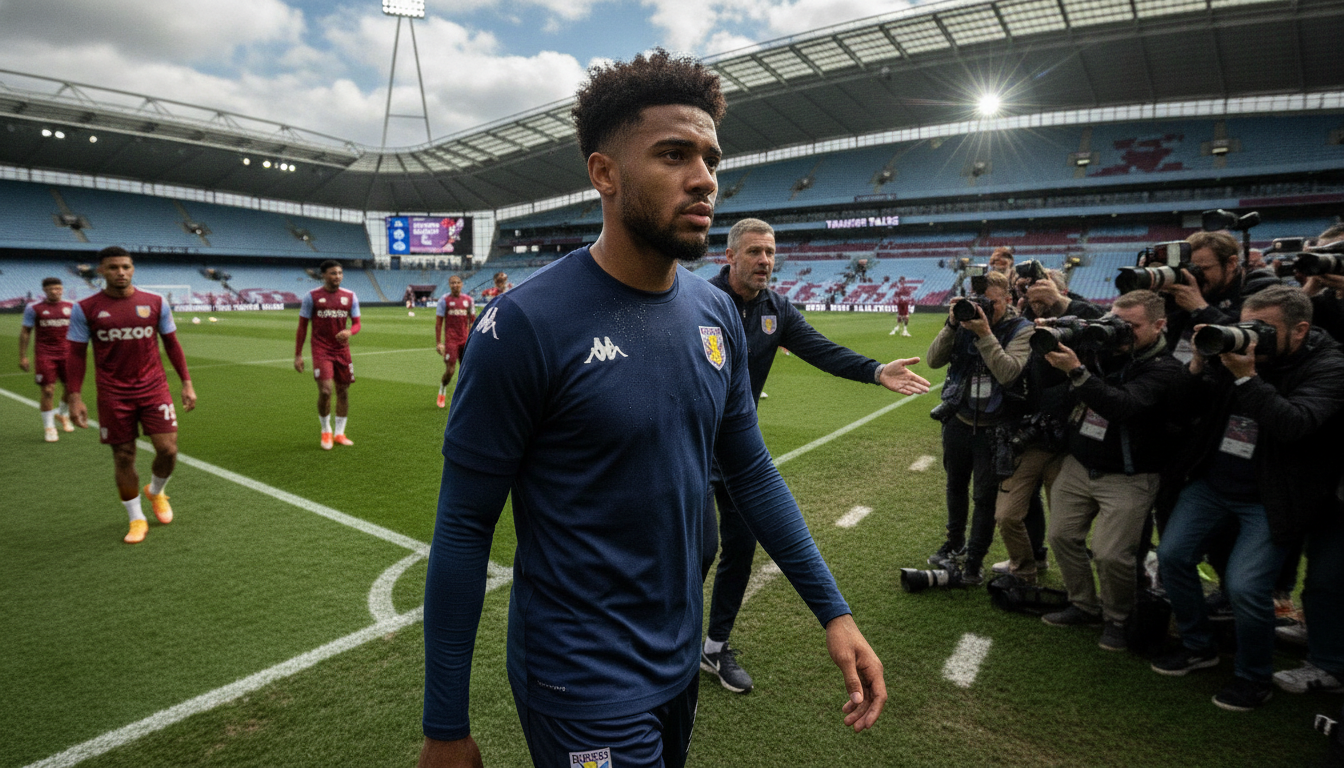
Ezri Konsa Eyes Arsenal Move as Saliba Sidelined, but Fee Dispute Clouds Deal
Ezri Konsa is reportedly keen on a summer switch to Arsenal after William Saliba suffered a back injury, yet a sizeable valuation gap between Aston Villa and Arsenal could derail negotiations.


Konsa signals interest in an Arsenal transfer
Ezri Konsa has indicated he would prefer a move to Arsenal this summer, according to recent reports circulating within transfer circles. The centre-back’s willingness to consider the Gunners comes amid uncertainty over Arsenal’s long-term centre-back availability. Konsa’s stance has added a new dynamic to what was already expected to be an active market for defensive reinforcements.
Arsenal officials have been made aware of Konsa’s preference and are understood to be monitoring the situation closely. The interest is driven by both the player’s form and the club’s immediate need to add experienced cover at centre-back. Any approach, however, will be shaped by valuation differences and the club’s assessment of long-term squad balance.
Saliba’s back injury forces Arsenal to reassess options
Arsenal confirmed that William Saliba will begin a managed recovery programme after sustaining a back problem, and the defender is expected to be sidelined for an extended period. The absence of Saliba, a defensive linchpin for the side, has prompted questions about depth and continuity at the back. Arsenal’s medical update has accelerated internal discussions about short-term solutions and contingency plans.
The club’s recent history shows how disruptive a prolonged injury to a primary defender can be, so reinforcement appears likely to be prioritized. Managerial staff and recruitment chiefs face a decision about whether to pursue an established centre-back on a temporary or permanent basis. The timeline for Saliba’s return will be central to those deliberations.
Valuation gap complicates potential transfer
A significant obstacle to any move for Konsa is the differing price expectations between the two clubs. Arsenal’s initial valuation is reported in the region of £30–35 million, while Aston Villa’s posture suggests they value the 28-year-old closer to £60 million. That disparity would require Arsenal to substantially increase their offer or to structure a deal with add-ons and incentives.
Villa’s position reflects both Konsa’s recent performances and the wider inflation in transfer fees for Premier League-calibre defenders. From Arsenal’s perspective, the question is whether the immediate need justifies bridging a wide gap for a player who is approaching 29. Negotiations will likely hinge on a compromise that balances guaranteed fee and contingent payments tied to performances or appearances.
Arsenal’s defensive alternatives and fitness concerns
Inside the squad, Arsenal have several central defensive options but each presents limitations that make Konsa an attractive target. Ben White, Jurrien Timber and Cristhian Mosquera are available but are not an ideal collective substitute for Saliba’s presence. White has recently returned from knee trouble and may be managed carefully in the opening months, while Timber is dealing with a groin issue that has restricted his minutes.
Mosquera remains a promising talent but is still developing the experience and decision-making consistency required in a title-challenging team. The club’s coaching staff are aware that relying on a mix of right-footed centre-backs and an inexperienced player could expose vulnerabilities, particularly in high-stakes matches. That calculus has strengthened the argument in favour of bringing in an established, reliable figure.
Konsa’s Premier League credentials and playing profile
Konsa has built a reputation as one of Aston Villa’s most dependable defensive performers over recent seasons and his Premier League experience is a major part of his appeal. The English centre-back is noted for his passing accuracy, defensive recoveries and aerial presence, making him a balanced option for teams seeking solidity. Statistical outputs last season underlined his consistency across duels and ball distribution metrics.
Beyond numbers, Konsa is valued for his positional sense and leadership in the backline, traits that could help stabilise Arsenal if Saliba’s absence extends into the new campaign. His versatility — able to operate in different defensive pairings — would offer manager tactical flexibility. That profile explains why Arsenal see him as a potential immediate fit rather than a longer-term speculative signing.
Financial routes and negotiation scenarios
Should Arsenal decide to press for Konsa, several commercial and contractual approaches could be explored to close the valuation gap. A mixture of up-front fee, performance-related add-ons and sell-on clauses would be a logical template to bridge the clubs’ differing positions. Loan-to-buy arrangements or payment in instalments are alternative structures that could be proposed to limit immediate financial outlay.
Villa’s willingness to negotiate will depend on their squad planning and available replacements in the market. If they are confident of securing a replacement or deem Konsa replaceable within their budgetary strategy, they may be more receptive to structured offers. Conversely, Villa’s desire to retain a player they consider integral could harden their stance, forcing Arsenal to weigh urgency against fiscal prudence.
Managerial and squad implications at Arsenal
Adding a player of Konsa’s profile would shape Arsenal’s defensive options beyond simply replacing Saliba temporarily. It would influence selection dynamics, with Gabriel and other left-sided defenders potentially forming new partnerships. The move would also affect the development pathway for younger centre-backs at the club, who could see their opportunities limited while an experienced recruit stabilises results.
From a tactical standpoint, Konsa’s competence on the ball could help Arsenal maintain possession-based patterns even when rotated into the lineup. His integration would need to be managed by coaching staff to preserve cohesion and to avoid unsettling established defensive chemistry. The timing of any transfer — ahead of preseason or closer to the campaign start — will also determine how quickly he can be assimilated.
Arsenal’s recruitment team will balance short-term necessity against longer-term squad planning when assessing how far to stretch financially. Any signing must fit into the club’s wage structure and broader roster strategy, particularly given the increasing emphasis on homegrown talent and sustainable spending models. That context will shape internal discussions as much as Villa’s asking price.
Market context and wider transfer dynamics
The current transfer market for defenders has been characterised by rising fees and intense competition for established players, a trend that increases the complexity of deals like this. Clubs are more frequently inserting premium valuations for players proven in top-flight environments, leading to a series of protracted negotiations. This environment explains why a straight swap from a £30m opening bid to a £60m asking price is not unusual, even if it demands creative solutions.
Arsenal will be competing not only with other English sides but also with continental clubs that value Premier League experience highly. Villa, aware of market demand, can therefore adopt a firm negotiating position. The outcome will depend on how both clubs prioritise immediate squad goals versus long-term financial planning.
If Arsenal ultimately decide not to meet Villa’s valuation, the club may explore alternative targets or accelerate promotion of in-house options. The decision will reflect a mixture of medical prognoses for Saliba, the manager’s tactical preferences and the board’s appetite for investment in summer business.
Konsa’s preference to join Arsenal introduces an additional human element into the equation, but transfers are complex transactions that require alignment across sporting and financial stakeholders. Whether his desire proves decisive will emerge as clubs engage in formal talks and outline the contours of any possible agreement.
The next phase of this story will hinge on formal offers, Villa’s response and the evolving assessment of Saliba’s recovery timeline. Until negotiations move into definitive proposals, Arsenal face a genuine dilemma between addressing an urgent defensive need and adhering to transfer market discipline.