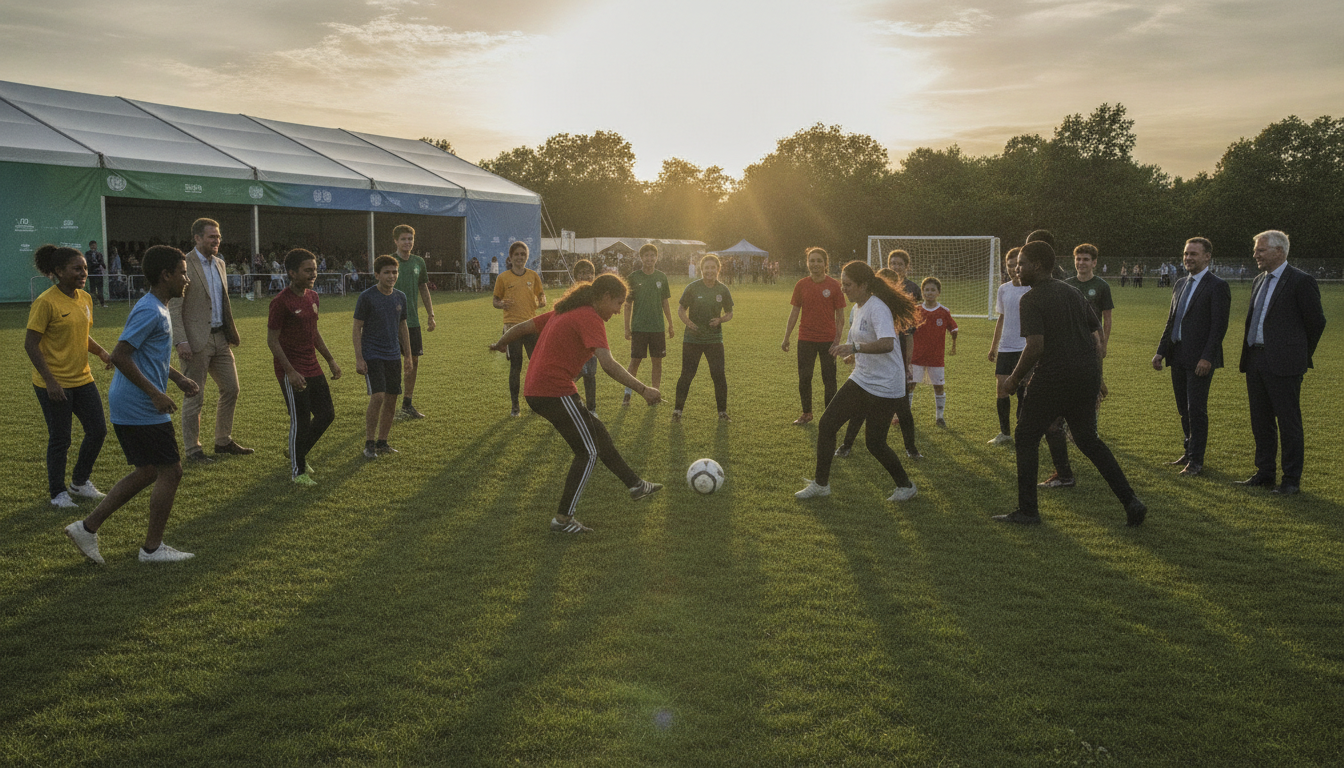
Football and youth mental health: UN event to showcase sport as a tool for resilience and stigma reduction
UN Youth Office will highlight football and youth mental health on July 17, 2026, arguing sport can reduce stigma, build resilience and needs sustained funding.


Dr. Sahira Al Nahari and UN Youth Office officials will convene young leaders, athletes and policymakers on July 17, 2026, to examine how football can support youth mental health and counter stigma.
The discussion, timed ahead of the Men’s World Cup final, frames football as a practical entry point for conversations that many young people find difficult to start in clinical settings.
Speakers will point to new UN findings and global health guidance to underline both the promise of sport-based approaches and the gaps that governments and funders must address.
UN to host "One World, One Game, One Goal" at UN Headquarters on July 17, 2026
The UN Youth Office will stage "One World, One Game, One Goal" at UN Headquarters on July 17, 2026, bringing together athletes, youth representatives, civil society and policymakers.
Organizers say the event is designed to celebrate football as a catalyst for improved youth mental health, while also highlighting opportunities to scale sport-linked programmes worldwide.
The timing — two days before the Men’s World Cup final — is deliberate, aiming to leverage football’s global reach to amplify messages about belonging, peer support and resilience.
Saudi initiative uses art and football to open mental health conversations
Dr. Sahira Al Nahari, founder of Shifā Art, described how therapeutic art workshops in Saudi Arabia have revealed football as a natural bridge to talk about emotions.
She said men attending her sessions often begin by drawing jerseys or teams, and those sketches quickly lead to conversations about anxiety and everyday pressures.
Al Nahari likened youth mental health to a football ecosystem: players, coaches, medics and fans all play roles, and interventions must mirror that collective support structure.
UN report finds rising adolescent needs and complex social drivers
A UN report published in February documented that one in seven people aged 10 to 19 experiences a mental health condition, and that most adult disorders begin by the mid-twenties.
The analysis links adolescent mental health to a wide range of social determinants, including education, employment prospects, family dynamics, poverty and the effects of conflict and displacement.
UN officials emphasize that those drivers require cross-sectoral policies, since clinical care alone cannot reach or address the root causes of distress for many young people.
Evidence links team sports to lower depression and greater social connection
Global health guidance cited by UN speakers notes a consistent association between participation in team sports and lower rates of depression and anxiety among adolescents.
As the world’s most popular sport, football is singled out for its capacity to foster belonging, strengthen social bonds and provide structured outlets for emotional expression.
Speakers at the UN event will stress that football legends and local role models alike can be effective messengers to transform norms and encourage help-seeking behavior.
Barriers to meaningful sport participation and the need for inclusion
Despite the benefits, many young people face barriers to participating meaningfully in sport, including economic obstacles, inadequate facilities, gender norms and social exclusion.
UN and youth advocates warn that simply promoting football is insufficient if programmes do not address accessibility, safety and cultural relevance for marginalized groups.
Panelists will push for inclusive design, local leadership and pathways that enable sustained engagement rather than one-off activities tied to high-profile tournaments.
WHO, UNICEF and UN frameworks promote multisectoral school-based support
The World Health Organization and UNICEF have developed evidence-based frameworks, such as the Helping Adolescents Thrive initiative, to support psychosocial programmes in schools.
Those programmes emphasize resilience-building, alternatives to risky behaviour and multiple delivery methods that blend clinical, community and school-based responses.
UN officials argue that sport should be part of a broader toolkit that meets young people where they are while linking to trained mental health professionals and referral systems.
Funding shortfalls and the $200 billion global financing gap
Speakers at the UN event will underline that financing remains a critical constraint, with most countries spending less than two percent of health budgets on mental health.
The World Health Organization has estimated a global financing shortfall of roughly $200 billion for mental health services, a gap that disproportionately affects adolescents.
Officials will call on national governments, donors and the private sector to prioritize sustained investment in community-based, school-linked and sport-integrated mental health programmes.
Youth leadership and peer-led solutions at the center of interventions
Both Dr. Al Nahari and UN Assistant Secretary-General for Youth Affairs Felipe Paullier emphasized that young people are not passive beneficiaries but central architects of support systems.
They highlighted examples of peer-led initiatives where young people provide mutual support, normalize help-seeking and design culturally relevant outreach through sport and art.
The UN delegation framed its role as partner and amplifier: listening to youth-led solutions and helping to scale successful models with technical and financial support.
Football’s resonance in communities, from informal street games to organized clubs, makes it a potent medium to disseminate psychosocial skills and model supportive behaviors.
Programmes that pair trained facilitators with local sports leaders can translate on-field teamwork into off-field coping strategies and referral pathways.
UN advocates say integrating mental health literacy into coaching curricula and community clubs can broaden the reach of services without medicalizing everyday struggles.
Measuring impact and ensuring evidence-based practice
Panelists acknowledged that while associations between sport and improved mental health are documented, robust monitoring and evaluation are still needed to determine what works, for whom and in which contexts.
They urged the adoption of standardized indicators, longitudinal studies and community feedback loops to ensure programmes are both effective and adaptable.
Donors and agencies were urged to fund rigorous evaluations alongside scale-up efforts so promising interventions can be refined and replicated responsibly.
Calls for cross-sectoral partnerships and long-term commitment
The conversation at the UN will center on the need for multi-stakeholder collaboration that includes ministries of health, education and sport, local governments, NGOs and the private sector.
Speakers stressed that short-term campaigns tied to major sporting events can raise awareness, but sustained impact requires long-term programming, stable financing and capacity building.
The proposed approach blends community-led sports initiatives with school-based psychosocial supports and formal health services to create durable pathways for young people.
The UN event on July 17, 2026, is intended as a platform to elevate those partnerships, share promising practices and commit to concrete next steps that link football to measurable mental health outcomes.
Officials will also use the forum to spotlight innovative local programmes and to solicit pledges for technical assistance and funding to expand proven models.
Youth voices will be central to the proceedings, with organizers aiming to ensure that young people drive the agenda and define the priorities that matter most to their peers.
As the UN and partners prepare for the session, organizers say the goal is both symbolic and practical: to show how football’s social power can be harnessed to reduce isolation and support psychological well-being.
The emphasis on art, grassroots sport and peer networks reflects a broader shift toward community-based, culturally attuned approaches rather than purely clinical responses.
UN officials and practitioners alike caution that sport is not a panacea, but when combined with evidence-based psychosocial care and adequate funding, it can play a significant role in a more comprehensive strategy.
Young people, practitioners and policymakers attending next week’s event will be looking for tangible commitments: pilot funding, evaluation plans and pathways to scale interventions that already show promise.
The coming days at UN Headquarters will test whether the global spotlight around football can be converted into sustained support for youth mental health policies and programmes that truly reach those in need.
The central message advanced by speakers is clear: football and allied community initiatives can open doors to conversation and care, but success will depend on inclusive design, evidence, and meaningful investment.