Vietnam vow to defend crown as ASEAN Hyundai Cup 2026 Group A opens in Thailand
Vietnam captain Nguyen Quang Hai declares his team ready to defend the ASEAN Hyundai Cup 2026 as Group A fixtures kick off in Thailand, with matches running July 24–August 7.


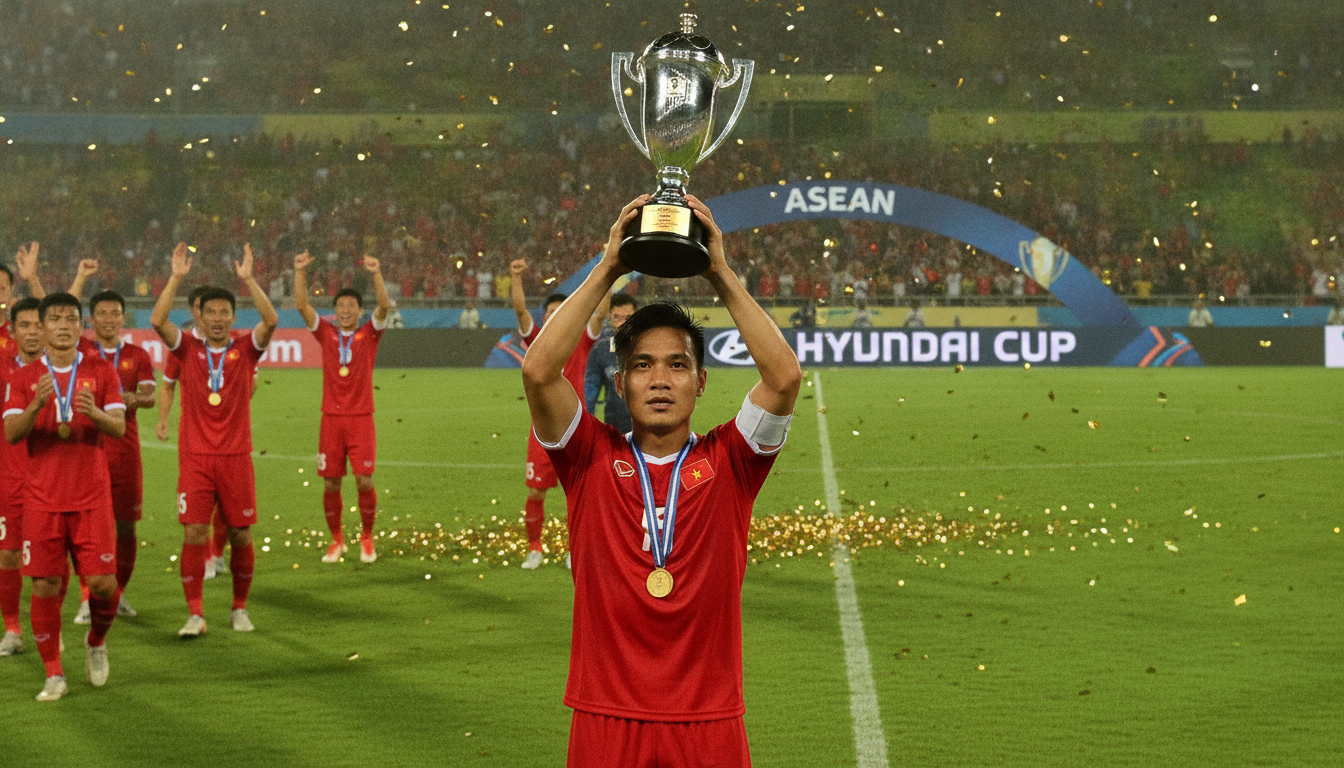
Vietnam arrive in Thailand on the back of their 2024 triumph and have signalled clear intent to defend the ASEAN Hyundai Cup 2026, captain Nguyen Quang Hai said on July 23. The skipper described a positive camp atmosphere and detailed preparations across fitness, tactics and team cohesion as Vietnam prepare for their Group A opener. Expectations are high for the Golden Star Warriors as they begin a campaign that includes fixtures against Timor-Leste, Cambodia, Singapore and Indonesia.
Quang Hải stresses readiness and unity
Nguyen Quang Hai framed the national squad’s build-up as measured and professional, saying the team has worked to sharpen both physical conditioning and tactical understanding. He credited the staff and players for maintaining focus in training sessions and building a shared belief ahead of the opening match. The captain’s comments underscored Vietnam’s objective to follow up their 2024 title with a sustained campaign rather than rest on past success.
Vietnam’s squad selection and match-day approach are expected to reflect pragmatic choices from coach Kim Sang-sik, who guided the side to the trophy two years ago. The emphasis on unity and preparation suggests Vietnam will prioritise controlled possession and defensive organisation while seeking moments of creativity from their key attackers. Opponents in Group A will test depth and adaptability across a compact schedule.
Group A composition and early stakes
Group A brings together Vietnam, Timor-Leste, Cambodia, Singapore and Indonesia, setting up a mixture of established contenders and teams aiming for breakthroughs. The group phase runs from July 24 to August 7, with Vietnam’s first game against Timor-Leste marking the start of a demanding block of fixtures. Only the top two teams from each group will advance to the semi-finals, raising the stakes for every early match.
The condensed timetable places a premium on squad rotation, recovery protocols and tactical flexibility. Teams with deeper benches can manage load better over the three-week group stage, while smaller squads will face the challenge of maintaining intensity and form. For Vietnam, keeping momentum through the first two matches will be crucial to avoid pressurised scenarios later in the group.
Singapore and Cambodia set to open in Phnom Penh
Singapore begin their campaign in Phnom Penh against Cambodia, a tie that will draw attention given the Lions’ recent resurgence in regional and continental competition. Coach Gavin Lee has urged his players to avoid looking beyond each match, stressing a step-by-step mentality as Singapore pursue progress after returning to the AFC Asian Cup. That cautious approach reflects a squad navigating renewed expectations from supporters.
Cambodia will provide a probing test on home soil, where local conditions and support can influence match tempo and physical contests. Both teams will likely treat the opening fixture as an opportunity to establish rhythm and confidence, with coaches prioritising structure in defence and efficiency in transition. Early results here could shape the balance of Group A heading into its middle rounds.
Group B favourites and outlying contenders
Seven-time champions Thailand are widely viewed as the team to beat in Group B, where they will begin their campaign in Vientiane against hosts Laos. Thailand’s pedigree in the ASEAN Hyundai Cup 2026 makes them immediate favourites, though regional tournaments have regularly produced surprises. Malaysia, Myanmar, the Philippines and Laos all possess elements that can unsettle the expected order.
Malaysia coach Tan Cheng Hoe acknowledged Thailand’s status while framing his own side’s aims around harmony and steady progress. Malaysia travel to Yangon to face Myanmar in their opening game, and Tan has highlighted the importance of the first match in setting a tone for the campaign. The Philippines, with several semi-final appearances but no final to date, start their assault on July 28 against Myanmar and will be looking to convert past near-misses into a deeper run.
Knockout format, schedule and logistical demands
The ASEAN Hyundai Cup 2026 progresses from group phase to semi-finals that will be contested over two legs, with first legs scheduled for August 15 and 16 and returns on August 18 and 19. The final is slated to be played over two legs on August 23 and August 26. That format rewards consistency across home-and-away ties and introduces strategic complexity in how coaches manage away goals, squad rotation and travel logistics.
Compact travel schedules and short turnarounds pose operational challenges for federations, with recovery protocols, medical teams and load management becoming decisive factors. Teams with professional domestic leagues and larger infrastructure are better positioned to handle the calendar, but national sides that build clear plans for recovery and set-piece preparation can neutralise those advantages. Coaches will be measured in selection decisions as the tournament shifts from group intensity to two-legged knockout arithmetic.
Tactical narratives to follow in Thailand and beyond
The ASEAN Hyundai Cup 2026 offers a laboratory for tactical evolutions across Southeast Asia as teams balance defensive solidity with attacking invention. Vietnam’s pragmatic mix under Kim Sang-sik, Singapore’s structured approach under Gavin Lee and Thailand’s traditionally fluid attack provide contrasting templates for success. Indonesia and Malaysia, with strong domestic talent pools, may push for high-energy pressing and quick transitions.
Individual players will also shape narratives — creative midfielders who can unlock compact defences and clinical forwards who finish limited chances will gain prominence. Set pieces, long-range finishing and management of game tempo are likely to decide tight fixtures where tactical discipline overrides individual flair. As the tournament unfolds, adjustments between first and second legs in the semis will highlight which coaching staffs can outthink opponents under pressure.
The competition’s wider significance extends beyond trophies and national pride, as performances here influence player visibility and regional standings. Scouts and clubs will monitor emerging talents, and national teams will take lessons from the tournament’s intensity back into qualifying campaigns and domestic seasons. For countries investing in youth and infrastructure, the ASEAN Hyundai Cup 2026 serves as an important benchmark.
Vietnam enter the tournament with concrete ambitions but face a sequence of obstacles that test squad depth and tactical consistency. Group A’s balance of established powers and determined challengers guarantees several high-stakes encounters before the semi-finals. Coaches on all sides have signalled restraint and focus, underscoring that early matches will shape momentum and reduce the margin for error.
With the first group fixtures set to begin, attention will turn to match-day selections, fitness reports and tactical plans that might provide early clues about who will progress. The tournament’s compact schedule will quickly expose weaknesses and reward teams that can maintain intensity across fixtures. Fans and analysts will watch how champions defend their title and how rivals attempt to dismantle established hierarchies.
The ASEAN Hyundai Cup 2026 arrives with a familiar mix of rivalry and renewal, and Vietnam’s declaration of readiness adds another compelling subplot as regional football moves into a high-stakes month of competition.