Singapore training camp in Okinawa: Lee names 24-man squad ahead of ASEAN Hyundai Cup 2026
Singapore will train in Okinawa (July 6–17) as coach Gavin Lee names a 24-man squad and schedules three friendlies to sharpen fitness and tactics for the ASEAN Hyundai Cup 2026.

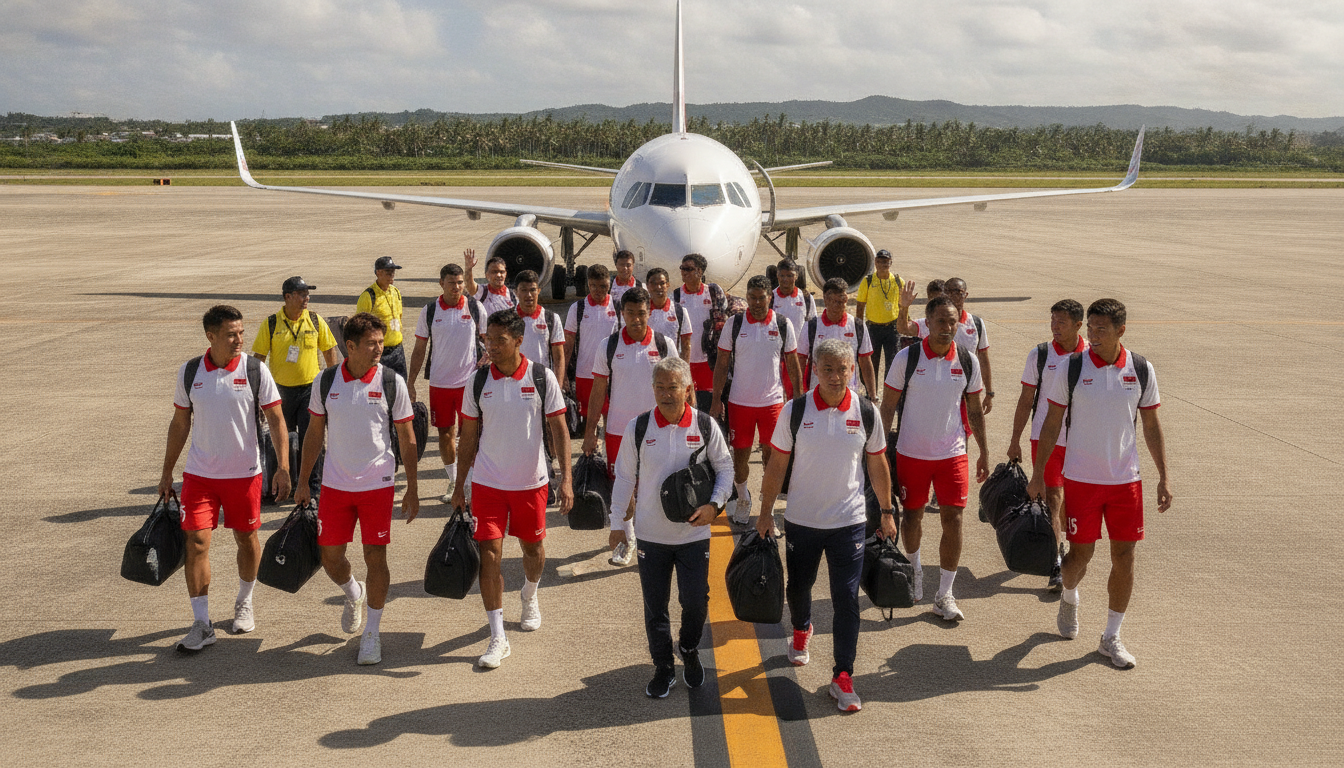
Singapore announced on Saturday that the national team will stage a concentrated training camp in Okinawa, Japan, as part of final preparations for the ASEAN Hyundai Cup 2026. The squad, selected by head coach Gavin Lee, comprises 24 players who will begin a centralised programme on June 23 before travelling to Okinawa for match practice between July 6 and July 17. The training camp in Okinawa is designed to simulate the short recovery times and intensity Singapore expects to face in Group A of the tournament.
Lee finalises 24-player roster for centralised preparations
Gavin Lee confirmed a 24-man squad to enter the national team’s centralised training phase starting June 23. The selected players will undergo an intensive buildup at home before moving to Okinawa for the overseas block of training and friendlies.
Lee’s selections balance experience and youth, with emphasis on players who have shown recent form in domestic and regional competitions. The roster size reflects the coaching staff’s goal to create competition for places while maintaining manageable group dynamics during an intensive camp.
Okinawa dates and calendar for July camp
The Singapore camp in Okinawa runs from July 6 to July 17, offering an 11-day window for training, recovery work and three scheduled matches. The timing places the camp immediately ahead of the ASEAN Hyundai Cup, allowing key tactical themes to be rehearsed under match conditions.
Before departure, the squad will complete a centralised period on the island from June 23 that focuses on conditioning and tactical drills. The sequencing of domestic preparation followed by overseas match practice is intentional, aiming to build fitness before testing tactical plans against Japanese clubs.
Planned opposition: Ryukyu, Okinawa SV and Albirex Niigata
Singapore will face J3 League side FC Ryukyu, J4 outfit Okinawa SV and J2 club Albirex Niigata during the Okinawa stint. Those opponents provide a range of playing styles and intensity levels for the national team to measure itself against.
The three-club slate is deliberately varied to stress different aspects of match preparation. FC Ryukyu offers a physically demanding opponent, Okinawa SV presents an opportunity to work on possession and transition, and Albirex Niigata brings the tactical discipline associated with a higher-tier J2 side.
Coaching objectives: conditioning, tactics and rapid recovery
Coach Lee has framed the schedule as a stress test that mirrors tournament demands, with short turnarounds between fixtures to force quick physical and tactical recovery. The camp will prioritise high-intensity conditioning, set-piece work and match scenarios that require swift tactical adjustments.
Medical and sports-science staff will be heavily involved to monitor load management, recovery protocols and injury prevention. These measures are intended to keep the squad competitive across the tournament’s compressed timetable and reduce the risk of fatigue-related setbacks.
Group A confrontation and tournament stakes
Singapore will compete in Group A at the ASEAN Hyundai Cup 2026 alongside defending champions Vietnam, Indonesia, Cambodia and Timor-Leste. The draw presents a demanding path with multiple regional rivals expected to vie for top positions in the group stage.
The matchups against Vietnam and Indonesia in particular will test Singapore’s tactical flexibility and defensive organisation. Lee’s preparations in Okinawa are therefore set against the backdrop of needing immediate competitiveness in group play, where points and goal difference can determine progression.
Selection implications and squad dynamics
The 24-player list sends signals about the head coach’s tactical intentions and depth assessment across positions. Competition for starting places will be intensified by the condensed camp, offering fringe players a chance to stake claims through training performances and match minutes in Okinawa.
Team management will be evaluating not only individual form but also combinations and cohesion under pressure. Decisions on the final tournament roster and matchday lineups are likely to be influenced by form shown in the three friendlies and by players’ ability to recover quickly between sessions.
Pre-tournament friendlies will therefore play a dual role: sharpening match fitness and providing a live assessment platform for tactical adjustments. The coaching staff will monitor both measurable performance data and qualitative indicators such as communication, positional discipline and decision-making under fatigue.
Logistics, support staff and medical oversight
The camp’s logistics encompass travel arrangements, training facilities in Okinawa and coordination with host clubs for the scheduled matches. Singapore Football Association officials have been tasked with ensuring training venues, recovery facilities and accommodation meet the team’s requirements.
A contingent of medical and sports-science professionals will accompany the squad to oversee load management, nutrition and rehabilitation programmes. Their presence aims to maintain player availability and mitigate the typical risks that come with intensive short-term training blocks.
This support structure will be critical when the team returns from Japan and transitions directly into the competitive environment of the ASEAN Hyundai Cup. Effective coordination between coaching, medical and administrative staff is a practical necessity for a smooth lead-in to the tournament.
Singapore’s choice of Okinawa as a training venue underscores a strategy to seek varied opposition and controlled conditions ahead of a major regional tournament. The combination of domestic centralisation and overseas match practice reflects a preparatory model intended to ready the squad for the specific pacing and recovery demands of the ASEAN Hyundai Cup 2026.
The squad departs from the local training phase on June 23 and will use the Okinawa matches to finalize tactical roles, evaluate squad depth and build match sharpness before the tournament begins.