Spain beat Argentina in extra time as Ferran Torres seals 1-0 World Cup final victory
Spain beat Argentina 1-0 in extra time as Ferran Torres scored the decisive goal, Enzo Fernández was sent off and Lionel Messi likely played his final World Cup match.


Match-winning moment
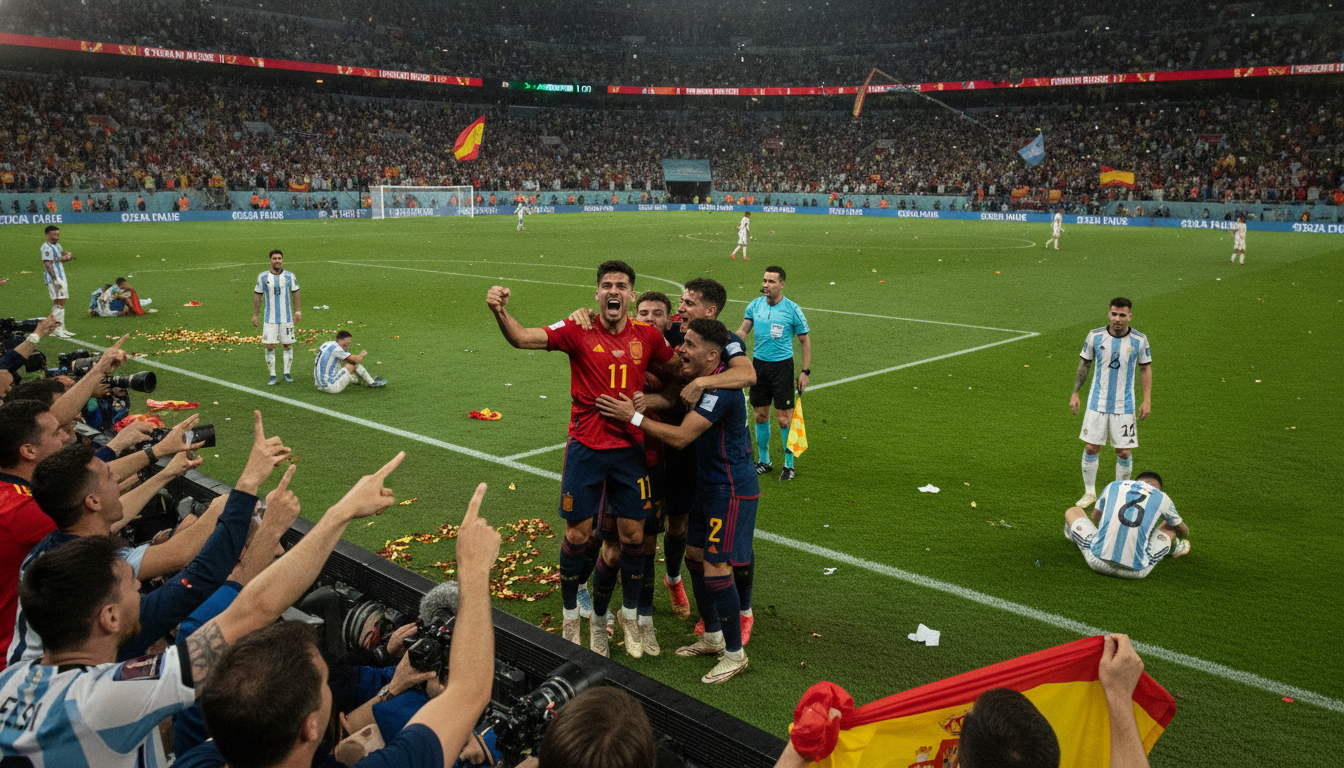
Spain broke a stubborn Argentina defence in the 106th minute when Ferran Torres converted at the far post to settle the World Cup final. The Barcelona winger finished from close range after a sustained Spanish attack, ending a low-scoring, attritional contest that had gone deep into extra time. Torres’s strike followed a sequence of patient build-up play and a smart piece of individual control down the flank that kept the move alive.
Control and chances
From the opening whistle Spain maintained the greater share of possession and created the bulk of the clear chances throughout the match. Statistical dominance was clear as Spain registered far more shots and territorial advantage while Argentina rarely pushed forward until the closing stages. Emi Martínez made several important saves to keep Argentina in contention, but the visitors ultimately could not fashion the volume of opportunities needed to threaten the Spanish goalkeeper consistently.
Tactical battle and turning point
Argentina employed a defensive, disruption-focused approach that slowed the game and limited Spain’s rhythm for long stretches. That strategy was effective in frustrating Spain until extra time, but it carried risks that materialised late when Enzo Fernández was dismissed after accumulating two yellow cards. Playing a man down in extra time shifted the balance decisively, allowing Spain to press with greater confidence and exploit more space behind Argentina’s lines.
Key contributions and individual roles
Pedro Porro’s cross to the back post and Nico Williams’s tenacious streak to keep the ball in play were instrumental in the goal sequence, showcasing collective work rather than a single moment of individual brilliance. Ferran Torres took advantage of the opening with a composed finish, while other Spanish players combined to sustain pressure for long periods. For Argentina, goalkeeper Emi Martínez kept his side alive with a string of fine saves, underscoring his importance despite the defeat.
Messi’s finale and post-match scenes
Lionel Messi, 39, likely played his last World Cup game and received plaudits for guiding an ageing Argentina side to the final through a demanding knockout schedule. He was largely contained for much of the match as Spain kept him on the periphery and limited his influence in dangerous areas. Tensions boiled over after the final whistle with a brief, heated altercation among players; the confrontation included aggressive reactions and saw Leandro Paredes sent off after shoving Gavi, reflecting the match’s high emotional stakes.
Atmosphere and spectacle
The final featured a star-studded half-time show that mixed global pop acts and tributes to football legends, adding a festival-like dimension to the sporting event. The entertainment lineup and tributes elevated the occasion and offered a landmark, Super Bowl-style production for the first time in a World Cup final. Packed stands and a collection of football icons and celebrities watched the closing chapters of a tournament that stretched across three host nations.
Tournament context and records
This edition of the World Cup, expanded to 48 teams and staged across Canada, Mexico and the United States, produced memorable storylines and notable individual achievements. Kylian Mbappé finished the competition as top scorer and set a new record for World Cup goals, while the teams that reached the podium underscored the depth of talent on display. England secured third place in a high-scoring playoff, marking their best finish since lifting the trophy in 1966.
Spain beat Argentina to lift the World Cup in a match that blended tactical discipline, late drama and global showmanship. The result capped a tournament that faced pre-tournament concerns about costs and conditions but delivered a host of compelling matches and moments. In the immediate aftermath Spain celebrated a younger, faster side that executed a dominant long-term pattern despite intermittent stoppages and interruptions.
Looking forward, Spain will build on a squad that combined technical fluency with physical resilience, while Argentina must reassess disciplinary lapses and tactics despite the pride in reaching the final. Messi’s World Cup legacy remains immense regardless of the result, and the tournament reinforced the sport’s global reach through its scale, entertainment and record-setting performances.