Eduardo Camavinga Told Minutes Will Be Scarce Under Mourinho as Real Madrid Explore Exit
José Mourinho has warned Eduardo Camavinga that first-team minutes at Real Madrid will be hard to come by, creating summer tension as the club weighs transfer options.

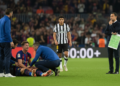
José Mourinho personally informed Eduardo Camavinga that his opportunities at Real Madrid are likely to be limited, a blunt message delivered ahead of the club’s 2026 pre-season. The conversation, reported on July 26, 2026 by journalist Sergio Valentín, set the tone for a summer in which Camavinga’s future has become a central talking point at Valdebebas. Camavinga has nonetheless returned for pre-season training and signalled his intention to remain and fight for minutes.
Mourinho’s assessment delivered before pre-season
Mourinho’s warning was not framed as a late reaction to training or one poor outing; according to reports, the decision was made before the coach arrived at Real Madrid’s training ground. The manager is understood to have evaluated the squad and concluded that playing time for Camavinga would be at an absolute premium this season.
That premeditated stance explains why club officials have quietly begun to probe the market for a possible transfer solution, even as Camavinga resists a move. The early, direct communication between manager and player has added a confrontational edge to what might otherwise have been a routine summer of squad adjustment.
Camavinga insists on staying and fighting
Despite the message from Mourinho and Madrid’s exploration of potential suitors, Camavinga reported for pre-season and has made clear he wants to remain at the club. The 23-year-old’s decision to stay and compete complicates the club’s efforts to clear space in midfield and reduces the leverage Madrid might expect when negotiating departures.
Camavinga’s stance is emblematic of many modern contract-era impasses: a player’s preference to fight for a place colliding with a club’s desire to reshape the squad. How long that standoff persists will depend on offers arriving that satisfy both the player and Real Madrid’s sporting and financial requirements.
Rodri’s arrival and the shifting midfield pecking order
The anticipated signing of Rodri from Manchester City has crystallised the reshuffle in Madrid’s midfield hierarchy and is a central reason for Mourinho’s assessment. Rodri’s inclusion is expected to push Aurélien Tchouaméni down the order at the base of midfield, which in turn squeezes playing time for those below him, including Camavinga.
That cascade of changes narrows the minutes available for rotation and development, particularly in deep-lying roles where the club now expects Rodri to anchor the team. For Camavinga, who featured largely as a substitute at times during 2025/26, the incoming profile of midfield personnel presents a clear obstacle to the consistent starting role he seeks.
Transfer implications and market dynamics
Real Madrid’s exploration of transfer options for Camavinga places the club in the familiar summer position of testing interest while managing internal dynamics. Clubs tracking Camavinga will weigh his age, versatility and contract status against Madrid’s asking price and the player’s public desire to stay.
Any concrete bid will change the calculus. A firm offer that meets Madrid’s valuation could accelerate a departure, while a lack of serious interest may strengthen the player’s case to remain. The interaction between agent negotiations, Camavinga’s own preference, and Madrid’s strategic priorities will determine how this episode resolves.
Sporting consequences for Real Madrid’s midfield plans
How Madrid manage Camavinga’s status matters beyond one player; it affects rotation patterns, injury cover and tactical flexibility across a long season. If Camavinga stays, Mourinho will need to decide whether to use him as a rotational option, to adapt his role, or to further limit his minutes in favor of established starters.
Conversely, if Madrid successfully move him on, the club will have cleared a pathway for other midfielders while potentially raising funds or freeing wages for additional reinforcements. The decision will be considered in the context of Champions League ambitions and domestic objectives that place a premium on both depth and coherence.
What this means for Camavinga’s career trajectory
At 23, Eduardo Camavinga remains at a crossroads that could define the next stage of his career. Staying and competing under Mourinho offers a chance to prove his adaptability and resilience at Europe’s biggest club, but it carries the risk of another season with limited minutes that could slow his development.
A transfer to a club offering regular starts would likely accelerate his progression and visibility, though it might require stepping outside the spotlight of Real Madrid. Camavinga’s ultimate choice will balance short-term playing time against long-term ambitions, national team prospects and the prestige of remaining at a global powerhouse.
Real Madrid will spend the coming weeks evaluating offers and internal options while Camavinga continues to train and make his case on the pitch. How that tension is managed will reveal much about the club’s transfer priorities and Mourinho’s immediate plans for the squad.