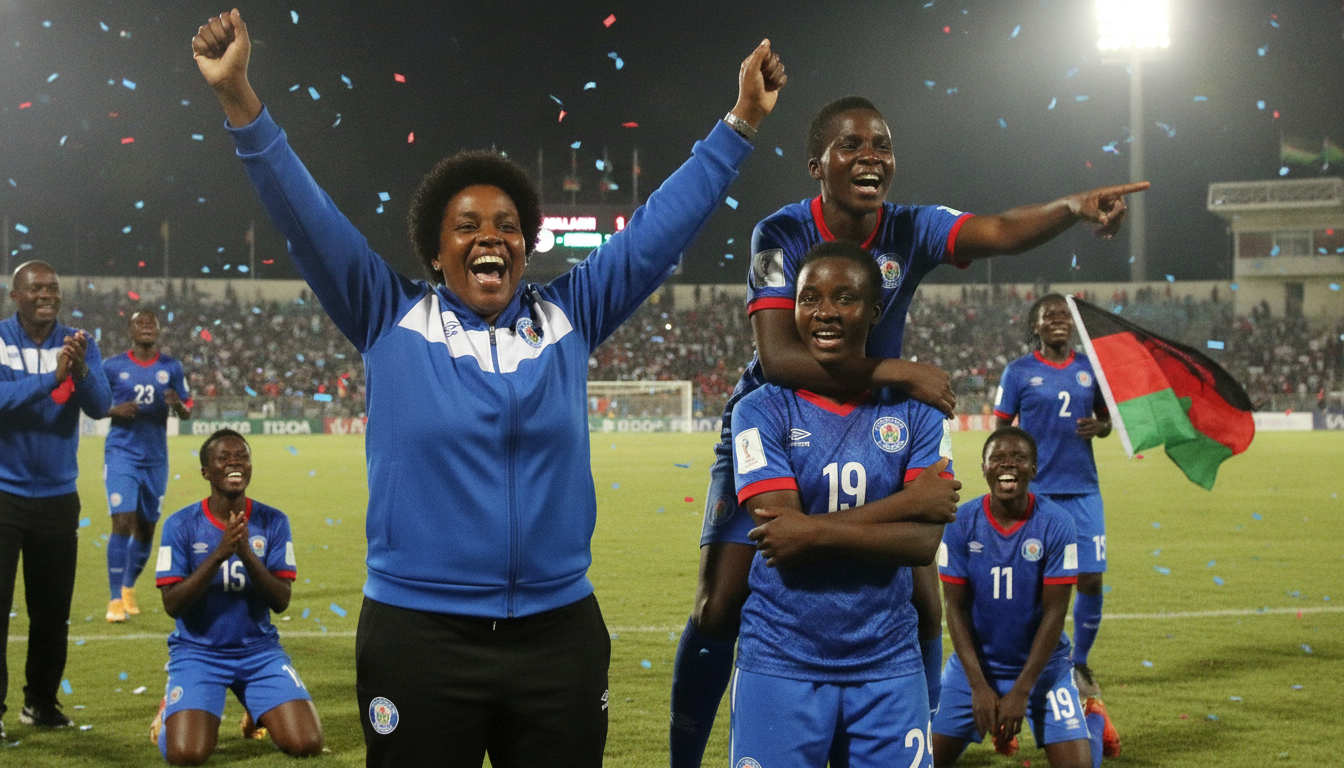
Malawi WAFCON win: Scorchers stun Nigeria to make bold Group C statement
Malawi WAFCON win: Scorchers stunned Nigeria in Rabat in Group C as coach Lovemore Fazili praised resilience and the returning Chawinga sisters’ impact.


Malawi produced a shock result at Al Madina Stadium in Rabat as the Scorchers beat Nigeria to record their maiden Women’s Africa Cup of Nations victory, a result that reverberated across Group C. Head coach Lovemore Fazili said the win vindicated the team’s fearless approach and the return of key attackers Tabitha and Temwa Chawinga. The victory gives Malawi momentum with two group games remaining and reshapes qualification calculations in a tightly contested group. Fazili underlined that the performance was no fluke, insisting his players had been fighting to prove they belong on the WAFCON stage.
Fazili praises fearless approach
Fazili emphasized mentality as the decisive factor in the upset, telling reporters at Al Madina Stadium that he had urged his players to discard any fear of their high-profile opponents. He said, "We told the players not to fear the name Nigeria," and added that the team’s belief was central to executing their game plan. The coach framed the result as evidence that Malawi were not merely participants but competitors prepared to take risks on the continental stage. His comments reflected a broader narrative of small nations finding confidence in collective resolve.
Fazili also credited preparation and match-day clarity for the result, noting that the squad’s understanding of roles and responsibilities allowed them to press and transition effectively. He highlighted the players’ discipline in sticking to tactical instructions under pressure from a traditionally dominant side. The coach made clear that mental fortitude would be the key focus ahead of the remaining group fixtures. He warned that Malawi would need to sustain intensity and concentration if they are to build on this landmark win.
Chawinga sisters restore balance
The return of Tabitha and Temwa Chawinga played a clear role in Malawi’s performance, according to Fazili, who described the squad as more complete with both forwards available. He observed that having both sisters on the pitch improved link-up play, created more attacking options, and helped teammates find familiar patterns in possession. The coach said the team had at times been incomplete without both of them and that their presence offered a tangible boost in confidence and variety. Their combined return was presented as a catalytic factor rather than the sole reason for victory.
Both players bring international experience and an attacking threat that forces opponents to adjust defensive priorities, which in turn creates space for other players to contribute. Fazili suggested that the sisters’ movement and finishing ability gave Malawi an edge in the final third when moments mattered. He also praised the supporting cast for responding to the sisters’ reintroduction with improved cohesion across midfield and defence. The result underlined how personnel availability can change a team’s tactical possibilities.
How Malawi outworked Nigeria tactically
Malawi’s approach in Rabat combined disciplined defensive phases with quick, purposeful transitions into attack, a template Fazili indicated was practised in training. The Scorchers were compact without the ball and sought to frustrate Nigeria’s build-up play by occupying lanes and forcing turnovers in midfield. When possession was won, Malawi looked to exploit the channels created by the Chawinga sisters’ runs, aiming to get numbers forward without sacrificing defensive cover. That balance between caution and ambition allowed them to seize key moments and maintain control of the match’s tempo.
Pressing triggers and counter-press routines appeared well rehearsed, with Malawi committing to collective effort to win second balls and prevent Nigeria from establishing rhythm. Set-piece organisation and situational awareness were also factors in a tightly fought encounter, as Fazili’s side limited clear chances and maximised opportunities on the break. The coach’s decision-making on substitutions and in-game adjustments was praised internally for keeping the team compact and reactive. Overall, the tactical plan demonstrated clarity of purpose and adaptability against a more-fancied opponent.
Group C implications and qualification path
The result has immediate consequences for Group C dynamics, where Malawi now have a genuine shot at progressing if they maintain form over the next two matchdays. Group C also features Egypt and Zambia, and progression to the knockout stage will require consistency and results across the remaining fixtures. Fazili was pragmatic about the road ahead, saying the team would keep the same intensity as they prepare for the next games. While one win does not guarantee qualification, it significantly improves Malawi’s standing and morale.
From a strategic perspective, Malawi can approach their upcoming matches with increased confidence and the tactical blueprint that worked in Rabat. Opponents will now prepare with greater respect for the Scorchers’ capabilities, which could invite different tactical responses and openings. The margin for error remains slim in a short group phase, and Malawi will need to manage physical recovery, squad rotation, and psychological momentum carefully. The team’s fate will depend as much on their own results as on how other fixtures in the group unfold.
Nigeria left searching for answers
For Nigeria, traditionally one of Africa’s powerhouses in women’s football, the defeat will prompt reflection and immediate reassessment of tactics and personnel. The Super Falcons have a history of deep runs in continental tournaments, so a setback in the group stage is likely to generate scrutiny and urgency. Opponents will interpret the result as a sign that Nigeria can be beaten when under sustained pressure, and coaches around the tournament may adjust preparations accordingly. Nigeria’s coaching staff will need to shore up defensive lines and sharpen their attacking transitions to avoid further disruption in Group C.
Players and staff will also be conscious of the psychological impact of an unexpected loss, and quick recovery will be essential to salvage their ambitions in the tournament. Match analysis will focus on lapses that allowed Malawi to exploit spaces and the effectiveness of their own front-line combinations. Standard of play across the WAFCON is rising, and established teams face an environment where depth, strategy, and game management increasingly determine outcomes. Nigeria’s next performances will reveal whether this result is an anomaly or the start of a more challenging campaign.
Scorchers’ schedule and what lies ahead
With two group matches remaining, Malawi must now turn attention to preparation, recovery and tactical continuity to sustain their momentum. Fazili’s comment—"We will keep on fighting because we still have two more games in the group stages"—set a clear expectation that complacency will not be tolerated. The coaching staff faces decisions about squad rotation to manage fatigue and injuries while preserving the cohesion that produced success in Rabat. Maintaining sharpness in training and managing player welfare will be as important as tactical refinement.
Off the field, the result is likely to galvanise support back home and among the diaspora, offering a narrative boost for Malawian football. Increased attention can aid player confidence and draw resources to a programme that has shown tangible progress. The federation and technical team will need to capitalise on the moment to ensure continuity in preparation for both the remainder of the tournament and longer-term development. For the players, the challenge is immediate: convert belief into points in the matches ahead and ensure this WAFCON win becomes a foundational milestone rather than a solitary highlight.
Malawi’s victory over Nigeria at Al Madina Stadium in Rabat stands as a defining moment for a team eager to assert itself on the continental stage, and Fazili’s squad will now be judged by how they build on that performance across the rest of Group C.