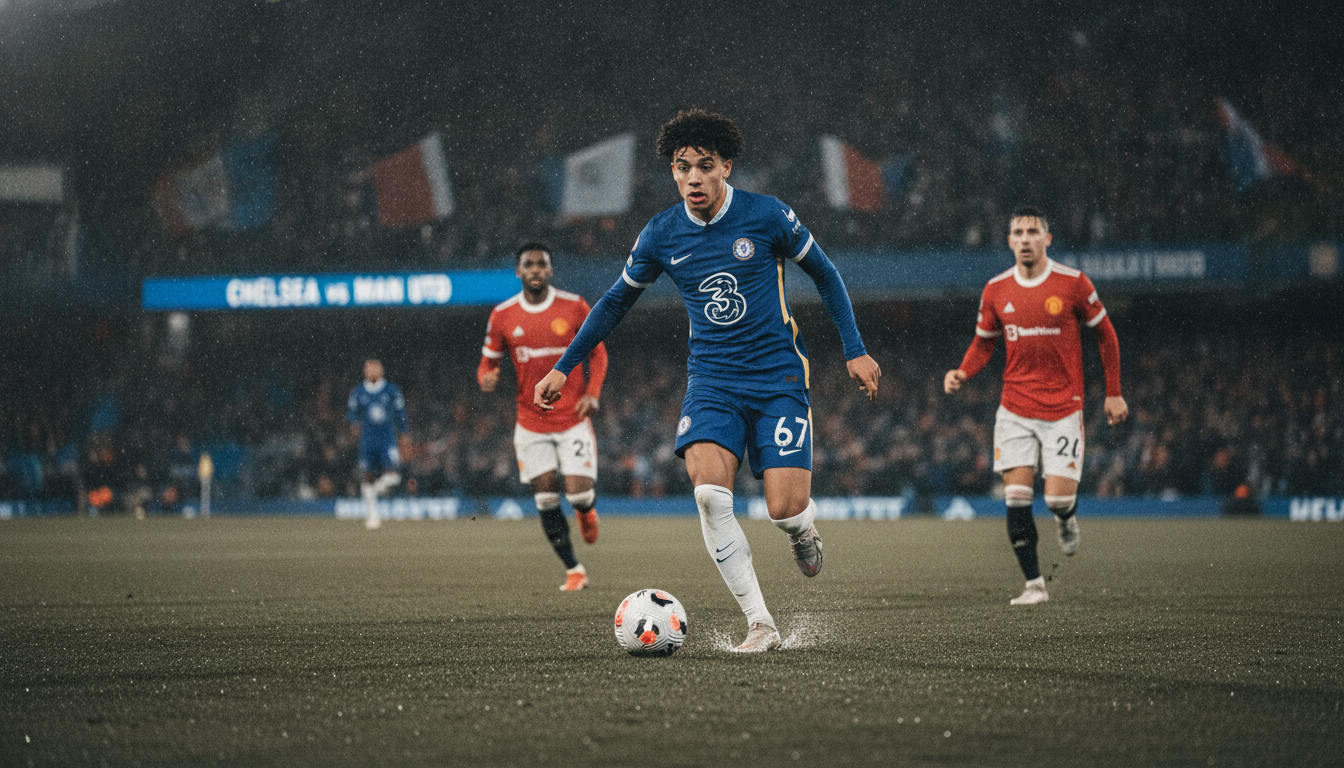
Lewis Hall transfer interest intensifies as Chelsea and Manchester United circle
Chelsea and Manchester United pursue Lewis Hall transfer as Newcastle set valuation, with weeks before the season and urgent tactical needs to address.


Reports linking Lewis Hall to Chelsea and Manchester United have intensified, with both clubs monitoring the 21-year-old left back as they consider how to reinforce ahead of the new Premier League campaign. The Lewis Hall transfer has become a focal point for talks after Chelsea moved Marc Cucurella on to Real Madrid, leaving the Blues short of a proven option at left full back. Manchester United’s reported interest adds a competitive edge to negotiations, while Newcastle United weigh valuation and sporting priorities. With time running down before the season starts, the situation could crystallize quickly.
Chelsea seeks a direct replacement following Cucurella exit
Chelsea’s sale of Marc Cucurella has left an obvious vacancy on the left side of their defence and the club is reported to be exploring rapid solutions. The search is now said to include young, dynamic options who can provide both defensive solidity and forward thrust, characteristics that defined Cucurella’s role. Lewis Hall fits that brief on paper, bringing pace and attacking instincts from deep positions that align with Chelsea’s typical demands of a modern full back.
The urgency of Chelsea’s search is heightened by the proximity of the new season and by a transfer market that narrows as days pass. Stamford Bridge has historically returned to youth and previous academy products when seeking fits who understand the club’s culture, which helps explain why Hall’s profile has been linked to the Blues. How Chelsea balances immediate need with longer-term squad planning will shape any approach they make for the England youth international.
Player profile and development at Newcastle
Lewis Hall broke through into Newcastle’s first team after leaving Chelsea’s academy, demonstrating a blend of defensive awareness and attacking contribution that attracted wider attention. He is known for his stamina, ability to carry the ball forward into half-spaces and for delivering effective crosses into the box, traits that suit Premier League systems that rely on full backs for width. At 21, Hall still projects further growth, which is why top clubs see both immediate value and future upside in him.
Across his appearances for the Magpies, Hall showed tactical adaptability, operating in systems that required him to defend robustly while also joining attacks in transition. Such versatility increases his appeal to clubs that rotate between back fours and systems that overload flanks. Newcastle’s coaching team has given the youngster minutes in challenging fixtures, and those performances have clearly contributed to the mounting transfer interest.
Manchester United interest and the case for a move
Manchester United have been linked with Lewis Hall as part of a wider evaluation of their defensive options, particularly at full back where competition and depth remain talking points. The Red Devils’ participation in European competition next season is likely to be a factor in any player decision, offering a platform to compete at the highest club level. For Hall, the prospect of regular Champions League football and a prominent role in a squad rebuilding under significant expectation would be an attractive proposition.
United could view Hall as a long-term successor and an immediate competitor for existing starters, providing tactical flexibility on the left. However, recent treatment of transfer targets suggests that any advantage for United will depend as much on the speed and clarity of their approach as on the player’s preferences. If Manchester United move decisively and present a compelling sporting case, they may gain the upper hand in negotiations.
Newcastle United’s likely stance and valuation considerations
Newcastle United face the classic choice between retaining an emerging first-team player and monetizing interest to reinvest in the squad. External valuations have placed Hall in a mid‑tens of millions bracket, but clubs often set asking prices above public estimates to reflect potential and squad importance. Newcastle’s appetite to sell will hinge on the fee offered, the quality of replacement options, and the timing relative to their own recruitment strategy.
There is also a sporting argument for Newcastle to hold onto Hall: continuity in a team that is pushing for top‑level ambitions can be worth more than a single transfer windfall. That said, a sufficiently large offer for a developing player can be difficult to refuse in modern football economics. Negotiations could therefore revolve around add-ons, sell-on clauses and performance incentives that bridge the gap between club valuation and buyer willingness.
What Lewis Hall would bring tactically to suitors
From a tactical standpoint, Hall provides traits that suit high-tempo Premier League settings: robust recovery pace, a willingness to progress the ball, and competent crossing from advanced positions. He can function as an outlet on counterattacks while also tracking back effectively to handle one-on-one defensive tasks. For teams prioritizing width from full backs, his ability to link with midfield and wingers would be immediately useful.
Defensively, Hall has shown maturity beyond his years in handling transitional phases and set-piece scenarios, which reduces the acclimation period buyers must factor into plans. His blend of attributes also allows coaches to deploy him in inverted roles or as a hybrid wing-back if tactical needs require greater central overloads. That versatility widens his appeal to Premier League clubs that expect multi-role capability in squad members.
Transfer timeline, competition and potential outcomes
With the season approaching, any transfer involving Lewis Hall is likely to be decided in the coming weeks as clubs finalize squads and registration lists. Chelsea may accelerate their search in response to Cucurella’s departure, while Manchester United could try to exploit the timing if they believe they can present a stronger immediate case. The final outcome will depend on fee expectations, agent positioning, and the player’s own priorities regarding playing time and European competition.
Transfer scenarios could range from a straight sale at an agreed fee to structured deals with add-ons tied to appearances, trophies or international caps, which are common in transactions for young talents. Another possibility is a longer negotiation that results in Hall staying at Newcastle for at least one more season if clubs do not meet valuation or if the player elects to continue development in a familiar setting. The window’s narrowing calendar increases the pressure on all parties to make pragmatic choices.
Newcastle’s recruitment plans and the willingness of Chelsea or Manchester United to match the club’s demands will determine how the story unfolds. If either buyer accelerates a formal bid, the negotiations are likely to be closely watched by observers assessing market values for emerging Premier League full backs. For Hall himself, the decision will balance immediate playing prospects against long-term career trajectory and the chance to compete on European nights.
Whichever path the Lewis Hall transfer takes, the coming weeks will reveal how top English clubs prioritize young defensive talent amid a compressed market and tactical demands that increasingly value versatile, attack-minded full backs.