Al Ittihad Eliminated from AFC Champions League Elite by FC Machida Zelvia
Al Ittihad knocked out of AFC Champions League Elite after a 1-0 quarter-final defeat to FC Machida Zelvia, with a deflected Tete Yengi strike proving decisive.

Match summary and outcome
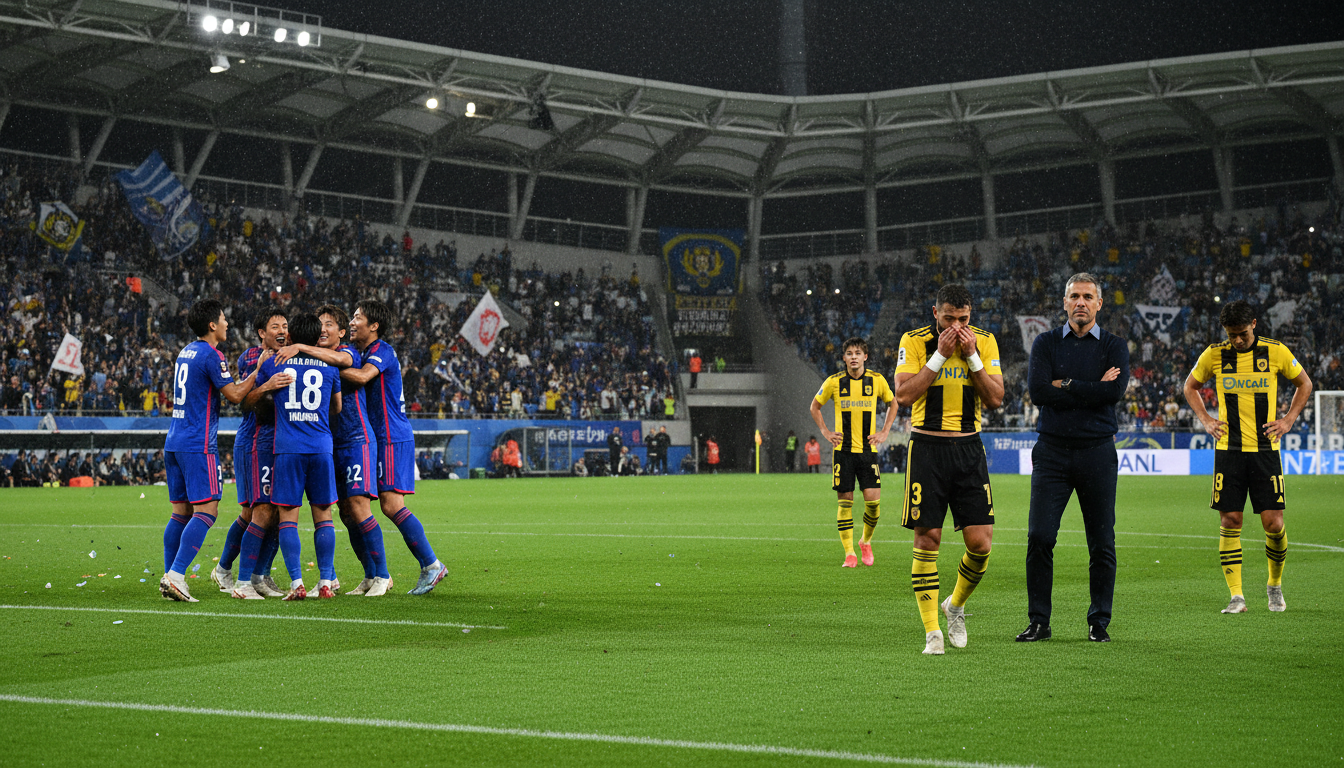
Al Ittihad’s run in the AFC Champions League Elite ended in a 1-0 quarter-final loss to J1 League side FC Machida Zelvia. The lone goal came in the 31st minute when Tete Yengi’s long-range effort took a deflection off Fabinho and looped into the net. The defeat extinguishes Al Ittihad’s hopes of winning a third Asian crown this season and sends Machida into the semi-finals.
The match was played at Prince Abdullah Al Faisal Stadium in front of more than 16,000 supporters, who witnessed a tense contest that unfolded largely in the second half. Machida will now await the winner of the quarter-final between Buriram United and Shabab Al Ahli to learn their semi-final opponent. The result marks a significant upset for the Saudi Pro League side given their status and ambitions in the competition.
Key moment and goal description
The decisive moment arrived from a situation that began with a long throw into Al Ittihad’s penalty area, which generated a scramble and defensive uncertainty. Tete Yengi reacted quickest amid the chaos, and his shot took a fortuitous deflection off defender Fabinho before crossing the goal line. The replay showed how the combination of throw-in pressure and a stray touch altered the game, underscoring how small moments shaped the outcome.
Al Ittihad’s backline was unable to clear a sustained period of pressure and the Japanese side capitalized on that brief lapse. Machida’s organization on set plays and throws was a recurring feature throughout the match and ultimately paid dividends. The nature of the goal left Al Ittihad with limited time to respond and shifted the tactical balance for the remainder of the game.
First half dynamics and crowd impact
Al Ittihad began the match on the front foot, buoyed by vocal home support and early attacking intent from wide players. Moussa Diaby and Roger Fernandes tested Machida’s defense with direct runs and crosses that momentarily unsettled the visitors. Those early moments suggested Al Ittihad might seize control, but Machida gradually grew into the game and neutralized the initial momentum.
The atmosphere at Prince Abdullah Al Faisal Stadium remained electric as fans pressed for an equalizer after half-time. Machida’s defensive discipline and counter-attacking awareness limited the space for Al Ittihad’s attackers to operate centrally. The crowd influence was clear, but it proved insufficient to overturn the single-goal deficit.
Conceição’s tactical adjustments and second-half response
Head coach Sergio Conceição reacted to the deficit with attacking substitutions after the interval, aiming to add pace and finishing quality. Steven Bergwijn was introduced and nearly leveled the score within minutes of entering the pitch, testing Machida’s goalkeeper and defense. Conceição later reflected that the team had improved after the changes and created more dangerous opportunities.
Al Ittihad continued to press, varying their approaches with crosses, combinations, and shots from distance to break down a compact Machida block. The Saudi side struck the woodwork twice, with attempts from Houssem Aouar and Youssef En-Nesyri forcing the frame of the goal. Despite sustained pressure and numerical advantages in attacking phases, Al Ittihad could not find the breakthrough.
Controversy over disallowed goal
Late in the match Al Ittihad believed they had salvaged an equalizer when Danilo Pereira headed home a set-piece delivery with four minutes remaining. Referee Ma Ning intervened and ruled the goal out for handball, a decision that provoked immediate protest from the home bench and supporters. Conceição publicly questioned the call after the match and stated that he believed the goal was fair and legal.
The disallowed goal proved to be the match’s final turning point and extinguished Al Ittihad’s last clear hopes of advancing. Debate around the ruling is likely to persist, particularly given the stakes of a continental quarter-final. Officials and the competition’s governing body will face scrutiny over interpretation and application of the handball law in crucial moments.
Machida Zelvia’s discipline and path forward
FC Machida Zelvia produced a disciplined defensive performance and executed moments of opportunism to secure progression to the semi-finals. Their ability to withstand sustained pressure, manage set-piece situations, and capitalize on a decisive chance defined their night in Jeddah. The victory represents a major achievement for the Japanese side and advances them into the latter stages of the AFC Champions League Elite.
Machida’s next opponent will be either Buriram United or Shabab Al Ahli, with the semi-final draw and scheduling set to determine the bracket. The team will now prepare to face a strong regional rival, carrying confidence from an away triumph at a hostile venue. For Machida, the result reinforces a strategic emphasis on organization and efficiency in knockout football.
Post-match reactions and implications for Al Ittihad
Sergio Conceição acknowledged his team’s improvement following the substitutions and highlighted the volume of chances created, but he accepted that execution fell short. He expressed frustration over the disallowed goal while commending his players’ effort and the support of the crowd. The coach emphasized the need to find solutions going forward despite the abrupt end to their continental campaign.
For Al Ittihad, elimination raises immediate questions about squad rotation, tactical adjustments in high-stakes ties, and transfer plans for the off-season. The club must now refocus on domestic priorities while reviewing the factors that contributed to their exit. Supporters and club officials will closely assess performance metrics and decision-making in critical moments as they plan for the next campaign.
Match statistics and individual performances
Goalkeeper Kosei Tani of Machida was busy throughout the second half and produced several important saves to preserve his team’s advantage. Houssem Aouar and Youssef En-Nesyri forced the woodwork and tested the visitors’ resilience with dangerous attempts. Steven Bergwijn’s late introduction nearly shifted momentum, while Fabinho’s unfortunate deflection was decisive in the scoring ledger.
Statistical metrics from the match illustrate a contested game with Al Ittihad edging possession but Machida maximizing their opportunities. The throw-in and set-piece sequences played a disproportionate role in determining the final scoreline. Individual battles across the pitch, particularly in midfield and on the wings, contributed to the overall narrative of the tie.
Al Ittihad now turn their attention to domestic competition and internal review as Machida Zelvia progress to the AFC Champions League Elite semi-finals. The match will be remembered for a single deflected strike, a contentious refereeing decision, and the abrupt end to Al Ittihad’s bid for a third continental title.